Can Poor Alignment Cause Uneven Tire Wear? [5 KEY Signs]
Can Poor Alignment Cause Uneven Tire Wear?

Can poor alignment cause uneven tire wear? In this article, we get to answer that and find out a lot more. Read on. Every vehicle requires proper wheel alignment for safety and easy handling. All tires must be properly aligned for your car to travel straight and prevent unnecessary wear. Driving with poorly aligned tires will make it difficult to control your car, thus increasing the risk of accidents. It’ll also add unnecessary costs since you’ll have to replace the tires from time to time. A proper wheel alignment will ensure your tires remain in excellent condition and will improve your vehicle’s overall performance and fuel efficiency. Poorly aligned tires tend to cause uneven wear, which poses a danger to your safety when driving on the road. The common causes of uneven tire wear include: – Bad wheel alignment– Worn out suspension– Improper tire pressure– Unbalanced wheels– Damaged wheels Also Read: How Long Will Tire Last With Bad Alignment? Can Poor Alignment Cause Uneven Tire Wear? Poor alignment can really cause uneven tire wear if immediate action isn’t taken. It refers to a situation where the tires aren’t angled. Car tires are usually independently attached via a suspension system that contains many adjustment points and links. The various adjustments are usually provided by the manufacturer to make sure the wheels are properly aligned. Uneven tire wear signifies an alignment problem with your vehicle’s suspension system. There are various tire wear patterns that show your car’s suspension system and alignment have a problem, such as: Generally, there are 3 types of wheel alignments that can help prevent uneven tire wear, which include camber angle, caster angle, and toe-in & toe-out angle. How Does Bad Alignment Affect Tires? Poor alignment can cause uneven wear of car tires, thus increasing driving hazards. Misaligned tires will also make a rough and torn appearance to tires after prolonged driving. Uneven wear will shorten the tires’ lifespan. In this case, you’ll incur more costs replacing them. Additionally, uneven tire wear will also destroy treads, thus leading to poor traction. This will further affect the ability of your vehicle to move or stop smoothly, thus increasing the risk of accidents, especially in areas prone to mud or snow. A bad wheel alignment will also make the steering wheel shaky, increase fuel consumption, and cause a tire blow out in extreme circumstances, especially when driving at high speeds. Car owners should be keen on checking their tires for proper alignment at the nearby service station to prevent extra replacement costs. Signs of Bad Tire Alignment A poor wheel alignment will increase your vehicle’s maintenance costs if you don’t fix it in advance Below are the top signs of bad tire alignment: 1. Uneven Steering Wheel Your vehicle’s steering wheel should remain centered when driving without any abnormal movements. Such movements show that there’s bad tire alignment. When there’s extreme wheel misalignment, the steering wheel will move to different degrees. When you take your car for maintenance and wheel alignment, you’ll make it centered and easy to control regardless of the condition of the road. 2. Car Pulls to One Side This is a common sign among cars with bad tire alignment. When driving on a straight road and you notice that your car can’t continue moving straight after taking your hands off its steering wheel, the problem could be associated with poor wheel alignment. However, you should watch out for the condition of the road. This is because you might notice the same on muddy or slippery roads. Your vehicle will keep drifting towards a particular side. 3. Squealing Noises Extreme tire misalignment will make your vehicle produce squealing noises. This noise results from the tires dragging on pavements due to their unusual movements. 4. Uneven Tire Wear Misalignment will cause uneven or unusual tire wear over time. Even if you keep rotating the car tires, you’ll find that this problem doesn’t end. In such cases, the problem could be poor wheel alignment. When you buy new tires, they’ll wear down unevenly due to the extra stress and pressure on the suspension components. 5. Vibration on The Steering Wheel When you drive your car and notice that the steering wheel is vibrating, the problem could be tire misalignment. This is caused by the increased pressure on the various steering components found between tires and the steering wheel. Can Tire Wear Affect Alignment? Tire wear will affect alignment. Vehicle wheels are connected through suspension, which plays a significant role in tire alignment. When your car tires wear out, they’ll reduce contact with the road surface, thus destroying the overall driving experience. Depending on the wear patterns of the tires, your car might also develop a camber issue and other multiple problems within the suspension system, which plays a crucial role in tire alignment. Worn-out tires will also affect alignment when the car is driven at high speed on bad roads with multiple potholes or bumps. Can a Bad Alignment Cause Tire Wear? Bad alignment can easily cause tire wear due to the increased strain on the tires by the vehicle’s weight. If you continue driving your car without any regular checks on the wheels, you’ll continue incurring many unnecessary maintenance costs. When you notice that you’ve been replacing your car tires frequently with new ones, it’s essential to visit a service station for a quick checkup. Conclusion Regular car maintenance is essential to determine such issues before they grow into costly problems. Look for a professional mechanic to help you spot problems in your car tires and suspension to ensure there’s proper alignment and reduce uneven tire wear.
Can Bad Control Arms Cause Uneven Tire Wear? [+ 3 Major SYMPTOMS]

Can Bad Control Arms Cause Uneven Tire Wear? 

Can bad control arms cause uneven tire wear? If you own a car you may have wondered. Today’s article will focus exclusively on this question and everything you need to know about faulty control arms.  A high-quality tire is expected to last three to five years, depending on the driving conditions. Therefore, if you notice uneven wear on a relatively new tire, you need to be concerned. There are many factors that can lead to irregular tire wear. Common examples include incorrect tire pressure, improper wheel alignment, and damaged rims. If you have discovered that your car has a damaged control arm, and you want to figure out whether it’s behind the uneven tire wear. Also Read: Can a Bent Rim Cause Uneven Tire Wear? [YES or NO – Find Out NOW] Can Bad Control Arms Cause Uneven Tire Wear?  A failing control arm alters the camber angle of the tire and pulls it inwards, thus leading to uneven wear. For those who are not familiar with control arms, these are suspension components that connect the car’s frame to the wheels. The purpose of a control arm is to ensure the wheels and frame move uniformly.  Control arms are susceptible to bending or breaking due to impact or regular wear and tear. When that happens, the control arm tilts the tire towards the inside, thus causing uneven wear. Control arms do not directly cause uneven tire wear. Once damaged, they affect a wheel’s alignment, and as you may already know, incorrect alignment can cause uneven tire wear.  Quite often, many car owners and mechanics overlook damaged control arms when diagnosing uneven tire wear. As a result, it becomes difficult to remedy the main culprit behind tires wearing out unevenly.  As you inspect the condition of the control arms, you should also check the bushings. Control arms work hand in hand with the bushings. If the latter are also damaged, they can contribute to irregular tire wear by affecting the wheel’s alignment.  The irregular wear caused by faulty control arms often occurs on the inner part of the tire. Depending on the extent of damage, the wear can extend to the center of the tire.  Bad Control Arm Symptoms  You can’t fully determine that uneven tire wear is caused by damaged control arms because it’s also a sign of other problems, such as poor alignment or damaged rims. To arrive at a more accurate diagnosis, it’s advisable to check for other signs of a bad control arm.  If your car has a faulty control arm, apart from uneven tire wear, you may notice the following signs;  Can I Drive with a Damaged Control Arm? The last thing you need to do to a car with faulty control arms is to drive it. You need to understand the crucial role that is played by a control arm. It acts as a connection between the vehicle’s frame and wheels. If it’s faulty, there is a high chance that it can break when you are driving. This can be pretty disastrous to both you and other motorists.  A damaged control arm also makes it difficult to steer your vehicle. Should this happen when you are driving at high speeds on the highway, it can result in an accident. It’s also worth mentioning that a broken control arm can also lead to the death wobble, which is when a car starts to shake aggressively when you are driving.  Do not forget that the more you drive a car with a faulty control arm, the more it damages other parts of the suspension, such as the bushings. Therefore, in the long run, you may also have to repair other parts of the suspension, which will be very expensive.  If you have spotted the above signs of a faulty control arm, schedule a consultation with your mechanic as soon as possible. This helps prevent the temptation to drive a vehicle with a damaged control arm.  What Causes a Control Arm to Fail?  There are two main causes behind control arm failure;  •    Wear & Tear  The most common cause is the usual wear and tear. Like other parts in your car, the control arms eventually wear out. This usually happens after around 60,000 to 100,000 miles. Unfortunately, many vehicle manufacturers use low-quality materials to build control arms. This significantly reduces their lifespan. It’s advisable to change your control arms every 70,000 miles.  •    Impact from Potholes and Road Hazards  If you don’t have the best driving habits, the impact from curbs, potholes or other road hazards can lead to control arm damage. This type of damage usually occurs immediately and can be quite severe depending on the strength of the impact. If your control arms happen to be very old, they will be more vulnerable to impact.  Is It Okay to Replace One Control Arm? Even though you can only replace one control arm, it’s not recommended. Your car’s suspension usually goes through the same amount of wear and tear. Therefore, if one control arm has failed, the other will definitely follow suit.  To avoid ongoing repairs and trips to the mechanic, it’s best to replace both control arms at once. This will also ensure that the control arms operate uniformly, thus improving stability and ride comfort.  Therefore, as tempting as it may be to save a few dollars by replacing only one control arm, you should avoid such an approach.  How to Fix a Bent Control Arm?  If you have a bent control arm, you can straighten it with a heat torch and a hammer. However, be prepared to use a lot of elbow grease when removing the bolts of the control arm, especially if you live along the salt belt. Apart from this challenge, it is possible to straighten a bent control arm. Make sure that you align the wheels once you are done.  The problem with fixing a bent control arm is that it will only serve you for a short while before you … Read more

Can I Jack My Car Up On A Slope?

Can I Jack My Car Up On A Slope

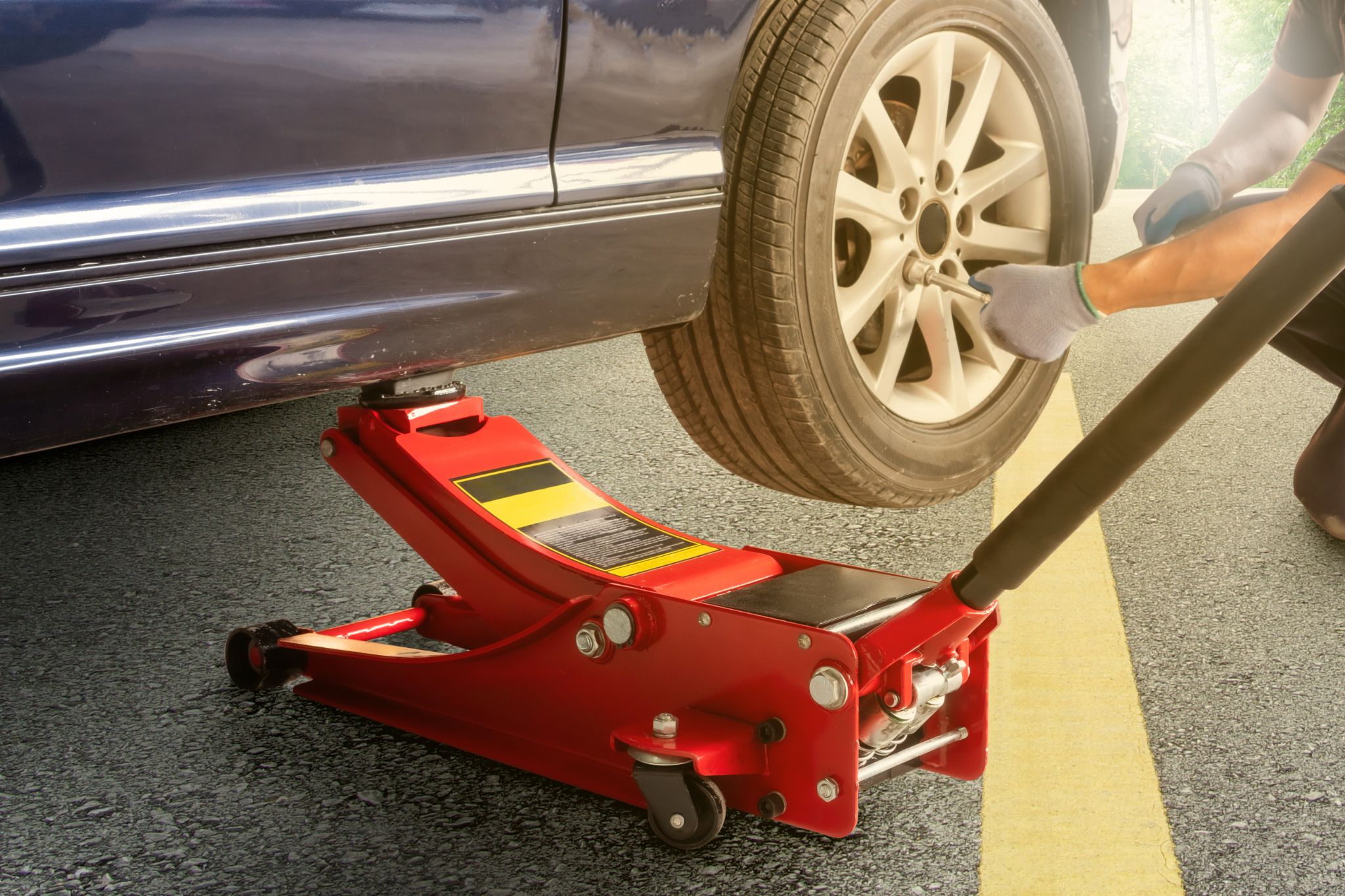
Can you jack a car on a slope? The need to jack up your car becomes imperative once you need to change a flat tire with a spare and curiously, you do not have the luxury of choice regarding where that happens. However, it is generally advised that, whatever the case may be, you should avoid jacking up your car at some specific places as much as possible. Despite this advice, you sometimes can’t help certain things. So, can I jack my car up on a slope? Jacking up your car on a slope should be avoided as much as possible, but when it becomes unavoidable, it can be done without any risks. If you must jack it up on a slope, ensure that the car is running up and down the slope and not across it, since cars are capable of moving sideways when jacked up on a slope. Yes, you can jack up your car on a slope, provided you adhere to the recommended precautionary measures. it’s also advisable to seek professional help in such instances. Can You Jack Up a Car on a Hill? It’s not recommended to jack up your car on a hill, particularly if the ground is sloping. Should you need to change a flat tire or perform any sort of maintenance on your car, it’s advisable to find a flat and level surface to park on before attempting to jack up the car. Jacking up a car on a hill can be dangerous – the car may shift or roll. This may cause the jack to fall off and injure you or damage your car. The steepness of the hill/slope can also affect the stability of the jack, making it less secure – increasing the chances of an accident occuring. Should you find yourself in such a situation, where you need to change a flat tire or perform maintenance on your car on a hill, it’s best to seek professional help. How Do You Jack Up A Car On A Slope / Hill? Your safety in such instances matters the most. You should ensure the car is parked well – and with proper support to prevent any sort of movement. After making sure that the car is not lying across the road and that it is also perfectly balanced on the jack with a jack stand in place too, then you can proceed to remove the tires with a jack spanner. Jacks utilize hydraulics in order to lift the vehicle, and these jacks are susceptible to easy damage particularly when they are left under pressure for too long. To prevent them from coming down suddenly on you while you work underneath the car, they are provided with jack stands. You should make sure that the jack is properly positioned since floor jacks are quite capable of moving in an arc particularly when they bear considerable weight. What Would Warrant Someone To Jack Up A Car On A Slope? One major reason that will require you to jack a car up on a slope is sudden tire puncture and the availability of the tools required to undertake the procedure. Sometimes, you may have no option other than to jack the car up on a slope because of your inability to get the services of a tow truck or the absence of a quick tire sealant that may help you with the problem. Are There Things To Keep In Mind While Jacking Up A Car On A Slope? Some of the things to remember when jacking a car up on a slope include making sure that the car is not lying on the road in a dangerous manner. Secondly, before you start loosening the tires, make sure that you place a jack stand underneath the car. Finally, make sure that the car is perfectly balanced, and that obstacles and wedges are suitably placed to prevent the possibility of the car moving while you are still working on it. Trending Searches Which Points Are Suitable To Jack Up The Vehicle? The most suitable points for jacking up a car are the re-inforced metal ribs designed for that purpose. On most vehicles nowadays, there are about four jacking points, which are located beneath the car’s rocker panel behind the front wheels and in front of the rear wheels. Do I Need Axle Stands While Jacking Up A Car? Axle stands are supports for the weight of your vehicle which prevents the car from falling on you while you are still working underneath it, especially in cases where you have removed the wheels. To use them effectively, just ensure that they can hold the weight of your car. What Is The Maximum Slope A Car Can Drive Up? To answer this question satisfactorily, you will have to consider both the design speed of the road and the stopping distance for the biggest truck plying the road. For drainages, the cross slope is about 1 percent up to a maximum of 4 percent. While for longitudinal slope, it can be between 0 percent up to a maximum of about 15 percent for downgrades, and as high as 10 percent for upgrades. Is It Okay To Park On A Slope? Yes, it is, provided everything is done as it should. The car should be parked not across the road, but beside it away from other vehicles on the road, and should be balanced properly on the jack in addition to using axle or jack stands. If all these are put in place, it is quite okay to park on a slope. Can You Jack a Car on an Incline? It’s generally not a good idea to jack up your can on an incline. A sharp incline is a no, no; whereas a slight incline for instance, in your backyard, could work just fine – provided all precautionary steps have been adhered to. But, is it safe to jack a car on an incline? With all precautions in place, it’s … Read more

Can a Bent Rim Cause Uneven Tire Wear? [YES or NO – Find Out NOW]

Can a Bent Rim Cause Uneven Tire Wear?

Can a bent rim cause uneven tire wear? This question is essential for any car owner who wants to enhance the longevity and safety of their car wheels. Hitting a pothole, curb, or other obstacles while driving may result in a bent rim. While it may seem minor, a bent rim significantly impacts the vehicle’s overall performance. For instance, it may affect your tire’s wear and tear. Read through the post to understand the connection between uneven tire wear and a bent rim. Also Read: Can a Cracked Rim Cause Vibration [3 Signs To Look Out For]  Can a Bent Rim Cause Uneven Tire Wear? Besides resulting in car vibrations, a bent rim will make the tires wear out. The wear may affect the specific tire with the bent wheel or other tires. How does the wear occur? As the tire bead follows the wheel’s contour, the bend starts mirroring the tire’s shoulder thread, dipping the sidewalls and causing strange wear. In addition, a bent rim can create an irregular surface where the tire rolls on. You may realize your tire wears unevenly as it rolls on an irregular surface. The pattern and amount of uneven tire wear depend on the location and severity of the bend. It’s vital to take your vehicle for professional mechanic inspections if you notice irregular tire wear. The specialists can help check or inspect your tires and rims. With the inspection, you can determine the causes of the tire’s uneven wear and fix them to guarantee safe driving. Do Bent Rims Cause Tire Wear? Bent rim is one of the serious car problems you should never ignore. It’s a problem that can create an irregular surface where the tire rolls on. Remember, your car tires should roll on regular or even surfaces to enhance efficiency. So, do bent rims cause tire wear? The bent rim creates an uneven surface for the tire to roll on, which leads to abnormal tire wear. Depending on the severity and location of the tire bend, it can result in wearing specific areas to cause a blowout or flat. Besides the abnormal wear, bent rims result in vibrations that can damage your vehicle’s steering and suspension components. Thus, it’ll be good to take your vehicle for a professional inspection if you suspect an uneven tire or bent rim. The professional will diagnose the issue and recommend appropriate replacement or repairs. Can I Drive on a Slightly Bent Rim? Driving a faulty vehicle compromises its safety and performance. While you can drive on a slightly bent rim, experts warn you against it. Even a slight bend in your car rim can result in vibration and other issues. These issues might affect the vehicle’s performance and safety. Can I drive on a slightly bent rim? You can risk driving on a slightly bent rim, depending on the severity or distance. With a bent rim resulting in tire wear, driving on a slightly bent rim may result in a flat tire or blowout. Thus, replacing or repairing the rim before the journey is vital. If you must drive on a slightly bent rim, ensure you travel a short distance. In addition, ensure you drive cautiously and at moderate speed to reduce accidents and further damage risks. Driving on a bent rim for long distances and at high speeds damages your vehicle. Is It Better to Fix a Bent Rim or Replace it?  Whether to replace or fix a bent rim depends on the repair cost and the damage’s severity. In most cases, repairing a minor rim bend is the most cost-effective solution. Nevertheless, severe rim damages, including significant bends or cracks, require a full replacement. When stuck on whether to replace or repair a bent rim, it’s good to consider the damage’s safety implications. Remember, a small bend might result in uneven tire wear and vibration, causing more significant complications. In addition, a bent rim may affect your vehicle’s safety, handling, and performance. Is it better to fix a bent rim or replace it? Experts recommend replacing a bent rim to repair it, especially if it has significant damage. Nevertheless, a repair can be a safe and cost-effective option if the damage is minor. Can a Bent Rim Cause Pulling? A bent rim might result in steering wheel vibration or pulling. How does it result in this problem? Driving on a bent time causes an uneven surface where the tire rolls, causing abnormal tears and wear. The irregular wear results in pulling and steering vibration as the tire rotates. Can a bent rim cause pulling? Yes, driving on bent rim results in pulling due to the abnormal tear and wear. The tire rolling on an irregular surface causes pulling to one side or another during rotations. Pulling can compromise the performance and safety of your vehicle, as it affects the handling and stability. Thus, it’ll be good to take your vehicle for professional inspection if you suspect a bent rim. The specialists will diagnose the issue and provide lasting solutions. Will a Bent Rim Ruin My Drive? A bent rim can damage or ruin your tire if you don’t address it timely. Driving on a bent rim leads to abnormal wear and tear, as the tire rolls on an uneven surface. Increased uneven tear and wear cause further tire complications, like a blowout or flat. So, will a bent rim ruin my drive? With a bent rim causing problems affecting your vehicle’s performance and safety, it can ruin your drive. A bent rim results in pulling, steering wheel vibration, and damages steering or suspension components. If you suspect a bent rim, it’ll be important to take the vehicle for a professional inspection. Your mechanic will recommend replacement or repairs to prevent further vehicle damage. Ignoring the issues may compromise your safety and the vehicle’s performance. Conclusion Can a bent rim cause uneven tire wear? The bent rim causes the tire to roll on an irregular surface, resulting in uneven tear and … Read more

Why Do Mercedes Have Different Tires?

Why Do Mercedes Have Different Tires

Some cars have different tires which are tough and resilient, a quality meant to effectively enable them to take care of their excessive weights, load-carrying capacities, or the need to give the cars excellent balance while driving,  especially in difficult terrains. But, why do Mercedes have different tires in the first place? Many models of Mercedes Benz cars have different tires, more so at the back than the front, in order to give the cars increased traction, since the rear wheels have wider widths than those in front. In addition, having different tires give the car a more appealing look, which many people cherish. What Tires Do Mercedes Benz Cars Use? There are many tires on the market that are great for Mercedes Benz cars such as the Westlake RP 18 Touring Tire and Goodyear Integrity Radial Tire. These tires are highly rated for their speed, size, and load-carrying capacities. In addition, they can fit most vehicles too. It should be noted that using unapproved tires for Mercedes Benz, may not give the needed safety, performance, or comfort intended by the manufacturers. Do Mercedes Need Special Tires? Yes, they do. Despite the fact that there are different configurations of tires with varying sizes and load ratings, there are specifically certain types of tires for use with Mercedes Benz cars, which are also recommended by the manufacturers of the car. These recommended tires give excellent traction, driving comfort, and safety. This is why Mercedes Benz needs special tires.(Read Also: Can I Jack My Car Up On A Slope) Which Tires Are Best For Mercedes Benz? Tires that are best suited for Mercedes Benz cars are those that are tested and certified convenient for use, due to their wet and dry traction ability, satisfaction, tread life span, rolling resistance or fuel economy, and rugged natures. There are many tires that boast impressive sizes, speed, and load ratings that fit most vehicles. Trending Searches Despite this, you are advised to use only those tires recommended by the vehicle manufacturers in the case of Mercedes Benz. To know these tires, consult your user manual or the nearest Mercedes Benz dealer around you. Alternatively, you can reach out to the manufacturer’s menu or through their website address online. Some of these tires are Westlake Touring Radial Tires and Goodyear tires, but you are sure to know more about these tires from the manufacturers. How Long Do Mercedes Benz Tires Last? In reality, how long your mercedes tires last depends on several factors which include regular maintenance, careful use, and the nature of the roads or terrains where you use them the most. So, how long do mercedes tires last? Your Mercedes Benz tires can last for as long as the 50 000 miles benchmark or for at least six years. To know reliably whether your tires are still good, check their treads and sidewalls regularly. However, regardless of the look of the tires to casual inspection or mileage driven with them,  make sure that you replace them once every six years at least. Does Mercedes Benz Warranty Cover Tires? Mercedes Benz, USA ( MBUSA) agrees to provide to the original purchaser of the vehicle or any subsequent owner with genuine spare parts, equipment, and all other factory-approved accessories, but not tires. (Read Also: What Size Tire Can I Put On A 20×10 Wheel?) This condition is based on the belief that all tires installed by the manufacturers and used in the US, are free from any production defects or other complaints and consequently,  are not covered in any warranty agreements. When Should Mercedes Benz Tires Be Replaced? Regardless of their outward look and any possible rubber material integrity, tires should be replaced once they are known to have been in use for the recommended period or have been driven for about 50 000 miles.(Read Also: Can I Put 285 Tires On 275 Rims?Find Out) Once either of these has happened, it is believed that the tires have undergone degradation in their structural integrity to warrant a replacement. In essence, tires should be replaced once they have stayed in use for about six years or have traveled across about 50 000 miles. How Much Do Mercedes Benz Run-flat Tires Cost? The cost of Mercedes run-flat tires depends on whether you do the installation yourself or it is done for you by the dealer. If you install it yourself, it costs about 277 dollars for every tire, while if your dealer does the installation for you, it can cost you anything from 327 dollars per tire. In essence, therefore, the cost is between 277 to 327 dollars. It is worthy of note that the cost of Mercedes run-flat tires is between 50 to 200 percent more than standard tires and the best benefit in terms of cost is the fact that run-flat tires outlast several tire changes since they remain affixed to their wheels.  Do New Mercedes Benz Cars Have Spare Tires? Yes, they do. Your Mercedes Benz car will be supplied with either run-flat tires, a tire fit mobility kit, or a spare tire. In addition, you may also get a tire pressure monitoring system( PMS) complete with sensors in each wheel too. In cases of any visible damage to the tire, you may call for roadside assistance immediately. (Read Also: Can I Drive Long Distance With A Plugged Tire?) Do All Mercedes Benz Cars Have The Same Bolt Pattern? Yes, they predominantly do. However, when it comes to fitting wheels from other models, the same cannot be said. For this reason, you have to stay loyal to OE wheel widths and offsets or tire sizes. It will be surprising to find other models with the same specs as your R class Mercedes. What Factors Affect How Long Your Tires Last? Many factors are implicated in determining how long your vehicle tires last. Though we all know that caring for them regularly (which includes proper maintenance and using them carefully by avoiding rough terrains and … Read more