What Is Brake Boosting? [+ 4 BEST Brake Boosters]
What Is Brake Boosting?

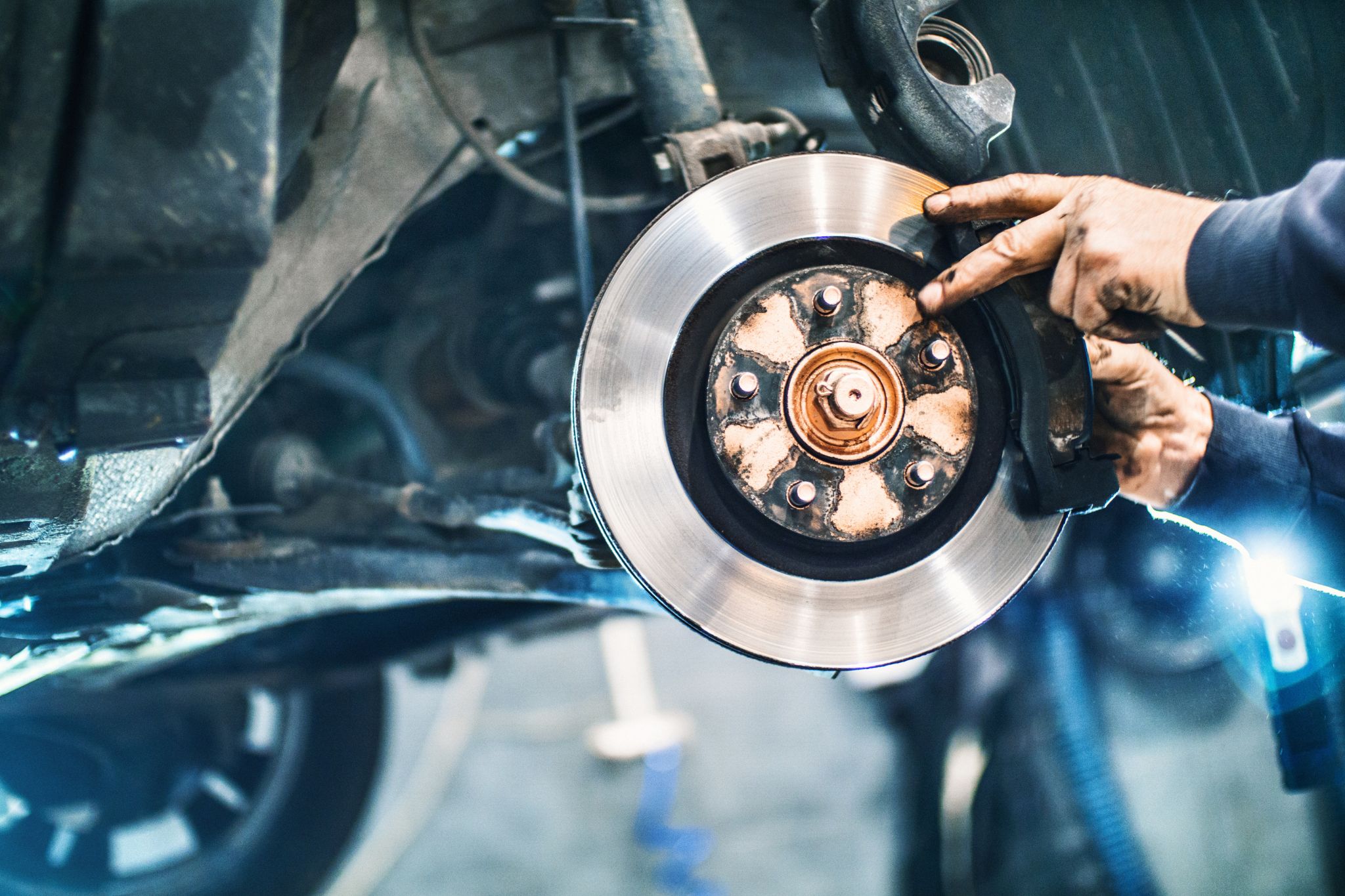
‘What is brake boosting?’ you may have wondered. In this article, we talk about what brake boosting is in depth. Brake boosters are essential components of the vehicle braking system, so they must be functional. In terms of functionality, a brake booster works in conjunction with the master cylinder to exert pressure on the brakes, thus reducing the amount of pedal pressure needed for braking.  Brake boosters use a vacuum to balance high fluid pressure in the vehicle’s braking system, hence effective braking. They are available in two diaphragms; single for small cars and tandem for big cars or trucks. They work by exerting pressure on the brake pedal. When the driver presses the brake pedal, the hydraulic fluid transmits this pressure to the brakes. Regardless of how much force the driver uses to press the brake pedal, the force will not be enough to stop the car. The brake booster is present to multiply the pressure to about four times the size of the diaphragm. What is Brake Boosting? Brake boosting is applying the secondary power source to aid in braking. When the driver brakes, the engine responds by slowing down, which helps reduce wear on the brakes. Typically, the technique works for cars that are modified for racing. Drivers apply the Brake boosting technique by using the accelerator and brakes simultaneously to raise the vehicle’s performance. This approach helps enhance the vehicle’s speed and manage speed in turns and handling on the track. You will often see this technique applied by professionals in professional drifting events and grassroots drift competitions.  If Brake boosting is applied effectively, it can dramatically improve the car’s performance on the track. However, it should be noted that this technique comes with its risks. If Brake boosting is not executed well, it can result in loss of control and even worse accidents.  The market has the best manufacturers of brake boosters. They produce innovative and practical product lines that received numerous accolades from customers and they include;•    Hitachi•    TRW•    Mando•    Crown Automotive How Does Brake Boost Work? Before we dive into how the brake boosters work, let’s understand how the standard brakes work. With regular brakes, it is simple. You push down the brake pedal, pushing a piston into the master cylinder. The master cylinder is filled with hydraulic fluid. This fluid is squirted into the system of wider pipes to increase the force of the pedal. The force piles onto the disc brakes, which consist of a disc rotor, a brake calliper, and a brake pad. Upon pushing the pedal, the fluid is released and the brake caliper pushes the brake pad against the rotors.  So, where does the action of the brake boosters come in? The brake booster is situated between the brake pedal and the master cylinder. A brake booster serves the purpose of increasing the force exerted on the brake pedal. This is done by the brake booster utilizing the power of the engine vacuum to increase the force the foot exerts on the master cylinder.  The booster uses a diaphragm system where the vacuum adds force to the brakes. Once you push the brake pedal, the lever passing through the master cylinder creates a small opening called a valve in the booster. This, in turn, allows the air to enter one side of the diaphragm thus increasing the pressure and pushes the piston to the master cylinder.  What Are The Symptoms of a Brake Booster? Like any other car parts, brake boosters can get damaged sometimes, wear down or break. If the car has a bad brake booster, you will likely notice one or more of the following symptoms; • A hard brake pedalA brake pedal should be soft when you press on it and should be too easy or hard to push down. If the booster works as required, then the pedal works well. The pedal is the first sign that you have a bad booster or its connections. If the brake booster is bad, it cannot deal with resistant pressure in the brakes. • The brake pedal is higherThe brake pedal position goes up when you have a damaged booster vacuum. For instance, if the vacuum isn’t working correctly, it might push the pedal out of place. • Presence of a hissing soundIf you hear a hissing noise after you step on the brakes and release them, the brake booster might have a problem. The booster or one of the seals or connections has a crack, leak or break. The air that enters and leaves the system when the booster is used causes the hissing sound. Can Brake Booster Affect The Engine? One of the symptoms you have a bad brake booster is the hissing sound produced when you press and depress the brake pedals. A hole is created in the diaphragm that allows excess air into the induction system. As a result, there is a fuel mix in the engine because of the connection of the booster to the main air intake.  In some new vehicles injected with fuel, the impact is little because the computer compensates for the difference. However, the case is different in older cars, as the brake booster failure can affect the engine and reduces fuel in the cylinder.  Without a cooling action with the right measure of gas, friction increases, and the engine parts’ temperature increases, causing a pre-ignition. If the situation continues, the continuous pre-ignition can lead to burnt valves or damage to the piston. This will require a high-cost repair. Also Read: Can Wheel Bearing Cause Check Engine Light?Find Out How to Test a Brake Booster A lot of the bad brake booster symptoms can be hard to notice since they involve the inner components of the car. However, there is a simple way to check the brake booster, especially if your vehicle uses a vacuum booster. The design of the brake booster allows it to carry excess vacuum, thus helping you test the brakes at least twice without using the engine. Also, you can … Read more


Is It Bad To Park A Car With Its Wheels Turned? [Know The ANSWER]

Is It Bad To Park A Car With Its Wheels Turned?

‘Is it bad to park a car with its wheels turned?’ is a question lots of drivers have. It’s common to find drivers parking their cars with the wheels turned. Whether they are parking uphill, downhill, or in a non-inclined parking spot, many drivers see this as a sensible move. However, will turning the wheels when parking your car cause damage to any components? Is parking your car with the wheels turned help in preventing your car from rolling away? Keep reading to find out. Is It Bad to Park a Car With Its Wheels Turned? Well, the answer is a bit complicated. It’s bad to park your car with the wheels turned. While there will be no effect on the car’s power steering. Other parts like ball joints and driveshafts will be under lots of stress if the wheels are not straight. Basically, when you park with the wheels turned, you leave the steering wheel turned. When this happens, the steering column transfers that force to the drive shaft and other components. This has the same effect as when you take a U-turn. After turning and you release the power steering, it straightens out by itself. So, when you park your car with the wheels turned, the steering column exerts this force. However, if you park with the wheels straight, no force is exerted on the steering column and other components. It’s also not bad to park your car with your wheels turned. According to experts, parking your car with the wheels turned helps to prevent runaway vehicles. In fact, local laws require drivers to curb their wheels when parking. In case another driver hits your car, or the parking brake fails, the wheels act as an additional safety measure. Basically, your car will not roll into people, traffic, or even the curb. Also Read: Should Rear Wheels Turn When In Park? [Plus 4 TYPES Of Drive Wheels] Should Front Wheels Turn When in Park? If you park your car facing uphill or downhill, the rule of thumb is to turn the wheels. This helps to ensure that the weight of your car will not roll towards the curb and into people, traffic, or other objects. If you’re unsure if you’re parked uphill or downhill, the best way to find out is to set your car in neutral gear. By doing so, you’ll know whether your car rolls uphill or downhill. If you park your car facing uphill, turn your front wheels away from the back. Then allow the car to slowly and gently touch the curb. If parking facing downhill, turn your front wheels towards the curb.  Will the Front Wheels Spin in Park? The front wheels can spin in park. When you park, it locks the transmission or drivetrain. Since the differential can still work, when you turn the front wheels or a rear-driven car, they can turn in the opposite direction.  However, if you park a front-wheel drive vehicle, the front wheels will not work. As aforementioned, park locks the transmission or drivetrain. So, in a front-wheel vehicle, it will lock the front wheels meaning they cannot turn.  How to Tell if Your Car Is Parked Straight There are several ways to tell if you parked your car straight without opening the window or getting out. First, you can drive forward or back a little. If you notice the car veering off in one direction, then you’ll know the car is not parked straight. Also, you’ll know in which direction to turn the wheels to park straight. Second, you can add colored tape to the top center of your steering wheel just like they do in racing cars. This will allow you to know if your steering wheel is straight without even looking down. Why Do I Always Park Crooked? One of the reasons you are always parked crooked is failure to pay attention. The majority of drivers drive into a parking spot, whether in a hurry or not, without making sure the car is in the correct spot. If you park crooked, it may be difficult for other drivers to park next to your vehicle. Also, crooked parking makes it difficult for you to enter your car from the driver’s side since the car next to you is also parked close to it. The good news is you can learn to park straight and accurately. All you need to do is practice parking with your car to know how much space you need and how to approach the parking space properly. Conclusion Parking your car with the wheels turned is not wrong. In fact, it helps to prevent your car from rolling onto the curb and into people or objects. However, if you turn the wheels while the car is stationary, it will cause tire wear. Parking straight is a challenge for lots of drivers. However, it’s not impossible to learn. All you need to do is practice in an empty parking space, and you’ll be grateful you learned.

Can You Pop A Tire With A Knife? [The SHOCKING Truth!]

Can You Pop A Tire With A Knife

Can you pop a tire with a knife? This is a common query that most people have in their mind. And that’s why you are here today. In this article, we’ll dive into the science behind tires and knives to get to the bottom of this common query. Whether you are a curious driver or just looking for a good myth-busting read – we’ve got you covered. Get ready to explore this intriguing topic. Let’s get straight to it! Trending Searches So, can you pop a tire with a knife? Yes, you can puncture a tire sidewall with a knife, provided the knife is sharp enough. It should be able to penetrate the sidewall, which is the softest part of a tire – making it vulnerable to cuts. Using a sharp knife, especially one with serrated edges, you can slice through the seams of the sidewall, effectively cutting it off. Alternatively, you can use a powerful cutting tool like a circular saw or a Dremel equipped with a blade to achieve the same result. How To Pop A Tire With A Knife? if you stab a tire will it explode? Yes, it is quite possible to pop a tire with a knife in some cases, but absolute care must be taken to ensure that the tire does not blow in your face. Using a sharp and serrated knife, stand while facing away and with the tire between your legs. Then, start making small radial cuts on the sides of the tire. And after several cuts, push the knife into the tire at an angle. A cut deep enough through the sidewall of the tire will start to release the air in it. By maintaining your stealth, you can accomplish this process quietly. A small cut is enough to give any tire a small puncture which will be adequate to let the air out slowly. If on the other hand, you make a large cut, the air will escape with considerable noise. You can also pop the tire with a knife by thrusting the tip of its blade straight into the smooth surface of the rubber about an inch or 2.5 cm from where the tread begins. Will a Tire Explode if You Stab it? Stabbing a tire may lead to an explosion, especially if it is underinflated or damaged. Stabbing a tire with a knife or any other sharp object, can cause the tire to burst. This can lead to a loud noise and may also lead to debris flying – this can be quite dangerous. This can cause injuries to the person stabbing the tire. Additionally, if the tire contains flammable materials such as gasoline or oil, stabbing the tire could easily cause a fire or an explosion. It’s important to handle tires and other potentially hazardous materials with care and caution. Which Knife Can I Use To Pop A Tire? The best knife to use in popping a tire is a sharp and preferably serrated knife that also has a pointed tip for piercing the rubber easily. Are There Consequences Of Popping A Tire With A Knife? Before you pop a tire with a knife, start by puncturing the sidewall in order to simplify the procedure and also brace the tire by placing the sole of your foot on the lower section of the tire or kneel down and pin it to the ground with one knee. (Read Also: Can You Put Mud Tires On A 2wd Truck) Otherwise, the tire may rock or shift when you start cutting. In cutting tires, position the knife with the blade pointing towards you and slowly guiding it down between your legs, for maximum leverage. Also, in order to prevent accidents, place only one foot or knee on a section of the tire as you cut through it. In addition, whenever you’re cutting through tires, be careful not to cut too close to its tread, as it may be reinforced, and also keep your face away, to prevent it from exploding in your face. Which Other Items Can I Use To Pop A Tire Apart From A Knife? Several items can be used to pop a tire such as a high-powered cutting tool, circular saw, Dremel, awl, bodkin, pricker, bradawl, prod, or piercer.(Read Also: Can Tire Valve Caps Fall Off?Find Out) Will A Slashed Tire Go Flat Immediately? It depends on the size of the hole or puncture. If the puncture is small, the air escapes slowly and hence deflation takes time, but when the cut is big, air escape is fast and so is its deflation too. Furthermore, highly pressurized tires tend to hasten the escape of air when slashed. Essentially, therefore, tires deflate at rates mostly dependent on the sizes of the tears or holes cut in them and also the gas pressure within them. Does Slashing Tires Make A Sound? This also depends. If you slash the tire quickly using a very sharp or pointed object, it is likely for the tire to deflate gradually and without making any sound. How Do You Slash Tire Without Making A Noise? In order to slash a tire noiselessly, make it quick by giving the tire a small cut or hole through which the air will gradually escape. (Read Also: Can Bike Tires Pop?Find Out Now) How Do I Stop People From Slashing My Tires? It is possible to get your tires slashed either accidentally or on purpose. Whatever may be the cause, let us look at how to prevent that from happening. To achieve this effectively, you can either use devices that are designed for tire protection or adopt other tactics to dissuade the assailant. The following tips will help. (Read Also: Will Tires Stop Bullets?Find Out Now!) a) Park wisely When you park at certain places such as behind closed doors like in garages, it will prevent getting your tires slashed, and should that continue to happen, lie in wait for the truant and get him or her … Read more

Can Uneven Tire Wear Cause Noise? [The ULTIMATE Truth]

Can Uneven Tire Wear Cause Noise?

Other than the engine’s sound, noises from the tires communicate a lot about your car. While there are many causes of the issue, can uneven tire wear cause noise? When driving, noise from your car tires should be a big concern. Experts advise you to immediately check to establish what is causing the noise from your car tires. There are several reasons your car has continuous noise and vibration while accelerating or driving. Read on to understand if uneven tire wear can cause noise when driving. Can Uneven Tire Wear Cause Noise Uneven wear is one of the common reasons your car makes while driving. How does the uneven tire cause noise? You’ll realize some noise when your tire wear isn’t even uniform across the circumference and width. With the uneven wearing around the width or circumference, you’ll notice some varying types of sounds. Experts reveal that the different uneven tire wear creates patterns that produce a unique sound when driving. Thus, when you hear unnecessary tire sounds, it’ll be vital to check if the tire wear is even or uniform. Proper tire maintenance can help to prevent excessive tire noise that results from uneven tires on your car. You can consider a regular tire rotation, ensure that you inflate your tires regularly, and check the tread depth annually. Experts also advise rebalancing the tires every 10000 miles and having a wheel alignment. These practices help to ensure even wear of your tire across the circumference. However, the tires start making noise due to uneven tire wear; fixing the problem may not be an issue. With the tires already damaged, the noise will not go away. Mostly the noise will reduce, and the tire noise will gradually reduce over time as they start wearing in and more evenly. Can Uneven Tire Wear Cause Humming Noise? While every car can experience noise at some point, increased humming indicates an issue you need to resolve. Humming noise is the usual noise tires give as they roll on the asphalt. Uneven tire wear is one of the common causes of the humming noise. Thus, it’ll be good to check for uneven tires when you hear increased humming. How does uneven tire wear cause humming noise? If your car tires wear out unevenly or in unusual patterns, it causes a change in the tire’s surface areas touching the road. The common uneven wearing pattern is cupping, which results in a high and low pattern.  When driving, the high and low patterns will trigger the humming noise. It’s good to invest your car for uneven tires if you hear a humming noise while driving. You can correct the issue by rotating the tires or moving the car’s rear tires to the front.  Can Uneven Tire Pressure Cause Noise? Tire pressure is crucial to enhance functionality and allow your vehicle to move without issue. However, uneven or unbalanced pressure may result in various issues and complications. Some individuals have been wondering if driving on uneven tire pressure can cause noise. Can uneven tire pressure cause noise? Uneven tire pressure can be the cause of your increased tire noises. Unbalanced or uneven tire pressure makes the wheels produce different levels of pressure on the wheel. The different pressure level results in uneven wearing of your tires.  If your car tires wear out more in certain parts, you may probably hear some noise as you drive. The noise usually increases as the uneven pressure causes an imbalance of the tires while driving. Unbalanced tire pressure may result from uneven load distribution and irregular inflating of the tires. Can Uneven Tire Wear Cause Vibrations? While it’s common for vehicles to vibrate while moving, increased vibration signifies certain issues. It’ll be good to check and establish the cause of the vibrations while driving. Experts reveal that various tire issues, like unbalanced or inflated tires, can cause vibrations. Can uneven tires wear cause vibrations? Uneven tires that result from missing tire weights, unbalanced tires, and a misaligned vehicle can result in vibrations. The vibrations increase with an increase in the odd wearing of the tires. When one side of your car tire wears more than the other, you’re more likely to experience vibrations. Besides the vibration, uneven tires will be pulling your vehicle slightly toward a single side of the road. Balancing the wear and rotating the wheels helps to reduce the vibrations. Also Read: Can Uneven Tire Wear Cause Vibration? Do Worn Tires Make a Noise? While driving your vehicle, you’ll usually expose the tires to wear and tear. Friction and load distribution are some of the factors that accelerate your tire wearing out. As the tire wears out, you’ll realize some changes in your car’s behavior, including noise. Do worn tires make a noise? You may hear louder noise as your car tires get to their end of life, and there is reduced rubber concentration between the road and the steel belt. In addition, the sound-muting features in the thread pattern usually distort as the tire loses its shape. Your tires will also become noisier due to their tread design, uneven wear, and tire construction. As the sounding insulating properties and tire thickness reduces, it gets near its reinforcements and belts. Thus, with time, you may find the noise increasing. Conclusion Tires are important to enhance a smooth and safe ride. When driving on well-maintained and proper tires, you can steer the vehicle accurately, which helps you to stop quickly. However, as tires wear, they start triggering issues like increased noise and vibrations. Can uneven tire wear cause noise? When your tires wear irregularly around the circumference or across the thread, it can result in increased vibrations or noise. If you hear increased vibration or noise, it’ll be good to inspect your tires and fix the issue.

Should Rear Wheels Turn When In Park? [Plus 4 TYPES Of Drive Wheels]

Should Rear Wheels Turn When In Park?

Have you ever taken the time to observe the rear wheels of any vehicle during parking? Did you notice the difference in motion between the front and rear wheels? Should rear wheels turn when in park?  Once you set your vehicle to park, you want to be sure that it will stay in the same position till you return. Generally, when the car is in park position, a metal arm- otherwise known as a pawl jams the transmission from the gear, thus keeping the vehicle from moving. However, the park gear position works more effectively on flat surfaces. The park gear complements the handbrake(also known as the park brake) in ensuring that the vehicle remains intact when parked.   So, Should rear wheels turn when in park? Read on! Should Rear Wheels Turn When in Park? With both the park brake and park gear in action, the drive wheels remain locked. Drive wheels, in this context, refer to the wheels that transmit force from the torque. This is known as tractive force, typically transmitted from the tires to the road. If you turn the steering when your car is stationary, you will notice that only the front wheels turn. The park gear position does not lock any wheels; therefore, they will be free to move as long as they are not touching the ground. However, applying the park brake locks the rear wheels. In this case, the vehicle should still be able to move. The motion will differ because the wheels skid over the road rather than roll over.  Understanding that the “Park” position does not lock your car wheels is essential. Instead, it locks the transmission from the gearbox. Therefore, the wheels will be free to move; thus, enforcing the park brake is necessary. The primary function of the park brake-also park brake- is to bypass the hydraulic braking system in case of a failure. It is designed to remain engaged when the car is in parking mode to prevent it from rolling away, especially on sloped surfaces.  However, the front wheels can roll since they are not locked. Most parking techniques show you how to align your front wheels just in case the braking system fails when the car is parked on unlevelled ground. Additional proof that rear wheels do not turn when in Park is ‘dry steering .’Although not advised, dry steering is when you turn the steering wheel when the car is stationary. Also Read: Is Rear Wheel Drive Good in the Rain? Why Do My Wheels Turn When in Park? Wheels can turn when in the park due to various reasons. Typically, the drive wheels lock while the non-drive wheels can rotate freely when the car is in the park. The park position locks the drivetrain; thus, the undriven wheels should be able to turn. If you want to know whether it is normal for the front or rear wheels to turn in park, you need to identify which wheels are drive and which are non-drive. The following are the different types of drive wheels(or drivetrains): All-wheel drivetrain vehicles have advanced electronics and differential capacity to send power to all four wheels. Each will gains traction and is independent of the other thus, all wheels can turn. Four-wheel drive vehicles are similar to the AWD in that the drivetrain system transmits power to all four wheels. However, they offer more traction and stability and are more robust on harsh terrains such as icy and off-roads. The front wheels receive all the engine’s power in front-wheel drive cars or trucks. The rear wheels consequently become non-driven and can move independently. With the RWD, all the power goes to the rear wheels. That means the rear wheels push the car forward while the front wheels can navigate the vehicle. Whichever type of drivetrain, the idler wheels are always independent of the axle and can turn freely even when in park. On the other hand, the drive wheels can turn in opposite directions due to how the differential works. Should Your Tires Always be Straight When Parked? When parking on a level surface, it is wise to always ensure your tires are straight since there is bias to the vehicle’s weight. Straightening the wheels gives you an easy time when you want to leave, especially if other vehicles are parked parallel to yours. However, leaving the tires straight when parking uphill or downhill can be risky. On an unlevel ground, you should leave the wheels turned to prevent the car from rolling into traffic in case the handbrake fails. While parking uphill, turn the front wheels away from the curb until the vehicle rolls back and gently until the rear part of the front wheels rests against the curb. Where there is no curb, always turn the front wheels to the right, so the vehicle rolls away from traffic in case the park brakes fail. When parking downhill, turn the front wheels toward the curb and let the vehicle turn gently until the front tire rests against the curb. Where there is no curb, the wheels should remain turned to the right for safety if the vehicle rolls. How Do I Make Sure My Wheels Are Straight When Parking? If you want to know if the car wheels are straight on the outside, let the steering wheel guide you. The standard rule is that a steering wheel should take two complete 360-degree turns before fully locking. Therefore, two turns back should bring the will back to the center of the wheel locks in one direction.  Another hack is to look at the insignia on the steering wheel. For most vehicles, you can be sure the wheels are straight if the steering wheel is facing the right way up. Alternatively, you can add colored tape to the top center part of the steering wheel to know if the wheel is straight without having to look down. You can also set the car to neutral and drive forward or back … Read more