Can You Check Fuel Pressure With A Tire Gauge?
Can You Check Fuel Pressure With A Tire Gauge

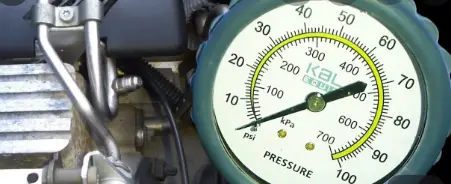
Knowing your vehicle’s fuel pressure is absolutely important in determining whether your fuel pump is in order or not. It also enables you to know what may be the cause of your car stalling or failing to start after two or more repeated attempts at kick-starting it, particularly in the mornings when the engine has taken the time to cool throughout the night. But, how do you check your fuel pressure, if there is no fuel pressure pump at hand? Can You Check Fuel Pressure With A Tire Gauge So, Can you check fuel pressure with a tire gauge? Yes, you can check your fuel pressure with a tire gauge, but mainly in emergency situations and only for low or high pressures too. Thereafter, you are advised to throw away any such tire pressure gauges used in this fuel pressure testing immediately afterward. It is common knowledge that every car is equipped with a fuel pressure testing part, which is commonly located beside the hood of the car’s fuel injectors. Air is known to be highly compressible, while gasoline, on the other hand, is not anything as near compressible as air. In addition, fuel may also leak where air and water will not. Furthermore, air pressure gauges are not meant to have solvents in them and gasoline is full of solvents. In essence, though you can somehow check fuel pressure with the use of an air gauge, the endeavor is at best very risky to undertake. Can you test a fuel pump out of the tank? Yes, you can test a fuel pump out of the tank, but that should be done before its installation in the system and with a multimeter. However, while doing this, you should observe the continuity of the connector and motor windings as you use it. If the pump is working perfectly, the resistance of the windings should be between 2 and about 10 Ohms. How does the fuel pressure gauge regulator work? Most notably, the fuel pressure gauge regulator oversees the regulation of all fuel pressures against the air boost or pressure. It also allows the fuel injector to keep the ratio between the boost and the fuel. The fuel pressure regulator has a kind of diaphragm that is known to control the bye-pass valve, which is also known as the ball seat too. (Read Also: Will Jeep Wheels Fit Toyota Tundra?) The FPR is mainly used in cars that are equipped with the Electronic Fuel Injection( EFI). The FPR also serves to maintain the fuel pressure to stay constant in all engine working conditions. Similarly, it sprays less fuel into the engine if it is idling. In fact, the FPR does anything that will determine how well your vehicle gets fuel supplied to it at all times. For a fully loaded engine, the fuel injector will spray more fuel into the engine to facilitate increased combustion in its cavity. This means that the fuel pressure in the delivery pipe will basically remain the same. Conversely, whenever the engine is turned off, the fuel pump stops working too and its springs will press on the diaphragm and also the valve as well. As a result of this, the valve will be closed and the check valve in the fuel pump will equally close too in response. If the FPR is faulty, the fuel pressure cannot be maintained and the engine will be difficult to kick start, and may also iddle unstably sometimes as well. In some rare cases, the engine power may also reduce in response to this. Is the air pressure gauge the same as the water pressure gauge? Yes, basically they are. Any oil, water and air pressures can be evaluated using the same pressure gauge, as long as the pressure to be measured does not exceed the capacity of the gauge or meter. You can also measure fuel pressure using the same water or air gauge. Although whenever you use it for measuring fuel pressure, you are required to promptly throw the pump away. Whatever differences there may be between these gauges, it is purely attributable to differences in the solvent contents of the fluids. So, yes, the water pressure gauge is the same as an air pressure gauge. Trending searches What causes low fuel pressure? Low fuel pressure has several different causes in vehicles. One of the major ones is a faulty or malfunctioning fuel pump. Another is when you happen to have a bad or damaged fuse in your pump. Finally, the low power supply can also manifest as low fuel pressure in vehicles too. When there is a low power supply in the fuel pump, you are bound to have a weak or drained battery behind it. How do you check the pressure on a 350z? There are several techniques that can be used in checking the pressure on a 35 oz. The first is the aneroid gauge, which measures pressure using a sort of metallic pressure responsive element that takes different forms, but actually works on the same principle. This is a kind of flexing elasticity under pressure applications differential. Secondly, is the Bourdon tube, which is a kind of flattened thin wall closed-end tube that is formed into a C-shape or helix. Whenever pressure is applied to the inside of this tube, the oval cross-section of the tube will become sort of circular or will straighten out the tube, which will, in turn, regain its shape when the pressure is relieved. These alternate changes in shape are communicated to a pointer which is read against a graduated scale. Finally, there is the diaphragm, which is a pressure gauge that uses the deflection of a flexible membrane. As the pressure builds up, the diaphragm flexes in response to it, which can also be measured against a graduated scale too. Will tire pressure gauge work as a fuel pressure gauge? Yes, a tire pressure gauge can conveniently work as a fuel pressure gauge too. However, to be … Read more
How to Get Tire Shine Out of Clothes? [EXPERT Advice + 3 TIPS]

How to Get Tire Shine Out of Clothes

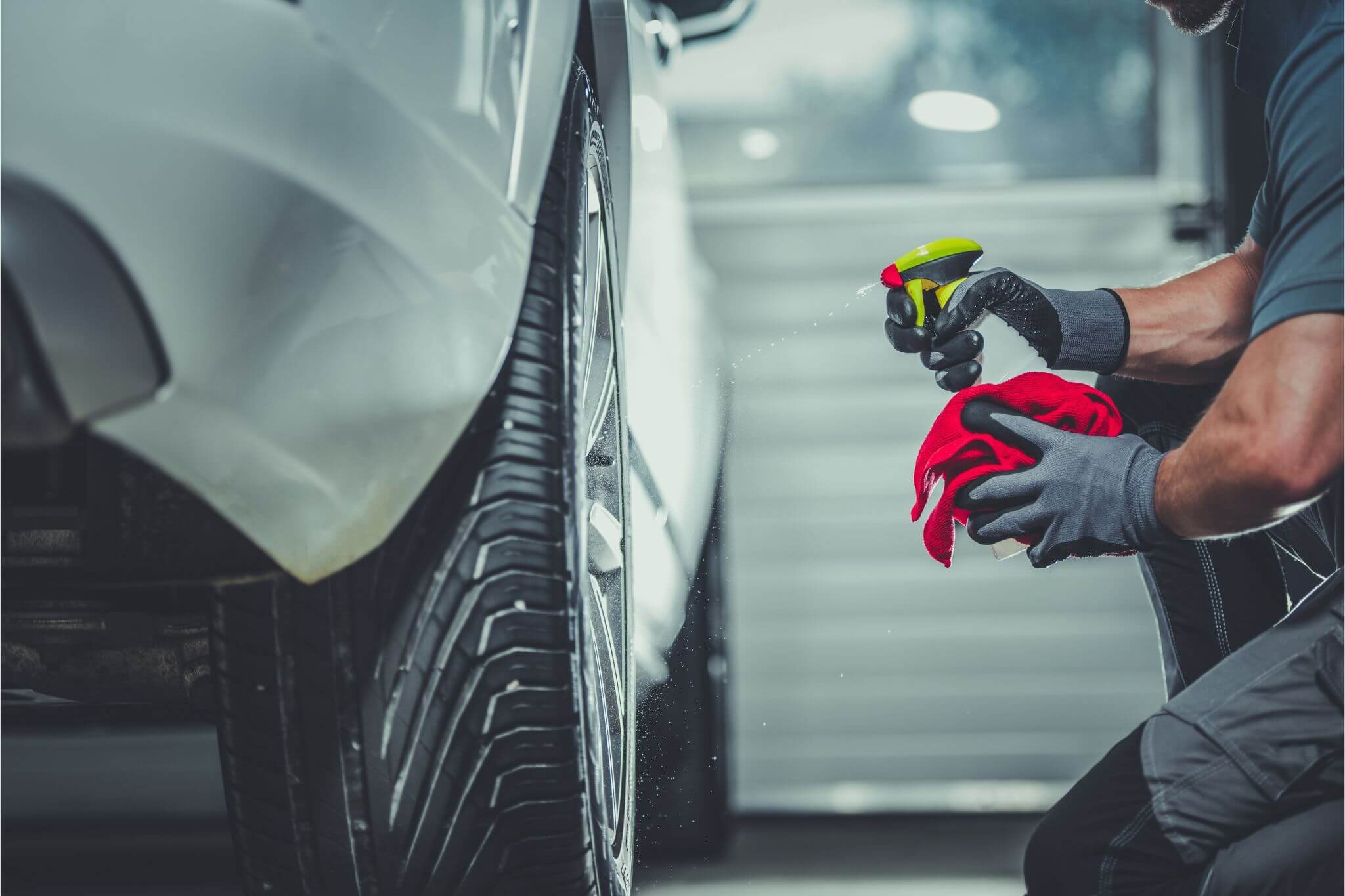
How to get tire shine out of clothes? Tire Shine or Dressing is a popular product that’s owned by many car owners. Apart from enhancing the appearance of your tires, it also protects the rubber from cracking, fading, and hardening. As beneficial as tire shine is, the last thing that you want is for it to stain your clothes.  There are many ways tire shine can stain your clothes. You could unknowingly rub your hands on your clothes after changing a tire. Or, if you are wearing a baggy outfit, your clothes could get accidentally stained when you walk near the tire. Irrespective of how tire shine stains got on your clothes, cleaning them isn’t always easy. This is why we have come up with this comprehensive guide on how you can remove tire shine stains from your clothes.  How to Get Tire Shine Out of Clothes?  When people often stain their clothes with tire shine, the first thing that comes to mind is throwing them in the washer. However, this usually never works. Here is a step-by-step guide on the best method of how to get tire shine out of clothes;  Step 1: The best time to deal with a tire shine stain on your clothes is when it’s still fresh. So, you should start working on it as soon as you notice it. When the stain is fresh, attempt to remove the tire shine marks using a damp cloth. If you can use microfiber, that would be better because it’s more effective at picking up stains. Do this gently to avoid spreading the stain.  Step 2: The above method will eliminate a significant amount of tire shine stains from your clothes. Pour a generous amount of laundry detergent or handwashing soap on the affected area to remove the rest of the stain. Scrub it gently with a soft thistle brush and clean the stain with water.  Step 3: Throw that piece of clothing in the washing machine and it should look spotless after.  In case you are unsuccessful. There are plenty of other products that you can use to get rid of tire shine stains from your clothes. We will talk about them in detail, later on. However, the above method should be effective in nearly all scenarios.  Also Read: Does Tire Shine Cause DRY ROT? (Exploring the TRUTH + 3 TIPS) Does Tire Shine Stain Clothes?  If you look at your bottle of tire shine, you will notice that it comprises a wide range of ingredients such as silicone or petroleum-based chemicals. It’s these ingredients that actually stain your clothes when it makes contact with tire shine.  Something else most people don’t know is that when you apply tire shine to your wheels, it reacts with the rubber. So, when your clothes touch the tires, it’s also stained by the rubber. The stain is even more stubborn if there is dirt on the tires.  When you catch a tire shine stain on your clothes, you need to know that you are also dealing with rubber and dirt marks. The good news is that tire shine stains can be cleaned and are not permanent.  Please note that tire shine stains depend on the formula of the product. We have water-based and oil-based tire shines. Stains from the latter are more difficult to clean and may require the intervention of aggressive cleaners. But as for water-based tire dressings, as long as you get rid of the dye, you are all good.  You May Also Like: Can Tire Shine Damage Paint? Best Products to Remove Tire Shine Stains from Your Clothes  Sometimes, a microfiber cloth, laundry detergent, and a soft-bristled brush may not be effective at removing tire shine stains from clothes. Such situations usually call for more advanced cleaners, such as the following;  It’s also very crucial to note the different sort of fabrics that you could be dealing with – as this will determine the exact method to be used. The below table covers the different types of fabrics and their recommended cleaning methods for tire shine stains. Prevention Tips: Say No to Tire Shine Stains on Your Clothes  It’s easier and less stressful to prevent tire shine stains than cleaning them. If tire shine is always staining your clothes, here are a couple of prevention tips you should follow;  a) Learn How to Properly Apply Tire Shine: Many car owners often leave their tires soaked with dressing. This is, however, not advisable. The best thing to do is always to let the tire shine sit for about ten minutes. Then clean the excess off with a paper towel. By doing so, your tires will remain shiny and won’t stain your clothes if you pass near it.  b) Be Very Careful When Changing Tires: Whether you are replacing a flat tire or doing the occasional tire rotation, don’t do it while wearing your favorite t-shirt or pair of trousers. There is a reason the guys at your tire shop are always wearing overalls. Always clean your hands after the change. This will avoid scenarios where you accidentally stain your clothes.  c) Be Mindful of Your Tires Whenever You Are Near Them: This is a tip you should probably share with family members. People living in urban areas have to deal with small parking spaces. This makes it easier to stain your clothes when passing near tires with dressing. Exercising caution in such an environment can save you a lot of trouble.  Also Read: Does Tire Shine Cause Tires Crack? What is the Best Home Remedy for Tire Shine Stains?  Hands down, lemon juice is the best home remedy for removing tire shine stains on clothes. This all-natural solution is an ideal alternative to harsh chemical cleaners. And the best part is that it’s widely available. Lemon juice infiltrates tire shine particles and breaks them apart, making it easier to scoop them off with a damp cloth or brush.  Also, lemon juice can be mixed with other home … Read more

Does Tire Shine Cause DRY ROT? (Exploring the TRUTH + 3 TIPS)

Does Tire Shine Cause DRY ROT

Does tire shine cause dry rot? Many people wonder whether tire shine causes dry rot, but the answer to this question cannot be straightforward because many factors need to be put into perspective. Tire shine is the final touch given to tires after washing. The tire shine is usually in the form of gel or sprays intended to provide the tire with its original shiny black look. Ingredients commonly found in most tire shine products Ingredient Purpose Silicone oil Adds shine and water repellency Petroleum distillates Acts as a solvent for the silicone oil Emulsifiers Helps to evenly distribute the silicone oil and water UV inhibitors Protects against sun damage Preservatives Prevents microbial growth and prolongs shelf life Fragrances and dyes Adds scent and color to the product Surfactants Reduces surface tension and helps to spread the product evenly Table of tire shine ingredients Most people think that tire shine is supposed to fix cracks, but it does not; it’s just supposed to give your tire a wet and shiny look. Today’s biggest question in this content is, does tire shine cause dry rot? First of all, let’s look at what dry rot is. Dry rot is the cracking on the tire’s sidewalls due to the brittleness and stiffness of the tire that has degraded. Tires are made of rubber, and rubber tends to wear out as time goes by due to friction. This is one of the most common reasons that lead to tire dry rot. But does tire shine cause dry rot? The answer to this question needs to be more direct. First, the drawback of the tire shine is that it can damage breaks if the excessive spray is applied on the tire. Secondly, some tire shine products that mostly contain silicone or petrochemicals, if applied on the tire, dissolve the protective waxes on the tire, thus causing tire dry rot. But when a good tire shine product that does not contain harmful chemicals is applied, the tire will not cause dry rot. Here we will talk about tire shine and whether it’s bad for tires. Tire Dry Rot Symptoms Large cracks on the sidewalls are the surest way of noticing the tire dry rot. A tire with dry rot tends to have large cracks on the sidewalls that expose steel cords and other inner components. Decolorization of the black color is mainly common when the tire has been used for a long time and has undergone a lot of friction. The black color tends to fade, thus making the tires look old and dull. This decolorization of the black tire tends to lead to dry rot of the tire. This can mostly be fixed by the use of tire shine to give the tires the original shiny black color. Brittleness and rigidity– a dry rot of the tire can mostly be identified through the brittleness and rigidity of the tire. Brittleness is when you touch the tire, and some tire pieces pull out. This brittleness is very likely to cause dry rot of the tire. Causes of Tire Dry Rot Many people don’t know UV lights, but there is a reason why experts and car manufacturers insist that people park their cars in the shade. UV lights tend to be harmful to your car tires since because the tires are made of rubber. When UV light hits the tires for a long, the tires tend to weather, thus leading to tire dry rot. Certain chemicals bring us to our initial question: Does tire shine cause dry rot? Yes, some tire shine chemicals made of silicone and petrochemicals tend to dissolve the tire when applied. This leads to tire dry rot if applied regularly and in large amounts. Underinflated tires– low tire pressure for frequently used tires can lead to dry rot. This is because if the tire is running fast in low pressure, the rubber of the tire can wear out, and this can be worse if you are driving in rough terrains. When the tire quickly wears out, it becomes brittle, leading to dry rot. When is Dry Rot on Tires Dangerous? When tires fail– when tires start failing, this becomes a dangerous tire dry rot situation since this can even cause accidents. When a tire fails, it prevents the vehicle from functioning the way it was supposed to initially. This can lead to some other related problems, such as brake failure. Large sidewall cracks– when the sidewalls are large enough to the extent that you can see the tire’s internal components, this shows that the tire dry rot is becoming dangerous and needs immediate replacement. Brittleness of the tire– when the tire becomes too brittle to the extent that when you touch the tire, the pieces of rubber tear out easily, this can be very dangerous, especially if you live in a hot climatic area since the rubber can stick on the road when driving. Even worse, the brittleness can damage the tire completely. Preventing Tire Dry Rot Regular tire inspection– doing a regular tire inspection will help identify the symptoms of a tire dry rot as soon as possible. You should do monthly checks by looking out for faded tires, cracks on the sidewall, or any other unusual thing on your tire. Avoid parking under the sun– as much as UV lights are harmful to your skin, they are also harmful to your car tires. This is because the UV light can weather the sidewall of the tire prematurely, and if the car is under the sun for too long, the sidewalls might develop cracks. You must park your car in the shade or in an enclosed place that will not receive UV lights. Avoid harmful chemicals– some tire shine chemicals are made of petrochemicals and silicone. When these chemicals are applied or sprayed on the tire, they tend to dissolve the chemical, which thus causes dry rot of tires. You must use tire shine products that do not contain any of those harmful chemicals. Conclusion … Read more

How Long Can I drive with A Knot In My Tire?

How Long Can I drive with A Knot In My Tire

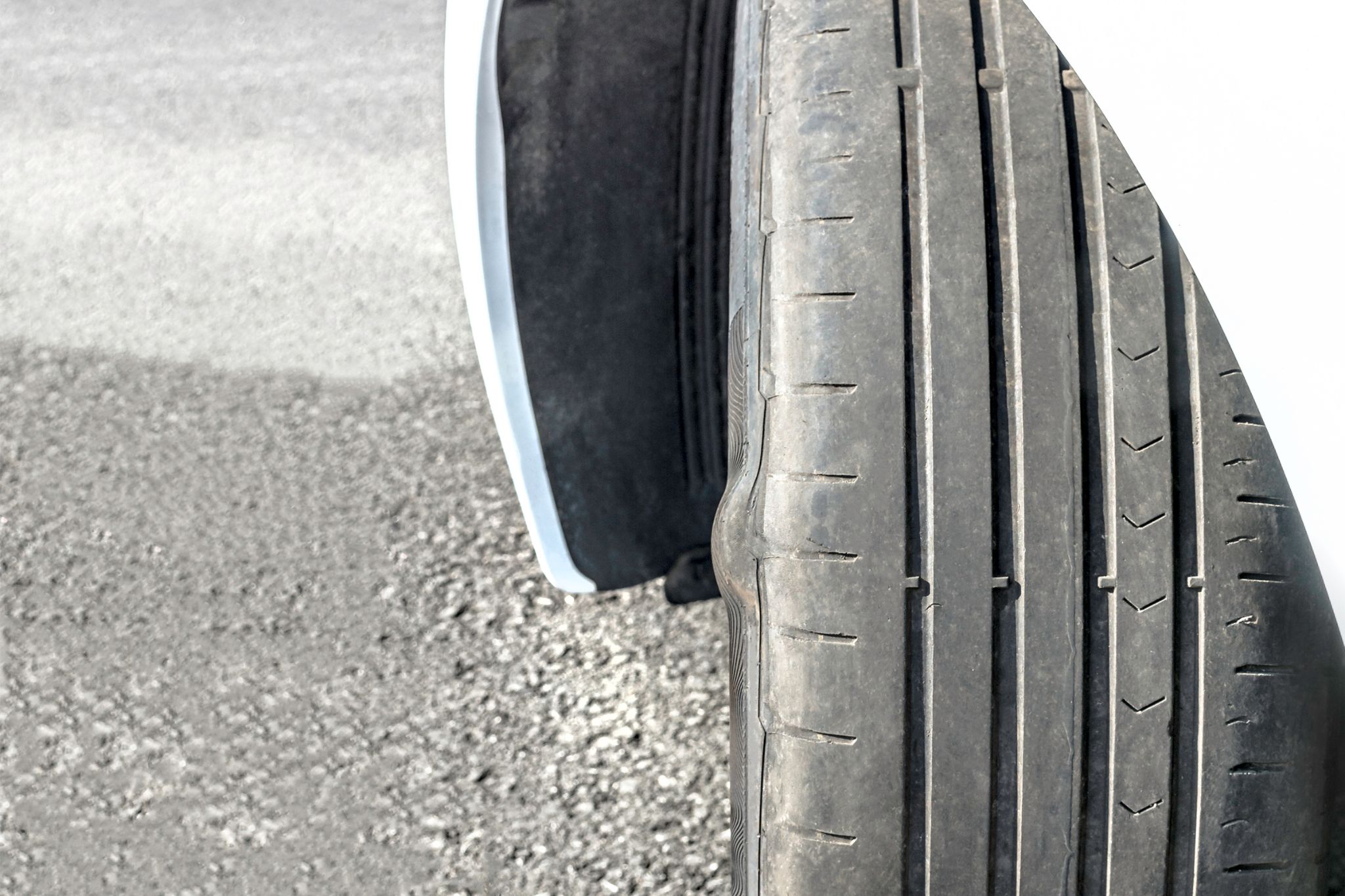
Tires are regularly exposed to very severe stress and pressures, such that one needs to keep checking up on them, just in case constantly. They commonly developed faults in the event of hitting an obstacle on the road, such as pot-holes. They get damaged also due to tire separation from the rim or sidewall ripples too. Sometimes, a weakened focus may appear as a sort of knot or bubble on the side of the tire or its sidewall. What happens when you see this bulge or bubble? Can you still drive the tire like that? How long can you drive with a bulge in your tire? or rather, How long can you drive with a bubble in your tire? Let’s find out! How Long Can I drive with A Knot In My Tire? You can drive for zero miles on a tire with a knot. This implies that,  under no circumstance, should you drive with a bulge or knot in your tire. Doing this is potentially very dangerous. In fact, you are not recommended to drive for even the shortest distance possible on bulging tires, not even to where you will get them replaced. In extreme circumstances, you may drive with it onto the back of a tow truck. Though, even that is not advised at all. How Long can i Drive With a Bulge in My Tire A tire bulge or tire bubble is basically the same as a tire knot. These are formed as a result of a weakened tire sidewall – an indication that the internal structure of your tires has been compromised. It’s important to have this checked out as soon as possible by an expert to prevent any sort of further damage to your tires and or your vehicle. But, how long exactly can you drive your car with a bulged tire? Well, It’s not recommended to drive with a bulge in your tires – it can lead to serious safety hazards and should be avoided completely. The driving distance should be zero miles – meaning you should have your tire checked and replaced before proceeding with the rest of your journey. Can I drive with a knot in my tire? You must not drive with a knot in your tire. In fact, the seriousness of the issue is such that you are not advised to drive on a knotted tire to even the nearest mechanic. A tire with a knot in it is a disaster waiting to happen. This is usually because such a tire has its structural integrity compromised, due to which it can blow out at any time. So, desist from running on knotted tires, no matter how small the knot may be. Is it safe to drive on a tire with a knot? No, it is not. Not safe in the least. Any tire with a knot in it is simply a sitting bomb waiting to detonate. This is particularly so knowing that such a tire can blow out any second, with severe or even fatal consequences to you and other road users as well, not to mention potential damage to the vehicle also. How far can you drive with a knot in your tire? You can drive for as long as zero miles with a bubble or knot in your tire. To drive a car with a knot or bubble in its tire is simply to invite trouble. For one, a tire with a knot in it can blow up at any time with possibly very serious consequences. (Read Also: Will LandCruiser Wheel Fit Hilux?) For this reason, you are not at all advised to drive it for any distance even to the nearest place where you can get it fixed. As a result, the moment you are lucky to notice such a knot, park it at a safe place away from other vehicles and make arrangements for the replacement of the affected tire immediately. In the alternative, if you have a truck at hand that can carry it, you may at least drive it onto the bed of the truck. That is the longest permissible distance you can drive it. How long will a tire with a knot last? It does not matter at all how long a tire with a knot lasts or how good-looking it may appear to any visual inspection. So long as the tire has a knot in it, such a tire is summarily useless, for your sake and that of all other road users. So, as far as you are concerned, a knotted tire has lasted its entire lifespan as a tire. It is no longer of any motorable importance, or it doesn’t exist. How can I remove a knot in my tire? There is absolutely no need to attempt the removal of a knot in a tire. Whenever any tire develops a knot in it, the structural integrity and safe use of the tire are totally compromised. That the tire has lost its structural integrity simply implies that it cannot be trusted to function safely anymore. Despite the risks in doing this, some people are known to make attempts at using either thin metallic wires or strengthened threads to sew up the site of the bulge or knot. This is against all traffic regulations which can even cause you a fine for a traffic violation in some places. Therefore, the moment you notice any tire knot, your main focus should be on how to get the tire replaced and nothing else. (Read Also: Can Tire Shine Damage Paint?) How do you fix a tire knot? A tire knot is just not fixable. Fixing it no matter how crafty done is at best a risky enterprise. Therefore, never resort to any tire repairs in such instances. It is more so where the tire knot is in the sidewall of the tire since the sidewall is the most vulnerable part of any tire. To worsen matters, the tire sidewall does not have any metallic … Read more

[EXPLAINED] Can I Use Fix A Flat For A Slow Leak?

Can I Use Fix A Flat For A Slow Leak

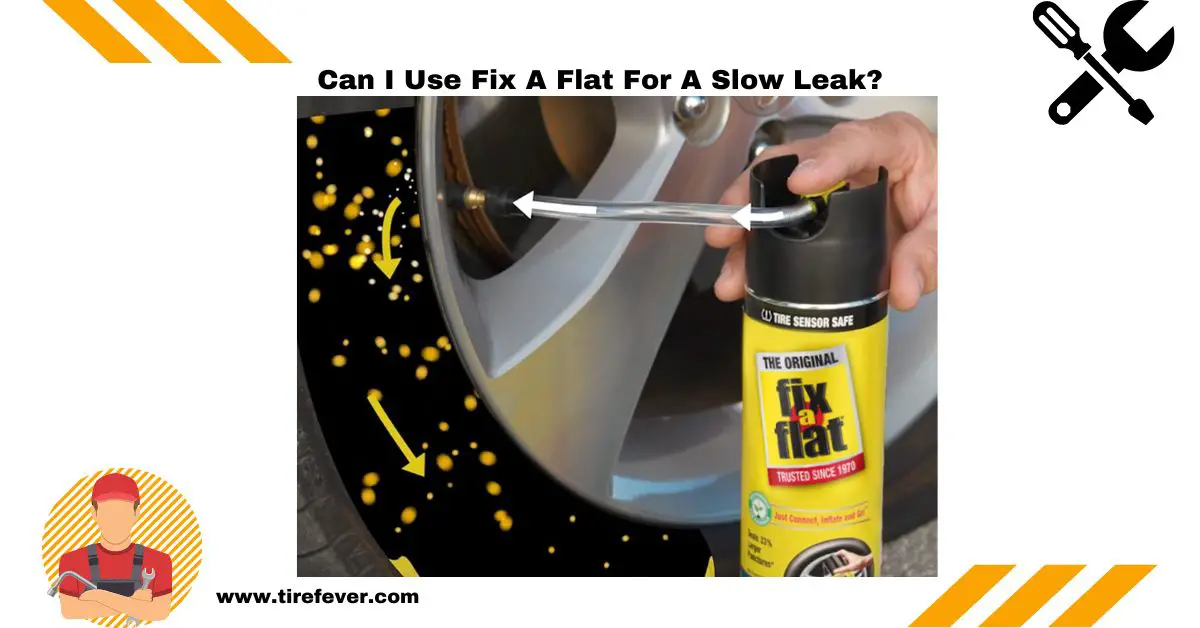
Not all cars come with spare tires and in the event of getting a flat tire, particularly at odd places and times, the services of a tow truck may be a little too expensive which is something akin to a dilemma indeed. Certainly, considering the unfriendly odds stacked against you, a quick tire puncture sealant may be your best option. However, it is logical to ask whether a tire sealant can mend all sorts of tire blowouts, and if not, then what types does it repair? So, can I use fix a flat for a slow leak? Well, Yes. The Fix a Flat sealant is meant to mend small punctures in tires that leak air slowly when nails or other sharp objects pierce them. These quick-sealing chemicals are used only as temporary solutions that will enable you to drive the vehicle long enough to get to tire repair specialists for more permanent solutions. However, you be should be mindful of some disadvantages associated with fix a flat tire puncture sealants. For instance, these sealing chemicals release gas into your tire along with a goo which may be difficult to remove even by tire specialists during repair work. This goo can also damage a tire beyond any repair. The fix a flat sealant is said to be very unsuitable for cold regions because it can easily get frozen and defrosting it is a difficult adventure. To worsen matters, the frozen fix a flat sealant is quite capable of knocking your wheel out of balance. It is also worthy of mention that there are cars that are provided with what is called a tire pressure monitoring system (TPMS ). Read Also: How Do You Use The Acura Flat Tire Repair Kit? This feature in some vehicle tires will alert you whenever there is any leak in your tire. Tire sealants however are capable of clogging the TPMS by ruining its sensor. Finally, you should also know that fix flat sealants are not recommended for use in motorcycle tires since they are meant for use only with tubeless tires of trucks and cars. All these issues must be given due consideration before using the fix a flat sealant. Is It Safe To Drive On A Tire With A Slow Leak? It is really not advisable to drive on any tire that has got a slow leak since doing that may worsen the leakage to a complete puncture and a flat tire. This must be avoided because a flat tire is a blowout hazard. We all dread tire blowouts because they can make the vehicle lose control and veer off the road thereby putting your life and the lives of other road users in danger too. (Read Also:Do You Put Chains On Trailer Tires?) If you notice that your vehicle tire is gradually deflating or that you have to repeatedly top-up to maintain tire pressure, you may be dealing with a slow leak. Please seek the help of a specialist in tires. Quick ways of finding out whether you have a leaking tire are: By listening to the sound of pressurized air escaping, gently running your hand across the tire to feel the air escaping, and noticing any abnormal temperature rise in the tire since depressurized tires are bound to have a temperature surge which you are bound to feel too. These are very advisable skills since you can’t solve any problem without first identifying it, right? Trending Searches Will Tire Slime Fix A Slow Leak? Slime tire sealants are known to both prevent and also repair flat tires instantly, but do they really fix a slow leak? Yes, they fix a slow leak by coating the inside of the tire or tube at the point of tear. They may however end up corroding the wheels and in addition, the solution they provide to punctures is only temporary at best. Does Fix A Flat Ruin Your Tire? The most appropriate answer to this question is a non-committal ‘yes’ and ‘no’ at the same time, to be candid with you. It is not, they do not ruin tires when you need its services to get you (and your car too) away from a potentially dangerous neighborhood or even a bush. In this situation, fix a flat is not bad or does not ruin tires at all because there is an emergency situation at hand. However, the answer is a ‘yes if you take into account the irreversible damage they do to car tires which may even lead to their total condemnation. In addition, fix a flat sealant can in some instances lead to the damage of even the wheels of your car, and are they also indicted in obstructing the pressure monitoring system(PMS) of vehicles? So, there you are on whether fix flat sealants ruin tires or not. To be on the safe side because of their damaging effects on tires, use them only in extreme emergency situations.(Read Also: Can A Cracked Rim Be Welded?) How to Use Fix a Flat For Slow Leak You already know it’s possible to fix a slow leak using a fix a flat. But how exactly do you use fix a flat for a slow leak? This next section, we’ll cover how to best use a fix a flat for slow leak. Step 1: Get the correct fix a flat for your tire Make sure you are using the correct fix a flat tire depending on our tire size. Here are some of the best fix a flat tire you could go for (Amazon) Step 2: Rotate the puncture to 6 o’clock position You should also get the valve at the same position if possible depending on where exactly the slow leak is coming from. Step 3: Shake the fix a flat vigorously for about 30 seconds You should shake the can vigorously for about 30 sec to allow everything to mix accordingly before being used. Bonus tip: Depending on your tire situation, you may want to release … Read more