[EXPLAINED] Can I Use Fix A Flat For A Slow Leak?
Can I Use Fix A Flat For A Slow Leak

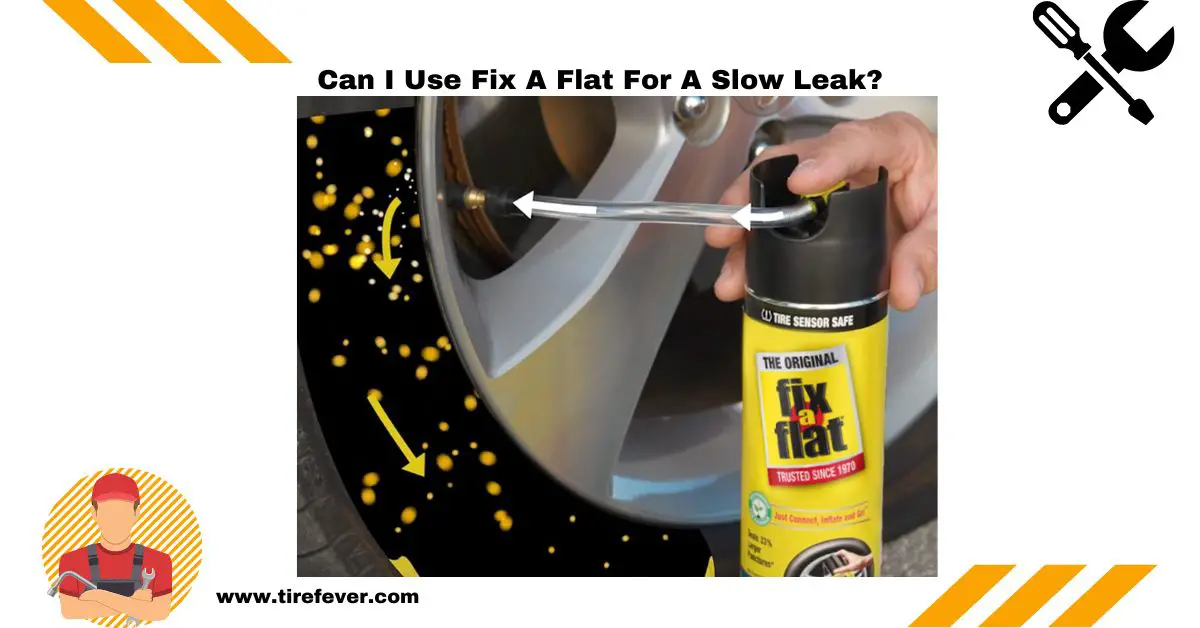
Not all cars come with spare tires and in the event of getting a flat tire, particularly at odd places and times, the services of a tow truck may be a little too expensive which is something akin to a dilemma indeed. Certainly, considering the unfriendly odds stacked against you, a quick tire puncture sealant may be your best option. However, it is logical to ask whether a tire sealant can mend all sorts of tire blowouts, and if not, then what types does it repair? So, can I use fix a flat for a slow leak? Well, Yes. The Fix a Flat sealant is meant to mend small punctures in tires that leak air slowly when nails or other sharp objects pierce them. These quick-sealing chemicals are used only as temporary solutions that will enable you to drive the vehicle long enough to get to tire repair specialists for more permanent solutions. However, you be should be mindful of some disadvantages associated with fix a flat tire puncture sealants. For instance, these sealing chemicals release gas into your tire along with a goo which may be difficult to remove even by tire specialists during repair work. This goo can also damage a tire beyond any repair. The fix a flat sealant is said to be very unsuitable for cold regions because it can easily get frozen and defrosting it is a difficult adventure. To worsen matters, the frozen fix a flat sealant is quite capable of knocking your wheel out of balance. It is also worthy of mention that there are cars that are provided with what is called a tire pressure monitoring system (TPMS ). Read Also: How Do You Use The Acura Flat Tire Repair Kit? This feature in some vehicle tires will alert you whenever there is any leak in your tire. Tire sealants however are capable of clogging the TPMS by ruining its sensor. Finally, you should also know that fix flat sealants are not recommended for use in motorcycle tires since they are meant for use only with tubeless tires of trucks and cars. All these issues must be given due consideration before using the fix a flat sealant. Is It Safe To Drive On A Tire With A Slow Leak? It is really not advisable to drive on any tire that has got a slow leak since doing that may worsen the leakage to a complete puncture and a flat tire. This must be avoided because a flat tire is a blowout hazard. We all dread tire blowouts because they can make the vehicle lose control and veer off the road thereby putting your life and the lives of other road users in danger too. (Read Also:Do You Put Chains On Trailer Tires?) If you notice that your vehicle tire is gradually deflating or that you have to repeatedly top-up to maintain tire pressure, you may be dealing with a slow leak. Please seek the help of a specialist in tires. Quick ways of finding out whether you have a leaking tire are: By listening to the sound of pressurized air escaping, gently running your hand across the tire to feel the air escaping, and noticing any abnormal temperature rise in the tire since depressurized tires are bound to have a temperature surge which you are bound to feel too. These are very advisable skills since you can’t solve any problem without first identifying it, right? Trending Searches Will Tire Slime Fix A Slow Leak? Slime tire sealants are known to both prevent and also repair flat tires instantly, but do they really fix a slow leak? Yes, they fix a slow leak by coating the inside of the tire or tube at the point of tear. They may however end up corroding the wheels and in addition, the solution they provide to punctures is only temporary at best. Does Fix A Flat Ruin Your Tire? The most appropriate answer to this question is a non-committal ‘yes’ and ‘no’ at the same time, to be candid with you. It is not, they do not ruin tires when you need its services to get you (and your car too) away from a potentially dangerous neighborhood or even a bush. In this situation, fix a flat is not bad or does not ruin tires at all because there is an emergency situation at hand. However, the answer is a ‘yes if you take into account the irreversible damage they do to car tires which may even lead to their total condemnation. In addition, fix a flat sealant can in some instances lead to the damage of even the wheels of your car, and are they also indicted in obstructing the pressure monitoring system(PMS) of vehicles? So, there you are on whether fix flat sealants ruin tires or not. To be on the safe side because of their damaging effects on tires, use them only in extreme emergency situations.(Read Also: Can A Cracked Rim Be Welded?) How to Use Fix a Flat For Slow Leak You already know it’s possible to fix a slow leak using a fix a flat. But how exactly do you use fix a flat for a slow leak? This next section, we’ll cover how to best use a fix a flat for slow leak. Step 1: Get the correct fix a flat for your tire Make sure you are using the correct fix a flat tire depending on our tire size. Here are some of the best fix a flat tire you could go for (Amazon) Step 2: Rotate the puncture to 6 o’clock position You should also get the valve at the same position if possible depending on where exactly the slow leak is coming from. Step 3: Shake the fix a flat vigorously for about 30 seconds You should shake the can vigorously for about 30 sec to allow everything to mix accordingly before being used. Bonus tip: Depending on your tire situation, you may want to release … Read more

Does Camber Cause Uneven Tire Wear? [Find Out NOW]

Does Camber Cause Uneven Tire Wear? [Find Out NOW]

Does camber cause uneven tire wear? Camber is the angle in degrees from vertical that a tire leans. It is measured as positive camber when the top of the tire leans away from the vehicle, and it is measured as negative camber when the top of the tire leans towards it. The way camber is measured is in reference to a static position where the top of the tire is level. But what happens when you apply a load? Does camber cause uneven tire wear? Well, when the camber angle is not set correctly, it can cause the tires to wear unevenly, with some areas experiencing more wear than others. Keep reading the following article to learn more about how camber can cause uneven tire wear. You May Also Like: Do Wheel Spacers Cause Uneven Tire Wear? [The SHOCKING Truth] Does Camber Cause Uneven Tire Wear? Yes, camber can cause uneven tire wear, with uneven tire wear resulting in tire imbalance, which can harm your vehicle’s handling. Because the tread is cut into different shapes along the tire’s circumference, this gives it an uneven wear pattern. As a result, some parts of the tread on one side of a tire will wear more rapidly than others. And this wears out the treads more quickly than other areas of the tire because they receive less weight and support from the road. This problem becomes more apparent when you have one tire that is significantly different than the other. One of your tires could be wearing faster than your other, leading to uneven tread wear and reduced traction. Resulting in difficulty handling your vehicle when traveling at higher speeds because one side of your vehicle is not getting proper support from its tires. And this can lead to an accident and serious personal injury. Does Camber Affect Tire Wear? Yes, camber affects tire wear by causing uneven wear because it prevents the tires from wearing evenly on their entire surface. This uneven wear can cause your vehicle to handle poorly, especially when driving through corners at higher speeds. This leads to uneven wear patterns of the tire tread, with some parts of the tire receiving less weight and support from the road. This happens when your car’s suspension is set up improperly, causing one end to be higher or lower than the other side and causing one wheel to be closer or farther away from its original position relative to a static position. This misaligned position causes one side of the tire to receive less weight and support from the road than the other, resulting in more wear on one side of the tire versus the other. This uneven wear causes your tires to become out of balance. It places undue stress on your car’s suspension, resulting in abnormal tire wear, poor handling, faulty steering, braking, and acceleration. Does Camber Wear Tires Faster? No, camber does not cause tires to wear faster. The speed at which your tires wear depends solely on how hard you drive and how long you have been driving. This is because the force of the weight on each tire varies with speed, and this force acts equally on both sides of the tire. This means that even if you were driving at equal speeds or distances from a standstill, each wheel would bear a different amount of weight concerning its inertia (weight versus friction). This leads to uneven weight distribution, which causes uneven tire wear. When the bottom of the tire leans more than the top, the camber can cause uneven wear and poor handling. Negative Camber Tire Wear Negative camber refers to a situation where the inside of a tire wears first and the outside wears last. Because the road supports the inner side less, it wears faster than the outer side. Negative camber is caused when a tire’s outside edge is tilted inward. In this situation, your vehicle has more mechanical support on one end than another, leading to uneven wear on each end of the tire. This can especially occur as your tires wear at different rates, causing one to wear more quickly than the other.  When your vehicle has negative camber, more stress is placed on the outside of your tires than the inside, which causes these tires to wear faster. How To Fix The Negative Camber The vehicle’s suspension system must be adjusted to fix the negative camber. This may involve installing adjustable control arms, camber plates, or other components for more precise alignment.  Here are some steps to fix negative camber: It is important to note that fixing the camber should be done by a professional mechanic with experience in alignment and suspension work. Improperly adjusted camber can affect handling and cause excessive tire wear, which can be dangerous while driving. Conclusion Negative camber results from poor design when creating the vehicle’s suspension system. It occurs when one end of a tire is supported less than the other side. This imbalance stresses your vehicle’s suspension, causing abnormal tire wear and poor handling at higher speeds. Poor handling increases your risk of an accident and can cause serious personal injury. It is important to have your vehicle’s suspension professionally aligned by a professional mechanic to improve your car or truck’s handling, braking, and acceleration ability.

Do Wheel Spacers Cause Uneven Tire Wear? [The SHOCKING Truth]

Do Wheel Spacers Cause Uneven Tire Wear? [The SHOCKING Truth]

Do wheel spacers cause uneven tire wear? Wheel spacers are known to accelerate the wear of various suspension components such as the hubs, bearings, and axles. That’s why it’s normal for one to assume that wheel spacers might also lead to uneven tire wear.  This has been a hot topic of debate amongst car owners for years. That’s why we have taken the initiative to offer a detailed answer on whether wheel spacers can cause uneven tire wear. Keep on reading to learn more about how this aftermarket part can affect your car.  Also Read: Can You Remount Tire That Wear Uneven? [The ULTIMATE Truth] Do Wheel Spacers Cause Uneven Tire Wear?  The good news is that wheel spacers do not cause uneven tire wear. What you have to understand is that wheel spacers extend the track width. They do not hold up the weight of the vehicle despite being installed between the wheel and hub. As a result, they have no influence over tire wear.  After installing wheel spacers, uneven tire wear will occur if your car has poor alignment or a faulty suspension. Provided your wheels were correctly aligned before the installation of wheel spacers, you have got nothing to worry about.  However, there is something you need to take note of. Wheel spacers tend to put much pressure on bearings. When the bearings start to wear out, this can throw off your alignment leading to uneven tire wear. Therefore, even if wheel spacers don’t directly cause uneven tire wear. The impact they have on bearings can lead to a similar result.  So, if you have noticed signs of uneven tire wear, you should explore other culprits other than wheel spacers. A visit to an expert mechanic can provide a more detailed diagnosis about what’s causing your tires to wear out unevenly.  Do Wheel Spacers Cause Wear?  At the beginning of this article, we mentioned that wheel spacers can accelerate the wear of various suspension components. One of the parts that often takes a significant amount of force from wheel spacers is the bearing. The main purpose of a bearing is to facilitate the smooth rotation of wheels. If you add a wheel spacer, it boosts the rolling resistance of the bearing, thus causing it to wear out faster.  The other part that also experiences wear due to wheel spacers is the hub. During manufacture, the hub of your car was designed to a specific length. When you add a spacer, the hub has to overwork itself so as to support the extra part. Eventually, wheel spacers lead to premature wear of the hub.  That’s not all. Apart from the hub and bearings, the axles also feel the extra force added by the spacers. Therefore, it may also get worn out sooner than anticipated. Even if wheel spacers may not lead to uneven tire wear, you can expect parts of your suspension such as the bearings, hubs, and axles to take a beating from this aftermarket part.  Pros and Cons of Wheel Spacers  After reading about what wheel spacers can do to your suspension, you may have second thoughts about it. Wheel spacers have both pros and cons. Before installing them, it’s a good idea to go through both and figure out whether they are right for you and your vehicle.  Pros of Wheel Spacers •    They give your car a better-looking stance: One of the reasons wheel spacers are popular among car enthusiasts is that they push your wheels outwards. This makes it look more aggressive and stylish. •    They improve your car’s handling: By increasing your car’s track, wheel spacers significantly boost the handling. This is why they are so common in race cars. •    Wheel spacers allow you to fit bigger wheels: If you have always fantasized about having bigger wheels but your wells are too small, spacers can make it easier for you to fit them. Apart from wheels, spacers also make it possible for you to fit other aftermarket suspension components like brakes.  Cons of Wheel Spacers •    It alters your car’s steering: As the track width changes, you can expect the fender-well clearance and scrub radius to change. This can impact the car’s steering behavior. •    Wheel spacers accelerate wear to various parts: The most obvious drawback of wheel spacers is that they will damage your bearings, hubs, and axles.  Do Wheel Spacers Cause Problems?  There are reasons why wheel spacers are considered a dangerous addition to a car. Even though they come with some benefits, wheel spacers can cause a couple of problems.  Did you know that wheel spacers can affect ride quality? When your manufacturer was creating the wheel hub, they didn’t envision the addition of a spacer. So, when you add one, it throws the car’s suspension out of balance and this can lower ride quality.  The other problem with wheel spacers is that they can increase steering effort. You will need to use a lot of energy to steer your car at lower speeds. That’s because spacers increase the angle of the steering axis. This problem can however be bypassed in cars that have power steering.  There is also an added safety risk when you install wheel spacers. The cheaper options that are made out of cast aluminum can come out when you are driving. This might lead to an accident. Also, when you fit wheel spacers, your tire shop may forego the warranty for their services.  The last problem that we simply can’t overlook is the accelerated wear to suspension components. When you decide to use wheel spacers, prepare to replace bearings and hubs more frequently than you would have. This translates to more maintenance costs. Don’t forget that wheel spacers are installed on all four tires. Therefore, accelerated wear will happen on both axles and each hub or bearing.  Conclusion  If you were wondering – do wheel spacers cause uneven tire wear? The above guide should clear all your doubts. Therefore, you should embark on a journey to figure … Read more

Will Alignment Fix Uneven Tire Wear? [+ 3 SHOCKING Signs]

Will Alignment Fix Uneven Tire Wear? [+ 3 SHOCKING Signs]

Have you noticed uneven wear on your tires? It’s a common problem that many drivers face. Will alignment fix uneven tire wear? You may find that your tires are wearing down on one side of the tread more quickly than the other. While wheel alignment can improve tire wear, it may not be a one-size-fits-all solution for every case of uneven tire wear. Regular maintenance checks and consultations with professionals can help keep your vehicle running smoothly and prevent costly repairs in the future. Uneven tire wear can affect your car’s performance and reduce the lifespan of your tires, leading to more frequent replacements. If you have been experiencing uneven tire wear, wheel alignment should be considered part of your maintenance routine. Aligning your wheels can help ensure that the tires can grip the road efficiently and are not wearing down prematurely. Read on to learn more. Also Read: Does Camber Cause Uneven Tire Wear? [Find Out NOW] Will Alignment Fix Uneven Tire Wear? Yes, alignment can fix uneven tire wear. Getting your wheels aligned by a professional mechanic can help correct any misalignment issues and prevent further uneven tire wear. It would be best to get your alignment checked every 6 months or 6,000 miles to ensure optimal performance and longevity of your tires. Uneven tire wear is a common problem when the tires are not wearing evenly across the tread. This can be caused by several factors, including improper inflation, worn suspension components, and, most commonly, misaligned wheels. When your wheels are out of alignment, they are not pointing in the same direction as each other or as the vehicle’s centerline. This causes your tires to wear unevenly and prematurely. A wheel alignment adjusts the angles of your wheels to ensure they are all pointing in the same direction and perpendicular to the ground. An alignment service can correct this issue if misaligned wheels are causing your tires to wear unevenly. During an alignment service, a technician will adjust your wheels’ camber, caster, and toe angles to ensure they are within manufacturer specifications. This will help distribute weight evenly across all four tires and prevent premature wear. It is important to note that if your tires are already severely worn or damaged due to improper maintenance or neglect, an alignment service may not be enough to fix the issue. In this case, you may need to replace your tires before having an alignment performed. Does Alignment Help With Tire Wear? Wheel alignment is an essential aspect of vehicle maintenance that helps to ensure optimal performance and safety. One of the benefits of proper wheel alignment is improved tire wear. Misaligned wheels can cause uneven tire wear, leading to premature tire failure and the need for costly replacements. When your vehicle’s wheels are not aligned correctly, they can pull against each other, causing uneven wear on the tires. This can result in bald spots or cupping on the tread, which can be dangerous when driving in wet or slippery conditions. Proper wheel alignment ensures that all four tires make even contact with the road surface, reducing the risk of uneven wear and extending lifespan. In addition to improving tire wear, proper wheel alignment has other benefits. It can improve fuel efficiency by reducing rolling resistance and making steering more responsive and easier. It also helps to prevent unnecessary strain on your vehicle’s suspension system, which can lead to costly repairs down the line. Overall, regular wheel alignments are a simple yet effective way to keep your vehicle running smoothly and safely while maximizing the lifespan of your tires. How to Fix Uneven Tire Wear Various factors, including improper inflation, misalignment, and worn suspension components, can cause uneven tire wear. Not only can this issue compromise the safety of your vehicle, but it can also lead to premature tire failure and costly repairs. Fortunately, fixing uneven tire wear is often a simple process that you can do yourself. Here are steps on how to fix uneven tire wear: Step 1 – Check Your Tire Pressure One of the most common causes of uneven tire wear is improper inflation. When your tires are overinflated or underinflated, they will wear unevenly and may even develop bald spots. To avoid this issue, regularly check your tire pressure using a quality gauge and adjust it according to the manufacturer’s recommendations. Step 2 – Get Your Vehicle Aligned If your tires are wearing unevenly despite proper inflation, it may be time to get an alignment. Misaligned wheels can cause excessive wear on one side of the tire, affecting handling and fuel efficiency. A professional alignment typically involves adjusting each wheel’s camber, caster, and toe angles to ensure that they are all parallel and pointing in the right direction. Step 3 – Replace Worn Suspension Components Occasionally, uneven tire wear may be caused by worn suspension components such as shocks or struts. These parts are critical in keeping your tires in contact with the road and absorbing bumps for a smooth ride. If you notice that your vehicle is bouncing excessively or handling poorly, in addition to uneven tire wear, it’s essential to have these components inspected and replaced as needed. What Are The Signs That You Need a Wheel Alignment? Wheel alignment is an essential aspect of car maintenance that helps ensure the vehicle’s stability, fuel efficiency, and tire lifespan. However, many drivers overlook this issue until it becomes a significant problem. What are the signs that you need a wheel alignment? Uneven Tread Wear One of the most noticeable signs of misaligned wheels is uneven tread wear on your tires. If you notice that one side of the tire has more wear, it may indicate that your wheels are not aligned correctly. This problem can be caused by several factors, such as hitting a curb or pothole or driving on rough terrain. Vehicle Pulling to One Side If you feel like your car is pulling to one side while driving straight, it could … Read more

Can You Remount Tire That Wear Uneven? [The ULTIMATE Truth]

Can You Remount Tire That Wear Uneven? [The ULTIMATE Truth]

Can you remount tire that wear uneven? It’s tempting to want to remount a tire with uneven wear, especially if it’s still new. But is this acceptable? Uneven tire wear is a common problem that’s caused by a wide range of factors. Once you fix these factors, the problem usually stops immediately. However, what should you do with the tires? Can you remount tire that wear uneven? The tires are a crucial component of your car. That is why your vehicle should always be equipped with tires that are in perfect condition. In today’s post, we will provide an in-depth answer on whether it’s advisable to remount tires with uneven wear. You May Also Like: Can Uneven Tire Wear Cause Wobble? [The SURPRISING Truth] Can You Remount Tire that Wear Uneven?  This is completely unacceptable! When uneven wear occurs on a tire, the rubber on the surface gets stripped away. And this is an irreversible process. Therefore, the tire is no longer usable. Remounting a tire with uneven wear is dangerous, and risky, and it can get you on the wrong side of the law.  A tire with uneven wear is highly vulnerable to blowouts. Can you picture how risky this is when you are driving at high speeds? It doesn’t matter even if it’s only one tire that has uneven wear. You should refrain from remounting it. A tire with uneven wear can affect acceleration, handling, and braking. Therefore, it’s very dangerous for you and other motorists.  Understandably, if your tires were relatively new and one or two of them have experienced uneven wear, you may feel reluctant towards replacing them with new ones. But at the end of the day, you need to prioritize your safety.  If you think that the uneven wear on your tires is minimal. Before remounting them, schedule a consultation with your mechanic. They can gauge the severity of the problem and offer professional advice on whether you should or shouldn’t remount them. But chances are, as long as your tires have uneven wear, you will get similar advice to the one posted above.  Can You Remount Tires?  Of course, you can remount tires as long as they are in good condition. Many car owners usually have a set of tires lying around in their garages. Sometimes, when one of your tires gets a puncture, you can dismount and remount another tire. This is quite convenient because it allows you to continue driving without having to stop and repair the punctured one.  When it comes to remounting tires, you should also avoid overdoing it. The more frequently you remount a tire, the higher the chance of damaging the rim and the tire itself. Therefore, don’t make a habit out of remounting tires every now and then.  Remounting tires is a relatively easy process. You only need a lubricant and a pry bar to remount a tire by hand. Alternatively, if you have access to a tire mounting machine, the process is even easier. You can also take your tire for remounting at a nearby mechanic shop. It’s important to keep in mind that expert mechanics will not remount tires with uneven wear or severe damage. They will advise you to replace it.  Will Uneven Tire Wear Even Out?  It’s impossible for uneven tire wear to even out. This process is irreversible. When uneven tire wear occurs, the rubber or treads on the surface get completely eaten away. Unless you are a magician, there is no way you can replace the worn-out rubber. This is why tires that have unevenly worn out are usually discarded and replaced with new ones.  If you have a tire that has uneven wear, don’t remount it hoping that one day it will even out. That is not going to happen. On the contrary, if you haven’t fixed the underlying cause, the uneven wear will continue to be more severe which can result in total damage to the wheel.  Instead of waiting for something that will never happen, there are a couple of creative ways you can use worn-out tires. You can make a bed for your furry friend. Or you can create an outdoor chair for your kids to play with. There are plenty of interesting ways you can reuse tires that have unevenly worn out.  Should You Replace Tires with Uneven Wear?  If you spot signs of uneven wear on your tires, you should replace them as soon as possible. To emphasize what we have been discussing in this article, uneven tire wear is a problem whose best solution is immediate replacement. If you continue using tires with uneven wear or you remount them, the problem will only worsen and it can eventually lead to blowouts.  When tires are worn out unevenly, your car will experience other symptoms such as vibrations and unusual noises. These are all signs that are nudging you towards replacing worn-out tires. When replacing your tires, always choose those that have the same size, speed rating, load capacity, and other manufacturer recommendations.  For many car owners, the thought of replacing tires is usually scary because tires are quite expensive these days. However, when you consider the dangers associated with driving a car with unevenly worn-out tires, it’s worth spending every cent on a new tire that will ensure safe driving.  Dangers of Driving with Uneven Tires  It’s alarming how motorists aren’t afraid of driving with uneven tires. A tire with uneven wear poses many dangers on the road for you, other motorists, and pedestrians. Here are some of the risks you may take when driving a car with uneven tires;  Conclusion  Considering how dangerous uneven tire wear is, the last thing on your mind should be remounting such a tire to your car. Doing so puts you and your passengers at a higher risk of getting into an accident. Therefore, if you have a couple of tires with uneven wear, get rid of them or find other uses outside your vehicle.  We hope our … Read more