Can I Pump A Car Tire With A Bike Pump?
Can i pump a car tire with a bike pump

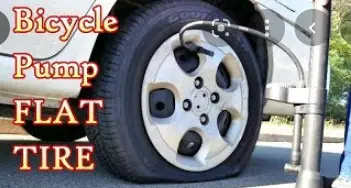
The tires of any vehicle are bound to get flat once in a while for different reasons whether they have a puncture in them or not. This can be a very frustrating experience, particularly if you are unfortunate enough to get it at odd locations or times. As a result, we should have options readily available through which we can repair the tires and re-inflate them. If you get a flat in the middle of nowhere, your most pressing concern is to reinflate your tire and move away from any possible harm. How do we do this, and what do we really need to satisfy this want? These questions and many others similar shall be discussed in the article. Can I pump a car tire with a bike pump? Of course YES, much as many people may be unaware and possibly even surprised, car tires can be conveniently reinflated with a bicycle pump. Though bicycle pumps that usually come with a Presta valve, which has a thin, treaded metal cylinder at the end won’t work for car tires. To be able to inflate a car tire with a bicycle pump, you need a Schrader valve and possibly many pumps with Presta valves to do it. Can a bike pump be used on a car? Yes, a bicycle pump can be used on a car tire, though there are some bicycle pumps you cannot use for this purpose. In order to inflate a car tire with a bicycle pump, park the car on a clear and flat surface before you remove the valve caps. Then, clean the valve of any dirt or grime before pressing the opening of the tire gauge to the top of the stem valve. Push it in firmly until the hiss of escaping air comes to a halt. Now, take a look at the mark that is closest to the end of the pressure gauge itself, in order to determine the pressure. Finally, determine how far below the required PSI your tire pressure is. This will give you an idea of how much pressure to allow into your tire. Continue pumping until you get to exactly the PSI value that you want. How long will it take for a bike pump to pump a car tire? After taking everything into consideration, it does not last more than an average of about 1 to 2 minutes to inflate a car tire with a bicycle pump. This is primarily because bike pumps when used for prolonged periods are capable of overheating and cracking due to the long time it usually takes to pump a car tire. How much PSI can a bike pump produce? Generally, bicycle pumps can produce between 60 to 70 PSI, if they are good ones. However, there are different kinds of bicycle pumps in use.(Read Also:Hankook Vantra Vs Goodyear Endurance(Which Is Better) Most notable or popular among them is the floor standing hand-operated bike pump, which is used for charging air guns that can get to about 4000 PSI( pound per square inch). Why don’t people hand pump their tires? Mostly, people are not disposed to hand pumping their car tires because hand pumps can only move as much air as their pistons allow, which are usually small. Pistons can be made bigger in them since the pressure is comparatively lower. So, a tiny bicycle pump with a small piston is actually wrong in pumping a car tire, and the exercise is likely to take a long time before completion. In addition, it takes a lot of motion too, which is very strenuous as well. How fast can I pump car tires with a bike pump? How fast you can pump a car tire with a bike pump depends basically on you and the efficiency or make of the pump. For instance, some pumps are smoother and faster to operate than others due to the smoothness or lubrication of their parts. Secondly, it also depends on your physical prowess in moving the pump more rapidly to accomplish the task in as short a time as possible. However, you should know that the faster you move the pump, the more its temperature rises too, and you don’t want to make it too hot, do you? All in all, pumping a car tire with a bike pump should not take more than say between 1 to 2 minutes at most. Trending Searches How To Prove Someone Slashed Your Tires Can Bike Tires Pop?Find Out Now How Long Can You Ride On A Patched Bike Tire? How do you inflate a car tire without a pump? There are several ways you can inflate a car tire without a pump, but the article will explain one of the easiest and most effective. The method involves the use of an air compressor. You have to always have a portable air compressor in your trunk, just in case. To use this method is actually best done by executing the following steps: Step 1 First, check your tire air pressure using a simple digital pressure gauge meant for this purpose. This will enable you to know the additional pressure your tire needs. It is better to check when your tire is cool because if it is hot, the temperature is likely to increase. Usually, 32 to 35 PSI is the standard for passenger cars. Step 2 Open the valve cap before pressing the pressure gauge, and wait for it to show the pressure. Then, note the additional pressure your tire needs. Step 3 Also, check the oil level and other parts to ensure they are working well before using the air compressor. Turn it on and let it gather enough air. Step 4 While inflating the tire, continue tracking the pressure so that you don’t overinflate the tire, and if you do so, press the tire gauge downwards to release any excess air. Thereafter, disconnect the hose after you are done and screw on on the valve cap. That’s it. Is … Read more
Can Bike Tires Pop?Find Out Now

Can bike tires pop

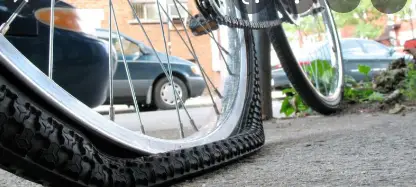
Tires are liable to go flat or pop regardless of the type of vehicle they are used with. The only consolation is that you can use and manage them properly in order to maximize how long you can use them. They usually pop from any such problems like worn out sidewalls, going over sharp objects like nails, bottles, or even thorns. Sometimes, they can pop also due to the degrading effects of acidic chemicals, such as poor quality tire shines or prolonged exposure in the scorching sun, and overinflation beyond the required PSI recommended by their manufacturers.  Can bike tires pop? Yes, bicycle tires, like those of other vehicles, can and often do pop too. As expected, bicycle tires pop usually from weak spots they might have developed, the presence of nails, thorns and pieces of broken bottles on the road too. Other common causes of bike tire popping are weak points anywhere on their surfaces, overinflation, limitations in cost and weight, or even bad internal tubes. So, yes, bike tires do pop like any other kind of tire. Can bike tires pop from too much air? Definitely, bike tires do pop from overinflation with air in excess of what is actually recommended. The user manual of any bike, or other vehicles for that matter, gives the exact volume of air that must be pumped into it. If you go beyond this limit, you are risking the possibility of your tire popping along the way. In order to prevent his from happening, it is highly imperative that you use a tire pressure gauge, whenever you are inflating your bike tires, because if you don’t, you may exceed the permitted limit without really knowing that you have. So, inflate your tires with due reference to your pressure monitor, or else you risk them popping unexpectedly. Trending searches How To Give Someone A Flat Tire Without Them Knowing How To Pop A Tire Back On The Rim With Fire Like A Pro Can You Pop A Tire With A Knife? Find Out Now Do bike tires pop easily? Usually, whenever tires pop, they do so due to a fault somewhere in them. In essence, though bike tires have limitations in weight, they are so designed like all other tires, to withstand the kind of strain they will be subjected to and also the weights they are meant to bear. If you consider their resilience against all these stresses, you will understand that, unless you contravene their normal uses and carrying capacities, they can be as reliable as any other. In summary, bike tires do not pop easily if you do not subject them to more weight and stress than is beyond their capacities. Why do my tires keep popping? If your tires keep popping, then obviously there’s something you’re doing wrongly. One, you might have been inflating them beyond their recommended capacities, such that the only response by the tire to relieve itself of the excessive burden is to pop. Or again, your tires can keep popping if they are old, overused, and totally worn out, particularly at their most vulnerable foci, the sidewalls. If this is the case, your only and most reliable option is to replace the tires promptly and do away with the menace, for it is indeed a menace. Your tires can also pop regularly if you subject them to loads or weights beyond their official carrying capacities. In this instance, reduce the weight you carry on them. When you hit or bump into hard objects in your path as you ride along, you stand a pretty good chance of getting repeated visits by tire popping too. Finally, tires pop regularly whenever they are gradually degraded by continued exposure to sunlight in the day, particularly in temperate climes. So, watch carefully where you park your bike also. We can go on and on, but the reasons given so far should give you enough heads up with regards to why your tires pop often. How do I stop my tire from popping? Tires always pop for a reason. One, you can guard against your tires popping if you do not use corrosive shines on them after washing or washing them with cleaning agents that are not recommended by the manufacturers. The user manual will help you with information on the correct cleaning substances to use on your tires. They can also pop when they have weak spots on them. Therefore, if you notice any bulging due to the weakening of their rubber, make sure that you change them before they pop. Never carry weight in excess of that recommended by the manufacturers. Here again, the user manual can help you with the correct weights to carry on your bike that will not constitute any threat to your tires. Finally, bike tires commonly pop when you hit them against hard obstacles while in motion. Mountain bikers know this all too well. So, they always avoid objects in their path whenever they go mountain biking. There are yet other causes of bike tires popping, but those mentioned here are some of the commonest. How hard should a bike tire feel? When a bike tire is properly inflated, it is bound to feel firm, and you will also observe that the pump becomes very difficult to work. All properly inflated bike tires conform to bumps, gallops, and any corrugated terrains, and they also absorb any shocks that may arise thereof. About 100 PSI of bike tire pressure feels simply great on paved roads, but not on rough grounds. However, 90 PSI will enable the bike to move faster on rough roads. In wet conditions, you are allowed to run as low as just 10 PSI or even less,  for example. How often should I fill up bike tires? Most importantly, you are supposed to reinflate your bike tires at least once every two weeks or so. However, it can take longer or even shorter than that, depending on the status of … Read more

Will Water In A Tire Evaporate?Find Out Now

Will water in a tire evaporate

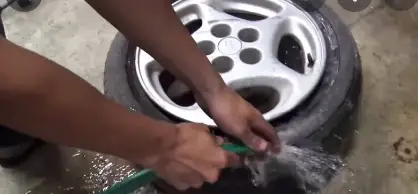
Naturally, water evaporates when its temperature rises and recondenses whenever it falls. Despite these properties, it may be necessary to ask whether water actually evaporates in tires, particularly since water is said to be insoluble with rubber. This is in addition to the fact that, however you try, you cannot prevent water from getting into your tires, one way or another. Consequently, we may want to know what happens to the water in vehicle tires. Will Water In A Tire Evaporate? Yes, water in tires actually evaporates whenever the temperature rises and condense again when the temperature falls. When the water in tires evaporates, it takes air along with it, which is one of the reasons why tires deflate even without a puncture in them. Though water has a very important role it plays in tires since it is said to increase vehicle traction with the road by giving it more stability even against very strong forces on it. Despite this, water in tires still causes a gradual, but assured,  deflation of the tires. Can tire absorb water? No, tires do not readily absorb water. However, water can easily turn to vapour when the temperature is high like in the day, and reconverts to water again at night when the temperature falls. If it turns to water vapour, it carries air along with it, since oxygen, for instance, is soluble in water. This combination of water vapour and the oxygen dissolved in it can effectively escape from the tire through any of the several avenues, such as the valves, but water does not get absorbed by tires. How does water get inside tires? Water can get into your tires through any of several routes. First, it can get access to your tires through a malfunctioning tire valve and its cap. Second, water can seep into your tires while working on it to fix a puncture or other malfunctions. Third, it is also very possible to get water into your tires where they have a small hole or puncture in them. Fourth, water can access your tires if you are constantly plying water logged terrains with the tires remaining in water for hours on end, whether they have a hole in them or not. Finally, air and water form a very good mixture since oxygen readily dissolves in it. Therefore, when you inflate your vehicle tires, chances are pretty very high for the air to contain water. When this happens, water has already gotten access into your tire. One way or another, there will always be water in vehicle tires. Consequently, we must acquaint ourselves with how to remove it efficiently, for obvious reasons. How do you get the moisture out of tires? It is very well known that water causes problems in vehicle tires if it eventually gets in there. This is occasioned by the cycle of evaporation and condensation that takes place in the tires if water gets in. If your vehicle happens to have a TPMS installed, water in them can destroy the tires, and so, in order to avoid this from happening, you should press the inflater valve for just a few seconds. This action will conversely dispel the water in your tires. Alternatively, you can deflate the tires completely, thereby expelling both the water and air in them. Afterwards, you can re-inflate them to the desired pressure. Though the water in tires is said to improve vehicular traction with the road, it must be eliminated from the tires as it can cause their deflation, though very gradually. What happens if I get water in my tire? If water gets in your tire, the most advisable thing to do is to get rid of it as soon as possible. Failure to do that may lead to repeated cycles of gradual air loss in the affected tire(s) until you eventually get a flat, with its attendant consequences. How you would be able to remove water from your tires has already been explained earlier in this article. It is true that water inside the tire increases vehicular traction with the road. However, whatever advantage this may have will ultimately pale into insignificance, if you place it side by side with the consequences you may suffer if you fail to get rid of the water in your tire.  How to get water out of a tire on its rim? If your goal is to rid water in your tire without necessarily removing it from the rim, you can, if you follow the recommended procedures. The most effective way of doing this is to first, deflate the affected tire completely thereby eliminating both the water and air in the tire. Thereafter, leave the deflated tire to stay like that overnight before you make any effort of putting air in it again. By doing this, you are essentially taking the necessary precaution to ensure the absolute removal of any traces of water in your tire. Trending Searches Can I Use Tire Foam To Clean Engine? Can Tire Rotation Throw Off Alignment?Find Out Can I Use Fix A Flat For A Slow Leak? Can I put water in my tractor tire? You really should, because if you do not, you will not get the traction necessary to balance the tractor. In addition, water in tractor tires increases their weight, which is very vital for the function they perform. Water in tractor tires also maintains the tire pressures. Putting water in tractor tires is called ballasting. There are several substances that can be used in ballasting apart from water, though water remains the most preferred ballasting fluid for different reasons. One, water is cheap, and two, it is always available and present everywhere. Other ballasting fluids are antifreeze, calcium chloride and polyurethane foam. It is worthy of note that, though water is commonly put in tractor tires, you are still not advised to put water in their tires where the temperature is below 32 degrees Fahrenheit or zero degree Celsius. This is because … Read more

Will Snow Chains Damage Rims?Find Out NOw

Will snow chains damage rims

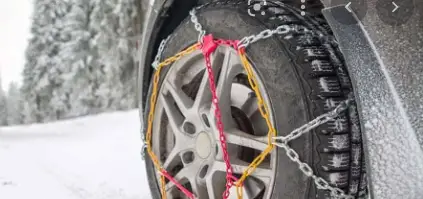
 Snow chains are metallic devices applied to the exterior surfaces of tires in order to improve their traction with the road, basically to give them stability as they navigate difficult terrains, such as snow-covered and muddy roads. Other means are equally used for the same reason, such as winter tires. However, there is the need to know whether these devices have any implications for drivers or their vehicles. This article will, in due course, discuss much of what we should know about snow chains and winter tires, their advantages, side effects, as well as how to use them properly. Snow chains shouldn’t affect your vehicle tires, all things being equal. To start with, you are not supposed to run snow chains unless there is snow or ice on the road, or in cases where the temperature is below 32 degrees Fahrenheit or zero degrees Celcius. These devices do not come cheap, and they are a perfect tool when you are stuck in the mud too. It is recommended that you use front snow chains if your vehicle is a front-wheel drive, rear chains if you have a rear-wheel drive vehicle, or all the tires if your car is an all-wheel drive (AWD). On the issue of whether they can harm tires or not, it all depends on certain things. One, if they are installed properly according to the manufacturer’s instructions, they would neither damage your tires and rims nor either mark them (or cause any damage whatsoever). Second, even when they are installed properly, you are not supposed to drive with them beyond a recommended speed, if you want to protect your tires. You should also know that these chains can harm your tires if they come in contact with the road or any hard surface on it, though in this case, they may damage the road itself instead of your tires. Essentially, therefore, snow chains do not constitute any threat to your tires, unless you do something wrong. They are also equipped with carm chains for the control and adjustments of how well or tight they fit your tires.(Read Also: Can You Check Fuel Pressure With A Tire Gauge?Find Out) Do snow chains damage tires? No, they really don’t damage your tires either, unless you install them wrongly or drive at speeds in excess of that which is adjudged safe, otherwise, you are safe to use them on any snow or mud-covered roads. How do you instal snow chains on your tires? Now that we know what snow tires are and when they should be used, it is only logical for us to discuss how they can be installed correctly on the tires. For you to achieve a successful installation of snow chains, perform the following operation in the exact sequence it is described: Step 1 Park the vehicle at a safe place or shoulder. Afterwards, flip on your hazard lights and put on your waterproof layers, hat, headlamp and gloves.  Step 2 Identify the correct tires for the installation: front-wheel drive, rear-wheel drive or all-wheel drive. If you have any issues doing this, consult your user manual for a guide on how to identify the correct tires for the installation. Step 3 Then, pull out the chains and instructions on the installation. Each snow chain bag contains two chains and the instruction mat can be used as a barrier between you and the snow-covered road, as you kneel to work the chains onto the tires. Step 4 Proceed to untangle the chains. They should hang loose with their metal hooks along the yellow and blue sections facing away from you so that they do not damage your tires. Step 5 Place the chains on your tire and connect the cable by putting them on the ground and pushing them behind the tire, yellow cable ends first from the right side to the left. Step 6 Connect the red hook on the right to the first available gold link on the left. Step 7 Now, check the diamond shape created in the mounted chain against the tire. Step 8 Then, connect the red chain along the bottom end. Step 9 This is where you should repeat the same procedures on the next tire too, and in fact, any other tire on which you would install the chain.(Read Also: Goodyear Endurance Vs Trailer King(Which Is Better) Step 10 At this stage, you should drive forward slowly for about 15 feet or the full length of a car. Doing this will cause the chain to relax and settle on the tires. Step 11 Finally, re-tighten the chains, and you are essentially done with the installation process. Is it okay to drive with snow chains on the road? If the road is not snow or mud-covered, you are really not supposed to use snow chains on it. If you do that, there is a high probability that you may end up damaging the road itself, or in extreme cases,  even your tires too. As a result, you are not supposed to run snow chains on bare roads; they are just not meant to be used that way, no matter what. Is it okay to have snow chains on overnight? No, you should remove them except if you have a strong reason not to. Nevertheless,  like it was explained earlier, you are supposed to use this chain only on snow or mud-covered roads, and for that reason, if you are driving on a snow-covered road all night, nothing should stop you from using it. On the other hand, if the vehicle isn’t being driven, but is just parked after use, the most advisable thing is to uninstall them, unless you are likely to drive out again early the next day, and the snow is expected to persist.   Trending searches Is It Safe To Jack Up One Side Of A Car? Can Broken Glass Cause A Flat Tire? Can I Leave My Car Parked With A Flat Tire? Do winter tires need chains? … Read more

Will A TH 350 Torque Converter Fit A 700 R4?Find Out

Will A TH 350 Torque Converter Fit A 700 R4

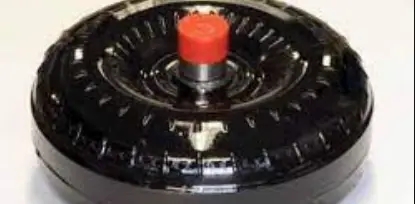
A torque converter is a type of fluid coupling that transfers rotating power from a prime mover, such as an internal combustion engine to a rotating driven load. It should be understood that in automatic transmission vehicles, the torque converter converts the power source to the load.  Will A TH 350 Torque Converter Fit A 700 R4? Of course,  YES, A TH 350 torque converter will fit a 700 R4, but the transmission must be totally disabled if you wish to install the short output shaft in it. This output shaft uses GM part #8681812. In any case, you should equally note that aftermarket shafts are usually not designed to the proper specifications, whereas all, or most, GM shafts are known to have more consistent spline works, which is invariably very important. So, yes, you can convert a TH 350 torque converter to perfectly fit a 700 R4 engine. Can you replace a TH 350 with a 700 R4? Yes, you can replace a TH 350 with a 700 R4, but know that the aftermarket shafts you may get for this purpose, is most likely not going to be manufactured to the proper details that you are going to require, whereas most GM shafts are known and designed to the best possible consistent spline work, which will definitely give you want in ultimate satisfaction. So, even though you can do that, there is still an important consideration to be aware of. Trending Searches Will Snow Chains Damage Rims?Find Out NOw Can You Get A Flat Tire From Running Over A Porcupine? How Much Tire Sidewall Damage Is Too Much? Will a 4L60E torque converter fit a 700 R4? First, you should know that most, if not all, 4L60E transmissions from 1997 onwards, have the same 30 spline input shafts just like the 1984 to 1993 700 R4 transmissions. Nevertheless, the 1998 to 2000 4L60E transmissions may or may not have the same input shaft as that of the 1984 to 1993 700R4 transmission systems. This obviously implies that this torque converter will certainly not work with an LS  type of motor, except probably if it will with a C5 Corvette. Is a TH 400 better than a TH 350? It is good to know certain things that are common between them before any proper comparison can be made between the two. First, both of these converters are adjudged very durable and simple too, from users and customer reviews worldwide.  Secondly, they are known to share the same bolt housing patterns as well. Furthermore, they mostly have the same engine types too. However, the TH 350 has somewhat lower performance and a comparatively smaller block; than the 350 Chevelle. The TH 350 is also used in many heavy-duty trucks and vans. In addition, the TH 350 is smaller and also fits nearly all rear-wheel drive Chevrolet passenger cars without any complaints. To further compare them more properly, the TH 350 uses a sort of mechanical kick-down switch. On the other hand, the TH 400 uses an electric kick-down switch, as against that used by TH 350.  This electric switch in the TH 400 is much easier to set up, especially if you are doing an LS swap. Both of them are however built with aluminum casings and also three forward gears, though with different gear shifts. (Read Also: Goodyear Endurance Vs Trailer King(Which Is Better) The TH 350 is said to have fewer drivetrains compared to the TH 400, which means that the TH 350 is likely to have more power to the rear wheels compared to the TH 400. All in all, if the TH 400 will fit in your car, it is indeed the right and better choice. In conclusion, the TH 400 is, from multiple perspectives and after in-depth comparisons, better than than the TH 350, but only just. How much HP can a 700 R4 handle? The street or strip 700 R4 is known to be very good for about 550 HP( horsepower) at the most, but more importantly, when used with an HD input drum, it can be good also for up to 625 HP or even a little more than that. What is more, this input drum is not so costly, as it goes for about 240 dollars at the most. So, how much power it can handle depends on the accessories you add to it, but the range is between 550 to 625 HP. Can you drive with a bad torque converter? No, it is not advisable in the least for you to do that, because it is potentially very risky and dangerous. However, if the torque converter can effectively hold the proper amount of ATF, then it won’t be able to transfer power efficiently from the vehicle’s engine to the transmission system with any satisfaction. How do I choose the right torque converter? There are quite a few things to put into consideration whenever you want a torque converter for your vehicle. First, make sure that the converter does not bear much resistance against the engine, as this is capable of reducing its efficiency. Secondly, also make sure that you select a converter with the best possible stall speed for your vehicle, which for the most part, should be between 2200 to about 2700 rpm( revolutions per minute). You also must not forget to look at the power curve, as well as the torque input of the converter too. Select a converter that will give more strength and durability, such as the Speedway Motors. Good converters should also have heat-treated internals, as well as high-strength bearings that offer significant life spans and also increased performance over a factory torque converter. If you get any converter that possesses most of these features, you are assured of a good and very efficient converter. Are torque converters interchangeable? Yes, for all intents and purposes, they usually are, but this is only possible if by any chance the two vehicles happen to have the same converter … Read more