Are Radar Tires Directional? Discover the Truth and Maximize Your Tire Performance
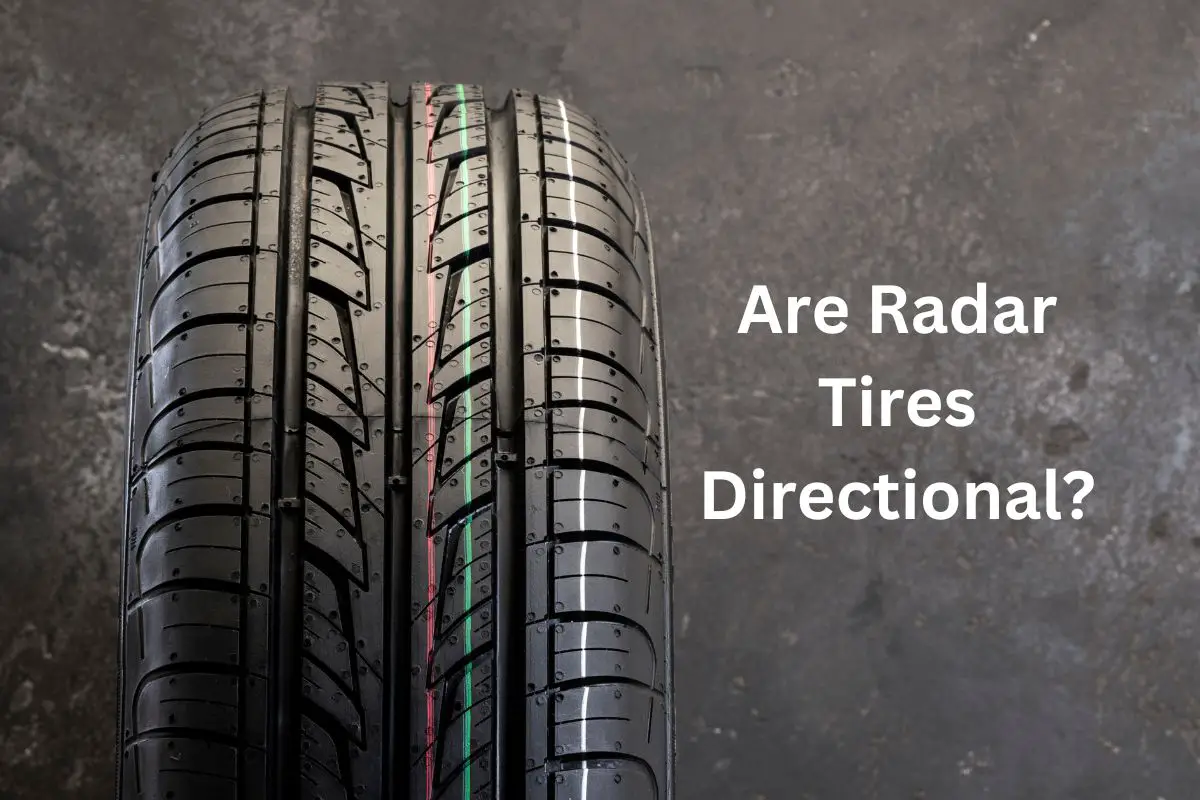
Are Radar Tires directional? It’s a question that often arises when considering new tires for your vehicle. Understanding the functionality of directional tires can help you make an informed decision about which type is best suited for your driving needs. In this blog post, we’ll delve into the world of Radar Tires and explore whether or not they are designed to be directional, providing you with valuable insights to aid in your tire research journey. When it comes to choosing the right tires for your vehicle, there are several factors to consider. One such factor is whether or not the tires are directional. Directional tires have a specific tread pattern that is designed to optimize performance in wet conditions by channeling water away from the tire’s contact patch. But what about Radar Tires? Are they engineered with this same design feature? Let’s find out together! Highlights: Directional tires enhance traction and handling in wet conditions They reduce the risk of hydroplaning for improved safety Proper installation and maintenance are crucial for optimal performance What Are Directional Tires? Directional tires are a type of tire designed to enhance traction and handling in wet conditions. They feature a tread pattern with V-shaped grooves that help channel water away from the tire’s contact patch, reducing the risk of hydroplaning. These tires are optimized for forward motion, meaning they can only be mounted in one direction. Directional tires offer improved performance on wet roads but may not perform as well on dry surfaces. If you’re looking for enhanced safety and grip in rainy weather, directional tires might be worth considering for your vehicle. Are Radar Tires Directional? So, are Radar Tires directional? Yes, some Radar Tires are directional. Directional tires have a specific tread pattern designed to enhance performance in wet conditions by channeling water away from the tire’s contact patch. However, not all Radar Tires are directional, so it’s important to check the specific model you’re interested in. With their range of high-quality tires, Radar offers options for various driving needs and preferences. Whether you’re looking for directional or non-directional tires, Radar has got you covered with reliable and innovative choices that deliver optimal performance on the road. Choose Radar Tires for confidence and control in any driving condition. Also Read:Are Starfire Tires Quiet or Noisy? Which Radar Tire Models Are Directional? Most tire brands have both directional and non-directional tires. Below is a list of some of the directional tire models from Radar tires. Please note this list is not exhaustive. Here are 5 directional Radar tire models: Radar Dimax R8+ Radar Renegade A/T-5 Radar Rivera Pro2 Radar RXS-9 Radar RPX800 How Can I tell if My Radar Tires Are Directionals To determine if your Radar tires are directionals, look for an arrow or the word “rotation” on the sidewall. Directional tires have a specific tread pattern designed to enhance water evacuation and grip. They must be mounted in a specific direction for optimal performance. If you can’t find any directional indicators, your Radar tires are likely non-directional, which means they can be mounted in any direction. When it comes to tire options, understanding whether they are directional or not is crucial for proper installation and performance. By checking for directional indicators on the sidewall of your Radar tires, such as arrows or the word “rotation,” you can ensure that they are mounted correctly. This will maximize their ability to evacuate water and provide excellent grip on wet surfaces. Remember, if there are no directional indicators present, your Radar tires are most likely non-directional and can be mounted in any direction without compromising their performance. Note: Always consult your vehicle’s owner manual or a professional tire installer for accurate information regarding tire installation and maintenance. Are Directional Tires Better? Directional tires are a popular choice among drivers looking for enhanced performance and safety on the road. These tires are designed to rotate in one direction only, with specific tread patterns that help improve traction and handling. However, like any other tire type, directional tires have their own set of pros and cons. Pros of directional tires: Improved traction on wet roads Better water evacuation, reducing hydroplaning risk Enhanced handling and stability Reduced road noise Cons of directional tires: Limited rotation options (can only be rotated front to back) Potentially higher cost compared to non-directional tires Tread pattern can wear unevenly if not properly maintained or aligned If you’re looking for improved performance and safety in wet conditions, directional tires may be the right choice for you. With their unique tread pattern designed to channel water away from the tire’s contact patch, these tires offer enhanced traction and reduced hydroplaning risk. Additionally, directional tires provide better handling and stability due to their optimized design. Another advantage is the reduction in road noise, resulting in a quieter ride. However, it’s important to consider some potential drawbacks. Directional tires have limited rotation options as they can only be moved from front to back. This limitation may affect tire lifespan and evenness of wear if not properly managed. Additionally, directional tires might come with a slightly higher price tag compared to non-directional alternatives. Also Read:Radar Tire Chunking Are Radar Directional Tires More Expensive? Discovering the cost of radar directional tires? Look no further. Radar directional tires are not necessarily more expensive than other tire types. While prices can vary depending on brand and size, radar directional tires offer exceptional value for their performance benefits. With their unique tread pattern designed to enhance traction and handling in wet conditions, these tires provide added safety and peace of mind on the road. Don’t let price be a deterrent; invest in radar directional tires for a reliable and secure driving experience. Directional vs non Directional Tires: Key Differences Directional tires and non-directional tires have distinct characteristics that make them suitable for different driving conditions. Directional tires are designed with a specific tread pattern that is intended to enhance water evacuation, providing better traction on wet roads. The tread … Read more