How To Keep Tire Shine From Slinging?

How To Keep Tire Shine From Slinging

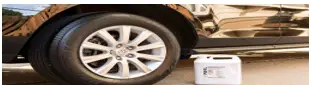
Tire sling is a phenomenon that occurs when tire shine dressing applied on tires gets flung to the wheels, side, and even fenders of the vehicle due to the tire spinning during movement. Many persons have attributed tire sling to the product itself when in reality the reason has always been the application. Regardless of the product being purchased, if you don’t apply a tire shine in the best way possible, you will always experience the tire sling effect. Below is a step-by-step guide on how to avoid tire sling on your vehicle tires. Trending Searches Can A Toyota Tundra Pull A Fifth Wheel Camper? Can You Jack Up A Car By The Transmission? Can You Jack Up A Car By The Engine? How to apply tire shine? Step 1 Ensure your tire is clean and properly dried The mistake some people make is applying tire shine immediately after washing their tires without allowing them to dry properly. A tire would have to be properly dried before tire shine can do its job, therefore, use a towel to dry your tire before allowing it to air-dry for a little while. If you miss this important step, you may as well just forget about applying a tire shine altogether because it would be of no use. Now you see why it’s not the product’s fault right? Step 2 Apply water-based dressing over silicon-based dressing There are basically two types of components used in making tires shine – water and silicon. They both have their pros and cons but for the sake of slinging, it is highly recommended you use water-based dressing, the reason is simple; water-based dressing will easily absorb into your tires thereby leaving you with an excellent finish that feels dry to the touch. Silicon dressing on the other hand doesn’t guarantee this type of finish as it is likely to form a film on the surface of your tire, thereby making it prone to slinging. This can be minimized though if you apply the silicon product moderately and follow the next steps I will explain below. Step 3 Use thin coats on the surfaces Another essential key to avoiding slinging is using as little at a time. In all honesty, using lots of products might give you a sparkling wet look at first, but all that comes to naught when you start driving. The advantage of applying very little product at a time is that it allows it dry on time. When applying your tire shine (be it water or silicone-based), use a shine tire applicator sponge. Then gently work the product into your tire by rubbing it round to ensure your tire shine is evenly spread out. Do not allow any form of a pool of the product on your tire, especially around the crack areas and grooves. The product has to be evenly distributed on the surface. Step 4 Give ample time for drying After applying your tire shine product, do well to allow it to dry completely before driving your car – let’s say for about 40-minutes. To make it faster, you can use a microfiber towel to clean around the surface of your tire after application – ensure you don’t use force, and apply lightly. Using a microfiber towel will ensure you don’t have an excess product on the tire that can result in slinging. To be very sure your tire dressing is completely dried, you can use your finger and swipe across the surface. If it leaves no residue stains, then you can go ahead and drive. You definitely wouldn’t have any tire sling after following these easy steps. How to clean your tire to avoid slinging? Remember I said cleaning your tire properly is the foundation required to avoid slinging, well, below are the steps to help you build a solid foundation. Step 1 Use washing soaps made specifically for tires There are various soaps out there you can use to clean your car, but never do the mistake of using the same soap used in cleaning the body of your car to clean the tire of your car or vehicle. This is because car cleaning soaps are designed to handle stains on the paint of the car as well as clear the coat, and using such soaps on your tire could leave a film on your car tire which could result in slinging when you finally apply tire dressers.  The same thing applies to tire cleaners as well. Tire cleaners have a very poor effect on your car paint and should be avoided at all costs. However, note that there are cleaners designed for both the body and tires of cars, and only when such cleaners are available should go ahead and apply them on both surface areas. Step 2 Allow your tire cleaner to soak in for a couple of minutes Patience is the keyword here – don’t be in haste. Ensure you allow your tire cleaner to sit on the surface of the tire after application for a couple of minutes – let’s say three – or follow the timing instruction stated on the cleaner. This is because the rubber used in making tires is not too porous which can make it very difficult to remove dust from tires, but allowing the tire cleaner to sit for a while will do the trick.  There are bound to be overspray when applying your tire cleaner, and when they occur, get a rag and clean such areas immediately.  Step 3 Use a tire brush to scrub the tires One thing that’s guaranteed you’ll do when cleaning your tire would be the use of force. Ensure you get the proper brush for cleaning tires which can be large enough brushes with stiff bristles and apply the right pressure needed to get a proper clean as tire dirt can be quite stubborn. The scrubbing pattern shouldn’t really be much of a concern to you – be it circular or back and forth … Read more
Can Bottle Jack Be Used On Its Side?

Can Bottle Jack Be Used On Its Side

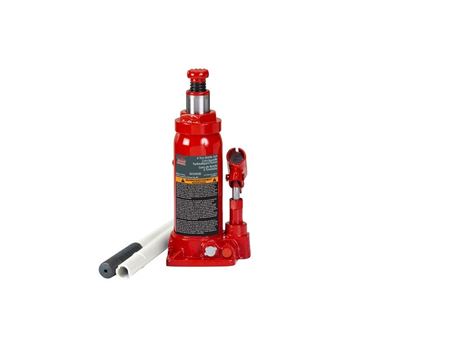
As a driver, you know you have a nightmare to wake up from when you discover you don’t have a bottle jack a bottle jack is as important to a driver as water is important to someone on a camping trip. However, the importance of a bottle jack is not in question here; many drivers have always asked the question, can a bottle jack be used on its side? Yes, a bottle jack can be used on its side. Most, if not all hydraulic jacks come with a port usually located at the bottom of the reservoir leading to the pump. However, when the jack is laid to the side of the jack containing the intake for the pump, it will work for a while until the hole is exposed to the atmosphere. In most cases, that port, in particular, is placed on the same side as the pump because it reduces the amount of work needed. So, depending on the design of the bottle jack and the amount of oil in the reservoir, you shouldn’t have a problem using a bottle jack on its side. Trending Searches How to use a bottle jack The following steps listed below will show you how to use a bottle jack. Materials needed Step 1 Park your vehicle safely Parking your vehicle safely involves two things; parking on the right side of the road and parking on a level surface. While using your garage will always be the best option, the last place a flat can occur would be a garage, and since they are likely to happen in the course of driving try moving away from incoming traffic to the shoulder of the road. Once you are safely away from traffic, try parking on a level spot and ensure the surface is hard. If the surface happens to be muddy, your planks would come in handy to provide a solid base for your bottle jack, and if the road isn’t as level as it should be, you might want to apply your parking brake and use the tire wedge to prevent your car from rolling backward or forward depending on the topography of the landscape. Step 2 Get a jack stand and inspect your jack before usage Depending on what you want to do under the vehicle, you may need to use jack stands if you’ll be staying under the vehicle for a prolonged time. Jack stands are a lot safer than bottle jacks as they provide you with the assurance that your car wouldn’t come toppling on you while working. In the case of a flat, a single jack would suffice. Inspect your bottle jack for any sort of leakage involving hydraulic oil as they could reduce the performance of your bottle jack. Also, ensure the plug behind is tightly fixed and the release valve is properly closed. Clean off any form of dirt on the saddle as it might hamper a clear contact with your vehicle. Lastly, check your jack stands for any sort of defect since any slight defect could put the integrity of the jack stand in check. Step 3 Locate the lift point on your vehicle To be sure of where your jack should be placed, ensure you read the user manual of your vehicle as such points can differ according to the vehicle manufacturer. Using any other points can cause a crack, injury, or even damage to your vehicle. Run a few test pumps on the bottle jack to be sure of its working condition; slowly pump up the handle upwards and downwards. You can also let down the cylinder by carefully turning the release valve in an anticlockwise direction to ensure it’s in good working condition. You can also use the handle located at one end of the bottle jack to release the valve which is located near the barrel bottom usually on the front of the jack. Ensure you tighten the release valve before use. Step 4 Lift your vehicle After locating the lift point on your vehicle, ensure your workspace is clear enough to work safely, and if you’re working at home don’t allow children to come around. If the area is swampy or muddy or has soft earth, get your planks to manage the situation by placing them underneath your bottle jack and your jack stand. Place your bottle jack underneath the designated point for lifting on the vehicle, insert the handle of your bottle jack and start pumping until the saddle of your bottle jack is close to touching your vehicle – don’t forget to ensure the saddle is directly in line with the vehicle lifting point. Pump your bottle jack until your vehicle is high enough from the ground to safely work under. Most bottle jack jacks will come with safety measures to prevent over-extension, however, it is never advised to lift your vehicle higher than required. Step 5 Position your jack stands and remove your bottle jack After achieving the desired height, place your jack stands and ensure they are properly supported if the ground is soft. Once placed, remove the handle from your jack, and with the use of your notch located at the end of your bottle jack, twist the release valve gently in the anticlockwise direction the same way you did while test running your bottle jack.  Gently release the jack until your vehicle rests comfortably on your jack stand(s). Before removing the jacks completely, double-check the location of your jack stand(s) and ensure they are properly placed before allowing your vehicle to rest on them. Once your vehicle is properly resting on the jack stand(s) you can go ahead and carry out your repair or maintenance activity under your vehicle.  Step 6 Bringing down your vehicle After completing your repair and maintenance on your vehicle, place your bottle jack directly facing the required points used in jacking your vehicle up while ensuring you follow the safety measures depending on the state of the ground, … Read more

Will 265 Tire Fit 9 Inch Rim?Find Out Here!

will 265 tire fit 9 inch rim

As a car owner, although you are not required to be an expert on the physical and mechanics of the working of your car, there is however certain basic knowledge you should equip yourself with. An example of such is the knowledge or knowledge of how to find out which tire size is appropriate for your rim or which rim size is most suitable for your tire size. On that note, we are going to take a 265 tire and a 9-inch rim as our focus of discussion to find out whether these two are compatible. So, will 265 tires fit a 9-inch rim? 265 tires are one of the tire sizes recommended for a 9-inch rim. Later in this article, we shall consider others aside from 265 tires which may also be used with the 9-inch rim. Whatever reason prompted the need to upgrade to a larger tire size, there is always the concern of compatibility. Your worry when you choose to fit a 265 tire with a 9-inch includes the fear of the 9-inch rim, being a big size rim, being too large for the 265 tires, or the 265 tires being too small for the 9-inch rim. It is a must for rim sizes to fit tire sizes else, you risk a considerable number of consequences which may include compromising performance. Yes, larger tires such as 265 tires have an outstanding impact on handling as they give a better grip on the road. This is only true if they fit perfectly well with the rim they are installed upon.  Trending Searches Will Fix-A-Flat Seal A Rim Leak Will Any 20-Inch Tire Fit A 20-Inch Rim? How do 265 tires fit a 9-inch rim?  Finding out which tire size is most appropriate for your rim size cannot be achieved by mere outward inspection of the tire and rim. It takes more than this to know how to make the right choice of rim or tire size. In today’s world, seeming for any form of information has become incredibly easy. Almost anything you are confused about can be cleared in an instant without much hassle.  Today, there are equivalence tables on the internet that provide comprehensive information on the tire’s sizes and the size of the rim in inches that are compatible with them. With such a list, you will be able to discover 265 tires as one of the tire sizes compatible with 9-inch tires. Note however that slight changes may exist for different brands of 265 therefore, a more certain way of finding out if the 9-inch rim is truly a fit for your 265 tires is by checking out the manufacturer’s guide on the recommended rim size for the tires. Information from professional mechanics and tire experts can be considered reliable as well. Such information should be crossed checked with the equivalence table and the manufacturer’s recommendation.  A similar internet tool creating usefulness is the online calculator. Learn how to use this to have precise information on what tire size is best for your rim.  Relying on the general finding of 265 tires being a good fit for a 9-inch tire could in some instances cause you to install a tire size that may constitute a great nuisance later on. As long as the tire’s brand allows for such installation, then it is okay to go ahead, otherwise, desist or risk having a tire that rubs on the car when you make turns, hits the inner aspect of the tire space when you drive over bumps potholes and increase the rate at which the tire wears off. Is it safe to use a 265 tire fit for a 9-inch rim?  Are you a car owner who is about to decide to upgrade their tire size to the 265 tires? What should you be worried about this big-size tire when it is installed on a 9-inch tire. Knowing that certain disadvantages, depending on their magnitude can make whatever benefits achieved through the tire size upgrading turn into dust and become irrelevant, all owners must learn about what they are up against when they consider such changes. To the full extent, you must understand what you stand to gain or lose and what you are risking. So, in this section, the focus will be to elucidate some of the possible challenges you may face installing a 265 tire on a 9-inch tire.so, if you have 265 tires you wish to install on 9-inch rims you find lying about, read through the following discussion to decide for yourself whether to go ahead or spend some money on the approach and recommended rim size. Your first worry with such upgrading will be the combined size and height of the rim and tire being too large for the wheel space. The result of such dis-proportionality is that you may find the tires rubbing against the fender or protruding outside the body of the car which may not speak well of the figure of the car. This sort of defeats some of the common goals of upgrading tire and run size which include atheistic purposes for better performance. There is also the fear of the tire fitting the rim. While the general finding is compatibility between 265 tires and 9-inch rim, do not be quick to assume that this will be the case for every brand of 265 tires out there. In your car, the brand of the tore could sit that it does not seat well on the 9-inch rim. Continuous use of such tire rim combination may affect other parts of the car such as the suspension and wheel alignment, either of which can bring about further damages such as the uneven wearing of the tires if left uncorrected. What other size will fit on a 9-inch wide rim? For most rim sizes, there could be multiple tire sizes that are a perfect match for the rim size. This is the case for 9-inch tires. The 265 tires are … Read more

How Long Will Road Bike Tire Last? 

How Long Will Road Bike Tire Last

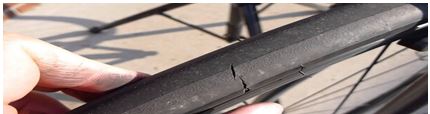
Everything there is, both living and none living has got a lifespan beyond which they lose functionality. At the point of purchase, the shiny attractive appearance of the bike tire with its alluring luster may cause you to become deceived about its life expectancy. You may also be proud of yourself as being a super careful person with a high level of maintenance practices and believe this to keep the tire forever. The reality however is that none of these can prevent the tires from needing replacing. So, how long will road bike tires last? What is well established is that road bike tires at some point will need replacing. It is however difficult to put a number to this, primarily because a host of factors will need to be considered before such a verdict is given.  Given the unending need to provide answers to the ever-inquisitive bike owners, this article will to a great extent, address this issue holistically and provide answers to other similar questions. While the exact lifespan of the road bike may be hard to tell, may keeping an eye out and hawking over the tire, you will be able to tell exactly when they need changing. Road tires are not exposed to the same condition as mountain tires and therefore will not be expected to have the same lifespan as mountain tires. This implies that the condition of The Road or say the type of terrain the tire is mostly driven on plays a role in how fast it will need replacement.  As for the road tires, there is a general statement on how long the tires last, however, even before this is stated, it must be stressed that this is only a general prediction and does not put into consideration external factors such as climate conditions, brands, and quality of the tire amongst other factors.  The duration for which the tires remain maximally function is stated in miles and not months or years. This is large because, how long the road bike tires last, is more of a factor in how frequent it is ridden. So let’s put a number to this duration.  Road bikes are said to last an average of about 1000 to 3000 miles. This is a much longer duration than racing tires which barely last for a thousand miles due to the priority given to maximizing their performance at the expense of durability.  Trending Searches Can You Reuse Bike Tires?Find Out Now Can Bike Tires Pop?Find Out Now Why do road bike tires last for that long?  For those who are aware of or drive racing bikes, how long a road bike tire last may come as a huge surprise. You have to understand that the condition of the road is nothing compared to the rough terrain of mountainous climbs. This is a contributing factor to the lifespan of road bike tires. However, if the tires are driven under bad road conditions, their lifespan gets shortened considerably. How long you should expect the tires to last is also connected to the tire’s exposure to certain conditions.  The sun can single-handedly cause cracks in the tires even when the tires are parked in the garage. Other conditions such as harsh chemical exposures could do the same. Once cracks are noticed in the tires, they must be replaced immediately as there are no repair methods that could fix this. Are road bike tires durable?  Compared to other types of bike tires, road bike tires are impressively durable. When well taken care of, the durability is further enhanced. The durability depends on the quality of the tire, which in most cases varies with the different brands out there. There are reputable brands with trustworthy road bike tires which are sure to last for a considerable period even with minimal maintenance practices. However, certain untrustworthy brands market ill-quality tires that are unworthy of any penny spent on them. The onus is on you to do proper research into the brand you intend to purchase. Your choice should be guided by the quality of the tire, the type of tire, its size, and other essential features that are a good fit. Tires which have special features such as puncture protection and flat protection are usually more expensive but are worth the buy. Although road bike tires are considerably durable, this can be improved by certain practices such as the use of Protestants against the sun’s UV rays, considering the type of road in your choice of tire type, not overlapping the tire, maintaining the recommended tear pressure at all times amongst other practices. Do road bike tires have an expiry date?  Tire expiration is not usually a common discussion because most tires will need repaving before the end of their natural life. Some companies indicate on tires when an expiration date, this is perhaps most important when the tires are bought from an untrustworthy online or offline auto shop that may attempt to sell expired tires to you. The tread wearing off and becoming smooth should be one of your primary worries. The rate at which this will happen will depend firstly on the quality of the tire, the rider’s weight, the condition of the road on which the bike is commonly road, and whether or not the tire is in the front position or rear. When can one replace a road bike tire? In humans and animals, aging is characterized by signs that imply that the human or animal is approaching the natural end of their life. Aging even in today’s world of advanced science and medicine remains inescapable. Road tires may not necessarily last up to the 3000 miles mentioned earlier in this article.  Are there any signs or indicators to look out for in your road bike tires that could give you a good idea of the state of the tire and whether or not replacement is imminent? Bike owners who engage in routine inspection of the tires, especially after every … Read more

Will A Bottle Jack Work Upside Down?

Will A Bottle Jack Work Upside Down

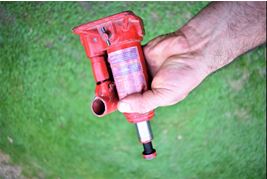
There are many mechanical problems out there that require you to use a jack upside down. In case you have encountered or are encountering one right now and you are asking “will a bottle jack work upside down?†here’s your answer. Yes, a bottle jack can and will work upside down as long as you do this: slide the bottom (which should now be the top) into a pair of steel channels that are welded to a top frame. This helps the jack to be removed easily at any point in time you might like, and if there happens to be any sort of danger during the movement, slightly extend the channels and add a locating pin. You can also use two jacks at the same time; one will be in an inverted position while the other will be in an upright position – the upright pump helps to limit the ram movement. When this is done, drill the bottoms of the jacks and use a high-pressure hose to connect them. It definitely works. Trending Searches How do you fix a bottle jack that won’t lift? A bottle jack that won’t lift has lost its value which can be caused by poor maintenance, bulky use, and environmental factors that can compromise its value. Before any damage to a bottle jack occurs, there must have been early signs which you ignored especially when these jacks have been available to you for many years. Below are some of the signs you should quickly notice and fix in your bottle jack before it escalates or gets you injured in the cause of use. Your jack is slow in release or doesn’t extend fully All bottle jacks are designed to depend on pressure caused by fluids to create any sort of movement. When the fluid flow is hampered or compromised in any way, it can cause a huge problem when lifting machines. What you should do You may want to consider replacing the hydraulic oil if possible or better still, let go and get a new one. Your bottle jack makes lots of noise during usage When you get too much noise from the wheels of your bottle jack, it’s simply the bottle jack’s way of telling you those parts need to be replaced. What you should do You may try working around it by greasing these parts to reduce the noise and increase its efficiency, but replacing these parts as a whole is considered the best option. Your bottle jack has a damaged frame Anything dent or hit that compromises the structural frame of your bottle jack could spell disaster and cause it to collapse under heavy load which could lead to injury or even death. Such damages are not redeemable and would require you to get a new bottle jack altogether. What you should do Simply buy a new jack to avoid stories that are better left untold. Your bottle jack handle gives you kickbacks If you notice your bottle jack is giving you kickbacks after a downward stroke, you are advised to stop using your bottle jack immediately. Using your bottle jack under such conditions is very risky and could cause you serious injury if you persist. However, such faults can be fixed with the help of a professional. What you should do Seek the service of a repair professional for rectification, or better still, get a new bottle jack. Your rams won’t lift The inability of rams to lift is usually caused by the little hydraulic fluid in your bottle jack. This can always be remedied by adding more hydraulic fluid, then trying to put the bottle jack in its release position; making a few pumps to release any air that might have been trapped inside, then filling up the reservoir. As long as the seal is replaced adequately, the rams of your bottle jack should have no problem lifting at all. What you should do Replace the hydraulic oil and follow the steps above, your bottle jack will work after everything is concluded. Your bottle jack emits milky or foamy oil You should sense danger the moment the oil in your bottle jack changes color. This could simply mean that water has gotten in contact with the hydraulic oil in your bottle jack which is usually caused by poor storage on your part. The presence of water in this area can lessen the viscosity of the hydraulic which is necessary for effective use. It could also cause internal corrosion in your jack which could weaken the structural integrity of your bottle jack with time if not attended to. What you should do You should try replacing the hydraulic fluid in your bottle jack with a new one, and try to ensure you maintain your bottle jack properly. Fluids are leaking out of your bottle jack Since the only fluid found in bottle jacks is hydraulic, then it’s most likely that the leaking substance is hydraulic however, this is not always the case. You have to be sure of the type of liquid leaking out, then, make a thorough inspection of where the leak point is located, and if it’s something you can’t handle on your own, you might need the help of a professional. What you should do Seek the help of a repair professional. Your overload jack is tripping your safety valve This is a common problem with almost all bottle jacks that occur when the intending load to be lifted is too heavy. If the load is more than the design capacity of the bottle jack, the safety valve of your bottle jack will automatically engage. When this occurs, you will have to refer to the user manual of your bottle jack on how to reset it. How to maintain a bottle jack You should have most of the issues discussed above if you have good maintenance culture. Your bottle jack can last for years if only you will be willing and careful enough to maintain … Read more