Will Flat Tire Damage Rim?

Will Flat Tire Damage Rim

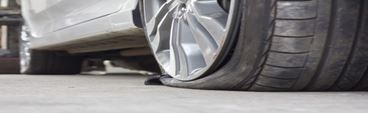
It is okay to assume that sometime in the recent past you may have seen while driving on the highway a car with a flat tire being driven slowly along the side of the road. A good number of persons do this without knowing whether the rims or the flat tires could be affected adversely in an irreparable way. This has necessitated the writing is this article to educate everyone out there unsure of the harm of driving with a flat tire. So, will a flat tire damage the rim? Yes, most definitely, flat tires are capable of damaging the rim. To understand further why this happens, there is a need to explain the significant time played by the air in the tires. The weight of the car is well supported by the inflated tire. The air allows for the accommodation of the car’s weight irrespective of the condition of the road.  A deflated tire losses this function and transmits all of the car’s weight to the next available structure which is the rim. However, unlike the inflated tires, the rim, being a solid structure will succumb to this weight and become deformed as a result.  A close analogy in this situation is the sole of sports shoes, while jogging with such shoes, you will notice that your weight is well supported by the “air” within the sole. This ensures that you do not feel any pain in the sole of your foot. Conversely, jogging or running with a shoe not designated for sports such as cooperate shoes or a barefoot will most certainly cause a significant amount of pain in the foot. Similarly, without air in the tires, the crushing weight of the car falls upon the rim which is unable to bear such weight and therefore begins to form a bend around its ends. Consequently, a rim with a bent end will not fit properly with tires of appropriate size. This will lead to such tires getting deflated slowly over time. When a rim develops a bend along the edges either due to impact with potholes, speed bumps or as a result of driving with a deflated tire, such will cause air to sip out of the tire through the bent area leading to a gradual deflation of the tire. Individuals who constantly experience flat tires especially when there is no obvious cause such as puncture agents like broken glasses or nails should consider having their rims examined for a bend as this is one of the possible causes of tire deflation. What is the highest duration for which a car can sit on a flat tire? Depending on the cause of the flat tire, the cost of repair is most likely affordable. However, a flat tire could result in heavy unplanned expenses if the situation is not properly handled. Part of improper handling of a flat tire situation is allowing the car to stay parked on the flat tire for an extended time duration. You may have probably noticed neighbors whose tires became flat after being out of use for a prolonged period. While in this state, the car is continuously left standing on a flat tire for an additional period before arrangements were made for intervention. Following such an incidence, there is no doubt that the tire will suffer irreparable damage and that the car owner will have to buy a new tire. So, from spending a little amount of money on fixing the cause of a flat tire, one can easily fall into having to buy a brand-new tire when the flat tire is not promptly addressed. Aside from this, there are other consequences associated with leaving a car with a flat tire to sit for too long on it. This includes the subject of our discussion which is damage to the rim.  The rim of an airless tire is susceptible to potentially severe damage which will require an extra cost to fix when the flat tire is allowed to sit that way for a long period. So, in the event of a flat tire, how long is considered too long? Well, to be on the safer side, it is best to avoid this completely. That is, once you experience a flat tire, rather than simply leaving the car parked in this state, ensure to have the tire fixed as soon as possible. This should ideally not exceed an overnight period. As for those who allow a car with a flat tire to sit for an incredibly long period, they also risk rusting the rim. As the car’s weight presses against the deflated tire, it damages the fabric of the tire as well as its wiring, this will completely ruin the tire. The rim in this condition may be in direct contact with the floor. Its exposure to moisture during rainy seasons will lead to rusting. Is it okay to allow a flat tire to stay overnight? At this point, you would have realized that the duration for which the car is allowed to sit on a flat tire greatly determines the degree of damage that will be done to the tire as well as the rim. So, is sitting overnight considered a long period?  An overnight duration may not be considered too long, however, this could over time contribute to the premature deterioration of the tire before its expiry date. Irrespective of efforts put in to avoid the flat tire from sitting for too long, sometimes, one may not have a choice other than to let the car sit this way. This could be a result of financial constraints or other similar factors. However, even in this condition, The car’s situation can still be helped by lifting it off the flat tire using a jack. Simply place a jack below the part of the car with a flat tire to get this part elevated. This method however is a temporary solution and should only be used for a short time duration such as … Read more

Will A Bad Tires Affect Alignment?

Will A Bad Tires Affect Alignment

The four wheels of your car are connected via what is known as suspension. The adjustment of this to allow for the highest feat of tire performance is what is known as alignment. The car wheels or tires do not always need alignment unless affected by certain factors which cause their misalignment. So, will a bad tire affect alignment? The common finding is that a bad car alignment usually causes the car tires to go bad before their due date.  When the car tires are well aligned, which is the normal state of the tires or wheel when the car is bought initially, they give the best driving experience and allow the car tire sufficient contact with the road. However, as long as the car is driven every day, a properly aligned wheel is bound to get misaligned someday, especially if the car is driven on a bad road filled with potholes or by a driver who drives recklessly, speeding over road bumps without slowing down. The tires are one of the first parts of the car to suffer a direct consequence of misaligned wheels. they show an obvious symptom of wearing prematurely and unevenly. Their lifespan is shortened considerably and they make driving rough and un-enjoyable. A lot of drivers out there do not care much about the vehicle’s tire alignment and may not be familiar with its symptoms. The misalignment, therefore, goes unnoticed for a while until it begins to cause major issues in the car.  Here in this article, we shall consider some of the causes of a misalignment, the common findings in a car with misaligned tires, and why it is important to regularly check the car’s alignment and have it adjusted when need be, amongst other issues related to vehicle alignment. Trending Searches Can A 16-Inch Tire Fit On A 16.5-Inch Wheel? Can You Use Super Glue To Patch A Bike Tire? Can You Reuse Bike Tires?Find Out Now How does alignment affect a car’s tires? Your driving experience, that is, how smooth or rough the driving feels depends highly on the condition of the tires. The condition of the tires on the other hand is greatly influenced its alignment. When a car wheel goes out of alignment, it poses a considerable threat to the tires, especially when left in this state for a considerable period. One of the primary benefits of always checking the car’s alignment as regular as possible such as during an oil change is that it helps to prolong the life span of the tires amongst other benefits which shall be mentioned later in this article. So, how does the car alignment relate to the condition of the tires? When the car tires connect the car to the road and bring about the movement of the car. The four tires must have good contact with the road and must move at the same speed and in the same direction to bring about a smooth driving experience.(Read Also: Does Tire Weight Matters?Find Out Here! When the car wheels become misaligned as a result of factors such as bumps or potholes, the four tires will no longer be in synchrony with one another and this will cause a bad driving experience. The tires will be out of place in terms of contact with the road and may not move at the same speed or direction unless the suspension is readjusted once more.(Read Also: Will Tire Pressure Light Fail Emissions?) The consequences of this are that the tires may experience premature wear and tear and become unusable before their due date. Also, the wearing, rather than being uniform as seen with a properly aligned car tire, will be uneven, this will greatly affect the driving experience. What causes the car to go out of alignment? Depending on the type of factor your vehicle is exposed to, the rate at which you will need to visit the auto shop for an adjustment of the car’s alignment differs. So, what are the factors that can cause the car to go out of alignment? These factors can be classified into road factors, driver factors, and the condition of the components of the car’s suspension.  In terms of road factors, individual who drives commonly along bad roads characterized by numerous potholes are more likely to have to deal with misalignment problems often than those who drive along good roads. Similarly, the presence of bumps on the road also affects the car’s alignment and influences how frequently the car will benefit from adjustment of its alignment. The style of driving is equally an important issue with a direct bearing on the car’s adjustment. Drivers who drive recklessly above the speed limit not minding the presence of potholes or speed bumps and running through and over them respectively will cause the car to go out of alignment in no time. When a pothole is entered into suddenly without slowing down, irrespective of the size of the potholes, you are likely to cause the car to go out of alignment. Similarly, there should be a considerable application of the car brakes when approaching a speed bump, otherwise, the car wheels may as well be shifted out of alignment. When similar objects are hit at a high speed, they could also cause the same problem. When the car collides with another car or is involved in any form of accident, the alignment is likely going to need some adjusting. As regards potholes and speed bumps, do not think their size is what determines the damage they are capable of doing to the car. Speed bumps in particular are usually constructed in a specified way in terms of their dimension. What is most important is the speed with which the car is driven into the pothole or over the speed bump. At high speed, the car tires come are suddenly impacted by these causing the alignment to shift out of place. How well you take care of your tires are also some … Read more

Will Slime Hurt Tire Sensors?

will slime hurt tire sensors

When stranded as a result of a flat tire, anyone in this situation will appreciate a quick and effective solution that can help save the day and get you going until you can get a more permanent solution. Slime sealant has been advertised as such a miracle agent. However, a good number of persons are doubtful about its compatibility with the tire sensors. So, will slime hurt tire sensors? No, tire sensors are not hurt by slime nor is the efficiency of their performance affected by it. However, whether slime will hurt the tire sensor or not depends on several factors, notably; how much of the slime was applied, the application technique, and how soon it is washed off before proffering a more permanent solution for the flat tire. Factors that determine whether slime will hurt tire sensors or not As mentioned earlier, it is not enough to simply dismiss the concern of the public about the possibility of incompatibility of slime with tire sensors and the potential damage that the tire sensors could suffer from as a result of fixing a flat tire with slime. There is a need to emphasize situations that could prove these notions right and how to avoid such situations. The first thing to understand about tire sensors is the location of the sensor. this is crucial to the possibility of affectation by the slime.  Chances are, if you were to examine your car tire, you will observe that the sensor is located within the tire and not outside it. This is the most common location of tire sensors. However, this does not rule out the possibility of having tires whose sensors are located elsewhere. For example, there are tires with sensors located in the cap of the valve. Those located at the stem of the valve are within the tire while those situated in the cap of the valve are outside the tire. This variation in location implies that the tire sensors located at the stem of the valve are within the tire, and slime used on the punctured area can clog such sensors resulting in temporary or permanent damage or dysfunction. Such sensors are more likely to malfunction following the use of slime sealant. However, when the sealant is washed out of the sensor, there is a great chance that the function of the sensor will be resolved. The manufacturers claim that washing the sensor with water will easily get the clogged slime out of it and return the sensor to its former efficiency. Slime is advertised as being water-soluble, thus posing no difficulty when washed with water. On the other hand, sensors whose location is outside the tire such as those located within the cap of the tire valve are not exposed to the slime applied to the puncture area within the tire. There is no threat from the slime on such tire sensors. Aside from the location of the sensor, one other thing to consider is how long the slime sealant is used. The sealant is not intended as a permanent solution to your flat tire problem and should therefore not be used as such. The sooner slime is washed off and replaced with a more permeant solution such as a tire plug, patch, or a combination of both the easier it will be to unclog the sensor and get it working again. Most of the time, whenever the slime sealant Is applied, there are reports from users of this emergency flat tire solution about a transient cessation or reduction in the efficiency of the tire sensors. This however returns to normal following washing of the sensor. The concern of the public about slime causing damage to the tire sensor is not based on facts or personal experience most of the time, it is commonly based on hearsay and the theoretical possibility reasoned out by the so-called tire experts. Those who may have experienced problems with their tire sensors following the use of slime may as well be within the category of people unaware of the right way to apply slime thus resulting in the sensor getting damaged or malfunctioning. Individuals who understand the right way of applying slime and follow the right step-by-step guiding principles are unlikely to accuse the sealant as the cause of any malfunction experience with the sensor. What do you think is the commonest cause of the sensor getting damaged as a result of applying slime on them? Well, if you are thinking about inadequate cleaning of the tires inside before using permanent repair solutions such as plugs or patches on the tire, then you are on the right track. Remember, whenever slime is applied to the tire, there is usually some form of the residue of the product left on the inside of the tire. Therefore, when preparing the tire for a plug or patch, the inside should be thoroughly cleaned out of the remnant particles. When this is not done or improperly done, there is a great chance of these particles affecting the sensors and leading to their malfunctioning or complete damage. Trending Searches Can A Bike Fit In A Toyota Corolla? Can You Use Tire Shine On Leather?Find Out Can You Still Ride A Bike With A Broken Spoke? How safe is slime as a tire repair agent? Aside from the general worry of the tire sensor being affected by slime. Some of these repair products in the past have been made with combustible or flammable gases. Although none of the application procedures demands the use of the heat of any kind, this does not rule out the possibility of a fire outbreak or having the tire explode at some point. This has made a lot of people skeptical about the safety of the product. This consequently reduced the patronage and general usage of the product. Over time, the manufacturing company took these concerns seriously into account in the subsequent version of the product and now makes products with nonflammable gas. Therefore, … Read more

Can Glass Ruin Tires?

can glass ruin tires

While driving, it is advisable to keep rapt attention on the road and to stay fused at all times to be able to avoid certain road hazards that could ruin your tire and turn a perfectly planned day into a horrible one. Here we shall be considering whether glass can ruin tires as well as other road hazards that could do the same. So, can glass ruin tires? In some instances, glass can ruin the car tires while in others, it may cause some damage to the tire surface which may eventually lead to ruining the car tire.  Without an adequately inflated car tire, it is impossible to drive the car properly, therefore, learning about the objects on the road can ruin your car tire, an integral part of your car is of significant importance. The tire, unlike other parts of the vehicle, is constantly in contact with the road and therefore susceptible to harmful objects capable of causing it severe damage which could get it ruined. Its constant encounter with different types of road hazards determines how long the tire can be used. So, irrespective of how durable a tire is when constantly used on a road with hazardous conditions such as glasses, potholes, salts, and other chemical substances, tree branches amongst others, the life span of the car tire will be greatly reduced. Trending Searches Can broken glass ruin car tires? Although it has been established that broken glass can ruin the tires, however, this is not always the case. The chances of tires getting ruined when they come in contact with broken glass on the road on several factors. First, this depends on the type of glass the car tire ran over. Not all types of glass can cause damage or ruin the car tire. When a car is involved in an accident on the road, the windshield glass, headlights, and sometimes the rear lights, depending on how the accident occurred are usually broken and scattered across the road. Other road users may run over such glass pieces which are incapable of ruining the car tire. Glass pieces from this type of glass cannot cause immediate damage to the tires nor create an injury that could eventually ruin the tire. Unfortunately, even though the presence of these types of glass on the road can be easily sighted from a distance away while driving and safely avoided if need be, most drivers are usually distracted and may not do this on time. Aside from the type of glass, the length of the glass pieces also plays a role in whether the glass will be able to ruin the tires or not. A glass piece not long enough to get through the thickness of the tire and into its inside is unlike to cause any significant damage to the tire. The most common type of glass that can ruin tire are broken bottles. This should give you the greatest worry when your car tire runs over them. Glasses from broke bottles are not commonly found on the plain road, they are usually buried in a heap of debris. During a downpour, the rain could easily flood the road with debris within which broken bottles from household trash could be lying in wait for your tires. Carelessly running through a heap of debris on the road is therefore not a good idea as this could cause damage to your tires or completely ruin them. Thankfully, glass bottles or heaps of debris can be sighted from a reasonable distance except if the diver is distracted or speeding incredibly. When such a road hazard is noticed on the road, you should slow down carefully and initiate a lane change. Applying the brakes suddenly and forcefully to avoid such road hazards is highly risky and not advisable. When the brakes are applied with such force, they drag on the road which causes immense wear and tears effect as a result of the frictional force.  A sharp turn made to avoid glass on the road could also cause you to swerve off the road and experience a much worse accident. While driving, ensure never to take your eyes off the road, always look ahead to take note of road hazards such as glass and safely avoid them. Drive within the speed limit and stay focused. What are other things that can ruin a car tire? Aside from glass, there are many other things on the road that could potentially ruin your car tire. Every diver or car owner must familiarize themselves with some of these road hazards and take precautionary measures such as driving within the speed limits, avoiding reckless driving, and looking ahead while driving in order never to experience a tire puncture on the road. Your tire could get ruined by objects such as glass, nails, tree branches, and other sharp objects capable of penetrating the tire surface. Any of these objects could mess up your entire day and leave you stranded in an odd place during an odd hour. Regarding the broken glass, this is not cable of causing ruin to all types of tires. Steel belted tires are not easily affected by broken glass. The strength of the broken glass also counts. If not strong enough to piecer the tire surface, the car tire will simply crush the broken glass further into pieces and will get affected by it. However, glasses strong enough to cause damage to the tire do so by creating an injury through which air and moisture from the surrounding environment into the tire and separate the metal wiring from the rubber component of the tire, thereby completely ruining it. Nails are also one of the things on the road which could puncture the car tire and eventually ruin it. Unlike other types of hazardous objects on the road, nails are not easy to spot and are only noticed once picked up by the tire.  Similarly, tree branches are equally capable of causing damage to the … Read more

Can I Drive Long Distances With A Patched Tire?

Can I Drive Long Distances With A Patched Tire

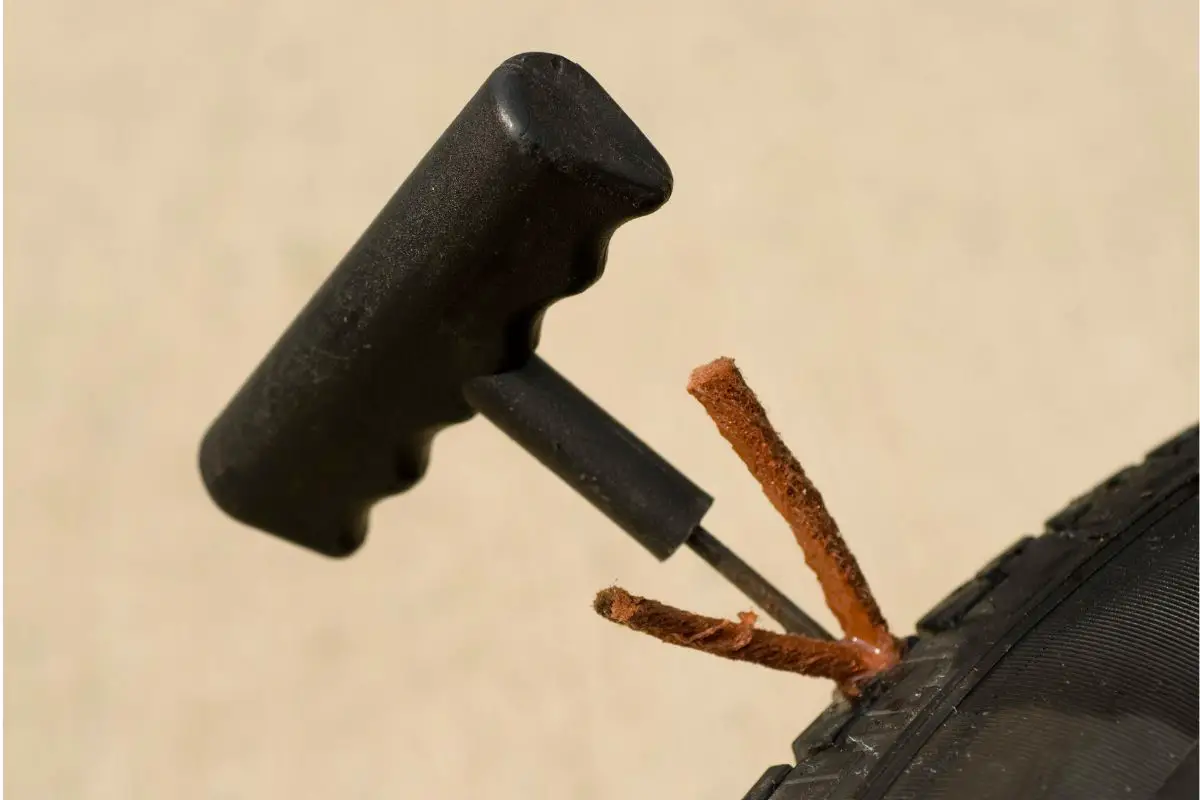
Can I drive long distances with a patched tire? This is quite a popular question asked by those who are skeptical about the safety of driving with a patched tire. When the car tire becomes flat, one of the quickest ways to get out of such a situation would be to use a tire patch. However, there is the question of how long you can drive with a patched tire. Highlights: Can I Drive Long Distances With A Patched Tire so, how long can a patched tire be driven for? When a tire is patched, yes, it may not be the same as a new tire, but it will be as functional as the other tires on the car. It can be driven for any length of distance, on any type of road, and by any kind of driving style. When not done properly, a tire patch could result in catastrophic consequences such as the explosion of the tire which could result in a terrible car accident that puts your life and that of other persons on the road at that time in considerable danger.  So, before concluding on whether it is okay to drive with a patched tire for a long distance, the question that needs to be answered is how well the patch was done and how many patches have been carried out on that particular tire.  Flat tires are a common problem, perhaps the commonest tire problem there is. If you haven’t experienced one yet, it’s likely to happen to you any time soon. It usually does not give any warning sign and tends to occur at odd places and at odd times. However, a flat tire is not the end of the world and does not necessarily imply the need to have the tire changed. A more cost-effective approach will be to have it patched. With the improvement in science and technology, tires are made in a way that affords them some form of ability to resist being easily punctured. However, certain hazardous objects such as sharp glasses, nails, and others can still cause considerable damage to the tire.  There is therefore the need to learn how to handle a punctured tire, the correct guideline on how to patch a punctured tire, how safe it is to make use of a patched tire, and how long a pat the tire will serve you. This and many more related issues are covered here in this article. Trending Searches Is it safe to drive long distances with a patched tire? Speaking about safety, there is an increasing number of car accidents and some of these are caused by preventable factors.  These statistics demand that every car owner or driver learn about the various causes of car accidents on the road and consciously avoid them. Some of these accidents are related to tire problems, especially when the car tire explodes. The driver losses control of the car, swerving into the wrong lane and colliding with oncoming vehicles or going off the road and running into stationary objects such as a tree, a parked vehicle, or similar objects. So, how safe is it to drive a long distance with a patched tire? Is this one of the causes of tires exploding on the highway and consequently resulting in terrible accidents? There is no blame on those who do not trust the idea of patching a flat tire and would rather replace the tire with a new one irrespective of the cost burden, however, a patched tire is not a time bomb waiting to explode as others may have you believe. When done properly, there is no difference between a patched tire and the other tires in terms of functionality and duration of service except for the fact that you are aware of the patchwork done on the tire.  When one of the rear tires goes flat for example, if you decide not to have it patched as a result of your distrust of the process, then you may have to prepare to buy two new tires at the same time as this is the recommendation. One of the rear tires should not be an old tire while the other is new. The two should ideally be changed at the same time to ensure they balance each other and a smooth driving experience.  The cost of Tires, similar to other car parts has continued to rise almost regularly. Therefore paying for two tires at the same time may not be budget-friendly. Thankfully, the distrust some drivers have for patched tires is simply based on hearsay and not experience.  In my years of driving, never have I been caught unaware by a flat car tire. Yes, this usually occurs suddenly without prior notice, but having my patch kit, potable pumping machine, and other tools handy have always help to be avoid getting stranded in an off place at an odd time.  Between attempting to fix a flat tire with a patch or driving with it that way, there is no doubt that the few minutes spent in fixing the tire is a much more cost-effective option. The highest distance a flat tire should be driven should be finding a suitable parking space off the road and no more. Driving with a flat tire is considered reckless as this puts the tire as well as the rim with the flat tire at risk of even greater damage. There are however instances in situations where you have no other option but to get a new tire. Take for example, when the puncture, cut, or tear sustained by the tire is considerably large, this rules out the option of repair. The more severe the damage is done to the tire the less likely the chance of begin effectively repaired. The possibility of repair also depends on the part of the tire that is punctured. If the puncture is sited in a place such as the walls of the tire, although some persons may successfully … Read more