Does Tire Weight Matters?Find Out Here!

Does Tire Weight Matters

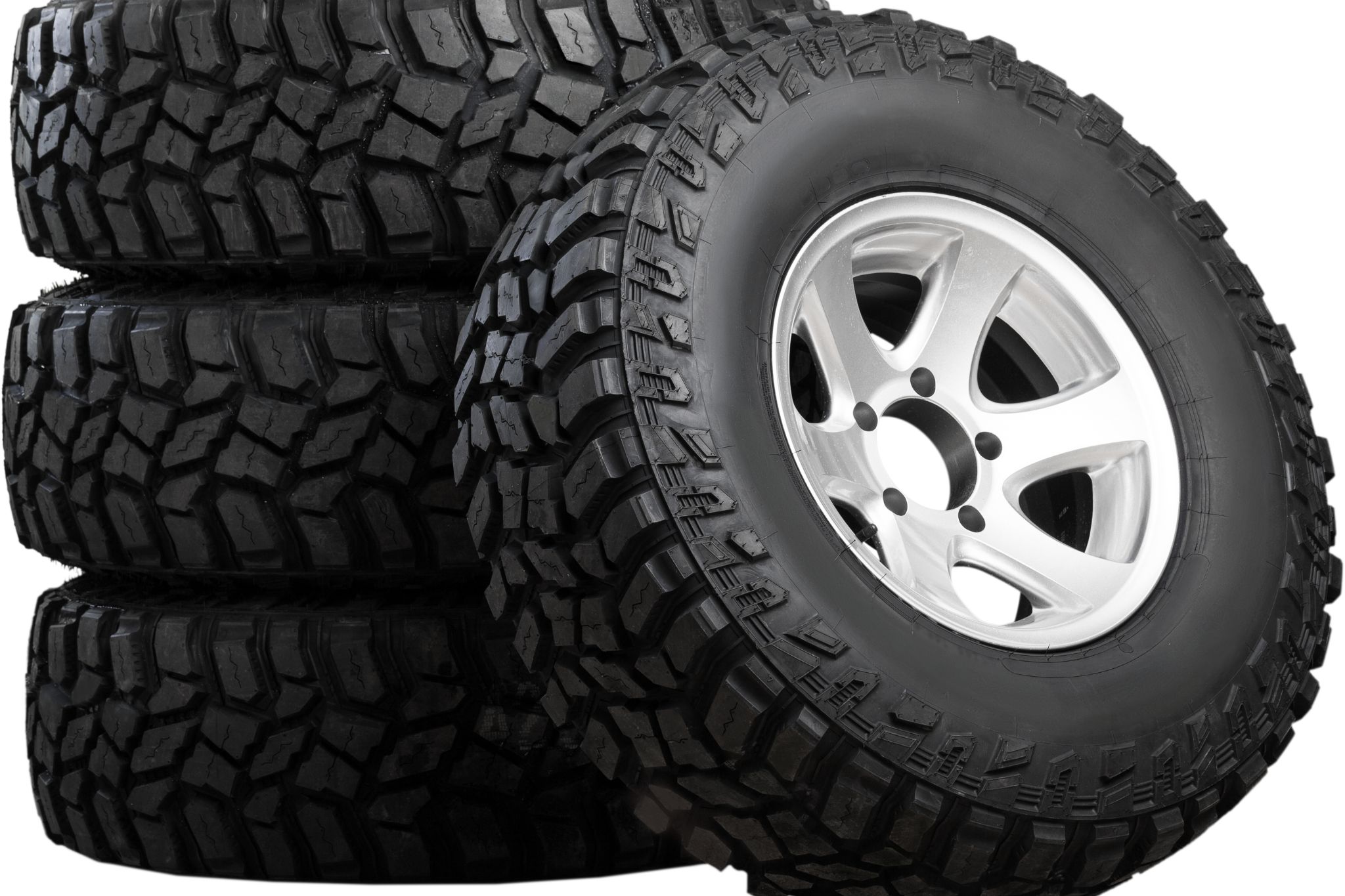
How much price are you willing to pay for beauty?  Sure when a car on the street with incredibly large tires which look disproportionate to the size and height of the car cruises by, lots of people cannot help staring at the car until it disappears out of the horizon. Must persons however do not realize what the car has to sacrifice for such looks in terms of its acceleration, braking distance, and other aspects of the car driving and handling? So, does tire weight matter? Tire weight undoubtedly should matter. This is not something that can be ignored. Irrespective of how controversial this topic is and the number of arguments in the various car chat forums on the internet, every car owner looking to install heavier and larger tires must understand the effect this has on the performance of their car and make an informed decision. The subject of the effect of tire weight on car performance and whether this should be something that matters or not is often an interesting one that generates hot arguments all over the Internet forums. As a daily driver or someone who runs a taxi business, this is an attunement you may also weigh in on. The car enthusiasts and the physics nerds will also find this fascinating. We have chosen in this article to present both sides of the argument, that is, the perspective of those who claim the tire weight should not matter as it has no impact on the car’s performance and those who believe the tire weight has a significant impact on the car’s performance and should therefore matter. There are helps those who take the middle ground, that is, agrees with the second group which believes the tire weight impacts car performance, they, however, believe that the weight’s impact on the car performance is highly negligible compared to other factors and therefore should not be given a center stage. Trending Searches Will A Bad Tires Affect Alignment? Can You Jack Up A Truck By The Leaf Springs? How does tire weight impact car performance? No matter how desperately you want your car to look elegant there is a limit to the price you will be willing to pay for this. Most women are willing to sacrifice hours, funds, and other resources to get their hair and nails done and look breathtaking afterward. There is however a limit to how much pain you are willing to endure to get to such a level.  When it comes to the car, there are car owners who aspire to treat their cars like a wife, and some more than they treat their wives. Let’s move straight to what can happen to your car’s performance as a result of installing large and heavy tires on the car to improve its looks.  There are mathematical values done by experts, calculations that show exactly the magnitude of impact the larger heavier tire has on the car’s performance. values show that heavier tires cause an increase in the rolling resistance of the tires which consequently translates to a decreased gas mileage. Aside from this, the handling of the car is equally put in jeopardy. So, saying it does not matter whether or not the tire is light or heavy is erroneous and not completely true. Some of the impacts of the large heavier tire may not be noticed, especially by drivers who before this time barely paid attention to the working of the car. A more objective evaluation of the impact is what the physicist put to us. These calculations show the weight of the tire does matter, no matter how insignificant it may seem, the impact is real. Which is better a light tire or the heavyweight tire? Some get a kick out of a back and forth argument. A lot has been said about this subject but never objectively. Most persons seem to state their personal experiences without any values or statistics to support their claim. Most persons that go for larger tires do not consider the impact of the weight of the tire on the car rather, their eyes are fixed on how gorgeous the large tires will make the car look at the end of the day.  To objectively evaluate which is better in terms of their impact on the car’s performance, light and heavyweight tires will be put to the test here by the physicist in the house. In case you are wondering who the physics expert is, it is no other than myself. Of course, I am by no chance an expert in the subject, and that is why you will be able to understand what is to follow as they are all explained in the simplest words possible with no sophisticated technical terms. So, let us brush over a little physics. Let’s start by considering the meaning of the following physics terms as it relates to the car.  Unstrung weight: not the entire weight of the car is saddled on the car’s suspension. The weight which the suspension is not responsible for is called the up strung weight. They, therefore, do not contribute to the rebound of the suspension. An example of such weight is the tires and tires. These two car parts are anchored below the suspension and are not bored by the suspension. The opposite of unsprung weight is the strung weight. So, if you were able to understand the unsprung weight as the weight not carried by the suspension, then, the sprung weight is simply that which is bored by the suspensions such as the weight of the engine.  Rotational mass: this is another important concept you must understand to explain coherently how the large tire impacts car performance. It takes energy to bring the car to move or get it to stop, the ease with which this is done or the difficulty as the car may be is considered the rotational mass. This mass must be overcome to accelerate the car or to bring … Read more

Will 265 Tire Fit 9 Inch Rim?Find Out Here!

will 265 tire fit 9 inch rim

As a car owner, although you are not required to be an expert on the physical and mechanics of the working of your car, there is however certain basic knowledge you should equip yourself with. An example of such is the knowledge or knowledge of how to find out which tire size is appropriate for your rim or which rim size is most suitable for your tire size. On that note, we are going to take a 265 tire and a 9-inch rim as our focus of discussion to find out whether these two are compatible. So, will 265 tires fit a 9-inch rim? 265 tires are one of the tire sizes recommended for a 9-inch rim. Later in this article, we shall consider others aside from 265 tires which may also be used with the 9-inch rim. Whatever reason prompted the need to upgrade to a larger tire size, there is always the concern of compatibility. Your worry when you choose to fit a 265 tire with a 9-inch includes the fear of the 9-inch rim, being a big size rim, being too large for the 265 tires, or the 265 tires being too small for the 9-inch rim. It is a must for rim sizes to fit tire sizes else, you risk a considerable number of consequences which may include compromising performance. Yes, larger tires such as 265 tires have an outstanding impact on handling as they give a better grip on the road. This is only true if they fit perfectly well with the rim they are installed upon.  Trending Searches Will Fix-A-Flat Seal A Rim Leak Will Any 20-Inch Tire Fit A 20-Inch Rim? How do 265 tires fit a 9-inch rim?  Finding out which tire size is most appropriate for your rim size cannot be achieved by mere outward inspection of the tire and rim. It takes more than this to know how to make the right choice of rim or tire size. In today’s world, seeming for any form of information has become incredibly easy. Almost anything you are confused about can be cleared in an instant without much hassle.  Today, there are equivalence tables on the internet that provide comprehensive information on the tire’s sizes and the size of the rim in inches that are compatible with them. With such a list, you will be able to discover 265 tires as one of the tire sizes compatible with 9-inch tires. Note however that slight changes may exist for different brands of 265 therefore, a more certain way of finding out if the 9-inch rim is truly a fit for your 265 tires is by checking out the manufacturer’s guide on the recommended rim size for the tires. Information from professional mechanics and tire experts can be considered reliable as well. Such information should be crossed checked with the equivalence table and the manufacturer’s recommendation.  A similar internet tool creating usefulness is the online calculator. Learn how to use this to have precise information on what tire size is best for your rim.  Relying on the general finding of 265 tires being a good fit for a 9-inch tire could in some instances cause you to install a tire size that may constitute a great nuisance later on. As long as the tire’s brand allows for such installation, then it is okay to go ahead, otherwise, desist or risk having a tire that rubs on the car when you make turns, hits the inner aspect of the tire space when you drive over bumps potholes and increase the rate at which the tire wears off. Is it safe to use a 265 tire fit for a 9-inch rim?  Are you a car owner who is about to decide to upgrade their tire size to the 265 tires? What should you be worried about this big-size tire when it is installed on a 9-inch tire. Knowing that certain disadvantages, depending on their magnitude can make whatever benefits achieved through the tire size upgrading turn into dust and become irrelevant, all owners must learn about what they are up against when they consider such changes. To the full extent, you must understand what you stand to gain or lose and what you are risking. So, in this section, the focus will be to elucidate some of the possible challenges you may face installing a 265 tire on a 9-inch tire.so, if you have 265 tires you wish to install on 9-inch rims you find lying about, read through the following discussion to decide for yourself whether to go ahead or spend some money on the approach and recommended rim size. Your first worry with such upgrading will be the combined size and height of the rim and tire being too large for the wheel space. The result of such dis-proportionality is that you may find the tires rubbing against the fender or protruding outside the body of the car which may not speak well of the figure of the car. This sort of defeats some of the common goals of upgrading tire and run size which include atheistic purposes for better performance. There is also the fear of the tire fitting the rim. While the general finding is compatibility between 265 tires and 9-inch rim, do not be quick to assume that this will be the case for every brand of 265 tires out there. In your car, the brand of the tore could sit that it does not seat well on the 9-inch rim. Continuous use of such tire rim combination may affect other parts of the car such as the suspension and wheel alignment, either of which can bring about further damages such as the uneven wearing of the tires if left uncorrected. What other size will fit on a 9-inch wide rim? For most rim sizes, there could be multiple tire sizes that are a perfect match for the rim size. This is the case for 9-inch tires. The 265 tires are … Read more

How Long Will Road Bike Tire Last? 

How Long Will Road Bike Tire Last

Everything there is, both living and none living has got a lifespan beyond which they lose functionality. At the point of purchase, the shiny attractive appearance of the bike tire with its alluring luster may cause you to become deceived about its life expectancy. You may also be proud of yourself as being a super careful person with a high level of maintenance practices and believe this to keep the tire forever. The reality however is that none of these can prevent the tires from needing replacing. So, how long will road bike tires last? What is well established is that road bike tires at some point will need replacing. It is however difficult to put a number to this, primarily because a host of factors will need to be considered before such a verdict is given.  Given the unending need to provide answers to the ever-inquisitive bike owners, this article will to a great extent, address this issue holistically and provide answers to other similar questions. While the exact lifespan of the road bike may be hard to tell, may keeping an eye out and hawking over the tire, you will be able to tell exactly when they need changing. Road tires are not exposed to the same condition as mountain tires and therefore will not be expected to have the same lifespan as mountain tires. This implies that the condition of The Road or say the type of terrain the tire is mostly driven on plays a role in how fast it will need replacement.  As for the road tires, there is a general statement on how long the tires last, however, even before this is stated, it must be stressed that this is only a general prediction and does not put into consideration external factors such as climate conditions, brands, and quality of the tire amongst other factors.  The duration for which the tires remain maximally function is stated in miles and not months or years. This is large because, how long the road bike tires last, is more of a factor in how frequent it is ridden. So let’s put a number to this duration.  Road bikes are said to last an average of about 1000 to 3000 miles. This is a much longer duration than racing tires which barely last for a thousand miles due to the priority given to maximizing their performance at the expense of durability.  Trending Searches Can You Reuse Bike Tires?Find Out Now Can Bike Tires Pop?Find Out Now Why do road bike tires last for that long?  For those who are aware of or drive racing bikes, how long a road bike tire last may come as a huge surprise. You have to understand that the condition of the road is nothing compared to the rough terrain of mountainous climbs. This is a contributing factor to the lifespan of road bike tires. However, if the tires are driven under bad road conditions, their lifespan gets shortened considerably. How long you should expect the tires to last is also connected to the tire’s exposure to certain conditions.  The sun can single-handedly cause cracks in the tires even when the tires are parked in the garage. Other conditions such as harsh chemical exposures could do the same. Once cracks are noticed in the tires, they must be replaced immediately as there are no repair methods that could fix this. Are road bike tires durable?  Compared to other types of bike tires, road bike tires are impressively durable. When well taken care of, the durability is further enhanced. The durability depends on the quality of the tire, which in most cases varies with the different brands out there. There are reputable brands with trustworthy road bike tires which are sure to last for a considerable period even with minimal maintenance practices. However, certain untrustworthy brands market ill-quality tires that are unworthy of any penny spent on them. The onus is on you to do proper research into the brand you intend to purchase. Your choice should be guided by the quality of the tire, the type of tire, its size, and other essential features that are a good fit. Tires which have special features such as puncture protection and flat protection are usually more expensive but are worth the buy. Although road bike tires are considerably durable, this can be improved by certain practices such as the use of Protestants against the sun’s UV rays, considering the type of road in your choice of tire type, not overlapping the tire, maintaining the recommended tear pressure at all times amongst other practices. Do road bike tires have an expiry date?  Tire expiration is not usually a common discussion because most tires will need repaving before the end of their natural life. Some companies indicate on tires when an expiration date, this is perhaps most important when the tires are bought from an untrustworthy online or offline auto shop that may attempt to sell expired tires to you. The tread wearing off and becoming smooth should be one of your primary worries. The rate at which this will happen will depend firstly on the quality of the tire, the rider’s weight, the condition of the road on which the bike is commonly road, and whether or not the tire is in the front position or rear. When can one replace a road bike tire? In humans and animals, aging is characterized by signs that imply that the human or animal is approaching the natural end of their life. Aging even in today’s world of advanced science and medicine remains inescapable. Road tires may not necessarily last up to the 3000 miles mentioned earlier in this article.  Are there any signs or indicators to look out for in your road bike tires that could give you a good idea of the state of the tire and whether or not replacement is imminent? Bike owners who engage in routine inspection of the tires, especially after every … Read more

Will A Bottle Jack Work Upside Down?

Will A Bottle Jack Work Upside Down

There are many mechanical problems out there that require you to use a jack upside down. In case you have encountered or are encountering one right now and you are asking “will a bottle jack work upside down?†here’s your answer. Yes, a bottle jack can and will work upside down as long as you do this: slide the bottom (which should now be the top) into a pair of steel channels that are welded to a top frame. This helps the jack to be removed easily at any point in time you might like, and if there happens to be any sort of danger during the movement, slightly extend the channels and add a locating pin. You can also use two jacks at the same time; one will be in an inverted position while the other will be in an upright position – the upright pump helps to limit the ram movement. When this is done, drill the bottoms of the jacks and use a high-pressure hose to connect them. It definitely works. Trending Searches How do you fix a bottle jack that won’t lift? A bottle jack that won’t lift has lost its value which can be caused by poor maintenance, bulky use, and environmental factors that can compromise its value. Before any damage to a bottle jack occurs, there must have been early signs which you ignored especially when these jacks have been available to you for many years. Below are some of the signs you should quickly notice and fix in your bottle jack before it escalates or gets you injured in the cause of use. Your jack is slow in release or doesn’t extend fully All bottle jacks are designed to depend on pressure caused by fluids to create any sort of movement. When the fluid flow is hampered or compromised in any way, it can cause a huge problem when lifting machines. What you should do You may want to consider replacing the hydraulic oil if possible or better still, let go and get a new one. Your bottle jack makes lots of noise during usage When you get too much noise from the wheels of your bottle jack, it’s simply the bottle jack’s way of telling you those parts need to be replaced. What you should do You may try working around it by greasing these parts to reduce the noise and increase its efficiency, but replacing these parts as a whole is considered the best option. Your bottle jack has a damaged frame Anything dent or hit that compromises the structural frame of your bottle jack could spell disaster and cause it to collapse under heavy load which could lead to injury or even death. Such damages are not redeemable and would require you to get a new bottle jack altogether. What you should do Simply buy a new jack to avoid stories that are better left untold. Your bottle jack handle gives you kickbacks If you notice your bottle jack is giving you kickbacks after a downward stroke, you are advised to stop using your bottle jack immediately. Using your bottle jack under such conditions is very risky and could cause you serious injury if you persist. However, such faults can be fixed with the help of a professional. What you should do Seek the service of a repair professional for rectification, or better still, get a new bottle jack. Your rams won’t lift The inability of rams to lift is usually caused by the little hydraulic fluid in your bottle jack. This can always be remedied by adding more hydraulic fluid, then trying to put the bottle jack in its release position; making a few pumps to release any air that might have been trapped inside, then filling up the reservoir. As long as the seal is replaced adequately, the rams of your bottle jack should have no problem lifting at all. What you should do Replace the hydraulic oil and follow the steps above, your bottle jack will work after everything is concluded. Your bottle jack emits milky or foamy oil You should sense danger the moment the oil in your bottle jack changes color. This could simply mean that water has gotten in contact with the hydraulic oil in your bottle jack which is usually caused by poor storage on your part. The presence of water in this area can lessen the viscosity of the hydraulic which is necessary for effective use. It could also cause internal corrosion in your jack which could weaken the structural integrity of your bottle jack with time if not attended to. What you should do You should try replacing the hydraulic fluid in your bottle jack with a new one, and try to ensure you maintain your bottle jack properly. Fluids are leaking out of your bottle jack Since the only fluid found in bottle jacks is hydraulic, then it’s most likely that the leaking substance is hydraulic however, this is not always the case. You have to be sure of the type of liquid leaking out, then, make a thorough inspection of where the leak point is located, and if it’s something you can’t handle on your own, you might need the help of a professional. What you should do Seek the help of a repair professional. Your overload jack is tripping your safety valve This is a common problem with almost all bottle jacks that occur when the intending load to be lifted is too heavy. If the load is more than the design capacity of the bottle jack, the safety valve of your bottle jack will automatically engage. When this occurs, you will have to refer to the user manual of your bottle jack on how to reset it. How to maintain a bottle jack You should have most of the issues discussed above if you have good maintenance culture. Your bottle jack can last for years if only you will be willing and careful enough to maintain … Read more

Will Tire Pressure Light Fail Emissions?

Will Tire Pressure Light Fail Emissions

A good amount of studies, research, and technological advancement are being made to get a man to inhabit other planets such as Mar. A notable example of such are the incredible strides of the world’s current richest man, Elon Musk. Irrespective of all of these, the earth is currently all we have got and the only place to call home as of today. Therefore, all efforts including emission tests must be made to keep the planet free from air pollutants. Tire pressure light may mean more than simply low tire pressure, it may have a bearing on emission. So, will tire pressure light fail emissions? Regarding the criteria for passing or failing the emission of the smog test, there are no generally accepted universal conditions for this. The central or federal government is relatively silent on what and what constitutes acceptable criteria to screen out a vehicle or designated it environmentally unfriendly. Whether the pressure light is part of what could affect your success or failure during an emission test is dependent on the state where the test is being carried out and the state’s criteria for a smog test. Over the years, experts and environmental scientists have given several warnings about the increasing air pollution either due to domestic or industrial activities. As part of the measures to help reduce this pollution, several states have made it legally binding for drivers and var owners to go through the emission test to ensure the car is not a threat to the environment and does play a significant role in the already deteriorating ecosystem. The essence of the test is to reduce the number of air pollutants such as hydrocarbons, oxides of nitrogen, carbon monoxide, and oxygen, all of which are present in exhaust from the tailpipe of vehicles. You and I are earth dwellers and must take an active role in securing the planet and making it habitable for man. Therefore, the emission test is a moral duty as well as a legally required activity in some states. A good number of states are already on board with this program and a lot more are considering it. Therefore, every car owner must learn about what could coat you with this tear and have it fixed before the time for the test. Depending on the state’s peculiar criteria, the test could take from about 15 minutes up to 30 minutes. It is however not a time-consuming exercise and therefore will not take up your whole day. Following a successful emission test report, you may proceed to complete the car’s registration. Why can’t tire pressure light fail emissions?  While the tire pressure may indirectly affect the number of emissions that are out of the car’s exhaust, there are states where the tire pressure light does not form a component of the criteria used in screening cars for emission. In such a state,  your car would not fail its emission test simply because the tire pressure light is on.  The hydrocarbons and other air pollution that could be coming out of the exhaust is not the first thing that comes up seeing the tire pressure light on the dashboard. Rather, the light generally signifies the exact condition of the tires at that moment.  Although tire pressure is directly related to the air pressure in the tires, its insect relationship with the emission of fumes from the car exhaust makes some states include this as a criterion for emission screening. Trending Searches How do I turn off the tire pressure light? A tire pressure light that can tell the exact condition of the tire at any given time but rather remind on irrespective of the tire pressure is a perfect candidate for a reset which will end the ambiguity Some of the methods applied in this regard include driving the car for about 10nkiles at 50 mph or more. Whenever ever the car is turned on again after driving at such a speed, the light would no longer stay on. You can also turn off the light by locating the reset button underneath the steering wheel. Long press on this button and do not remove your finger until you notice 3 times blinking. The result would be the light on th dashboard going off. Other methods include deflation of all tires with the spare inclusive and re-inflating them to the manufactures recommended pressure. Excluding tire pressure light, what can cause emissions failure?  It may be difficult to find out on your own some of the criteria considered at the point of testing for emission in cars except perhaps for those who have gone through the process before or who know someone who has. Of course, an officer who works at the inspection point or those who are acquittances of such an officer could daily learn about the various criteria required and conditions that could cause one to fail the test. If you do not fall within any of the above-mentioned categories, this information can easily be accessed from places such as the state’s environmental agency. Note that the criteria are subject to change. For example, the tire pressure light may not be at the moment considered as a factory or determinant of success or failure in emission test for your state, the narrative may, however, change by next year or in 2 to 3 years. Therefore, always seak the updated list of these conditions. In this article, at this point, the aim is to acquaint you with some of the issues your car could be experiencing that may cost you the emission test. Here, you will be able to learn about these conditions and take the necessary steps to avoid having been told about them at the checkpoint following the failure of the test. Before thinking of the tire pressure, the following factors should be first be considered Any of these are common reasons why you are likely to fail this test Can you pass mass inspection with tire pressure light on? In … Read more