Can I Use Slim Tube Sealant In A tubeless Tire? Find Out Here!

can i use slime tube sealant in a tubeless tire

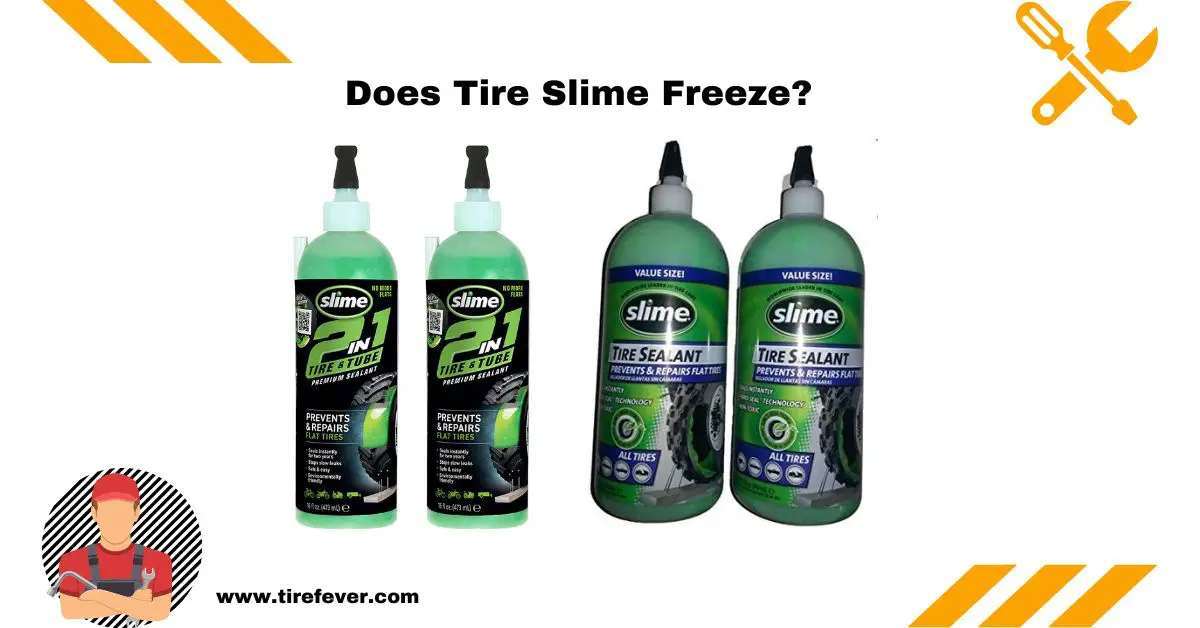
If you can imagine someone who seeks something and will not rest or give up until he gets hold of it, then you have a good idea of how effective slime sealants are in tackling holes in the tire. The sealant actively seeks out the hole and upon arrival at the puncture site, immediately puts an end to the hole. To achieve optimal results when using the slime sealants, care must be taken to ensure the right type is used for the tire in question as they are of varying types for the different types of tires. So, can I use tube sealant in a tubeless tire? The most appropriate answer to this would be no you cannot. This does not mean some persons out there are not pulling this stunt and getting away with it. The right thing to do however is to ensure the sealant used for a tire is specified for that tire, else, you risk causing more damage to the tire rather than repairing it. The purpose served by slime sealant in a tube tire is slightly different from that in the tubeless tire. In the tubeless tire, for example, the sealant is required to protect against corrosion and rust as the tubeless tire is more susceptible to these. So, why can you not make use of a slime tube seal but in a tubeless tire? This is because the sealant designated for tube tires capacity to prevent corrosion and rust, a much-needed feature for tubeless tires.  Read Also: Will Dodge Rims Fit A jeep Cherokee? What is the slime sealant for tube tires? Colors, particularly the primary colors are generally easy to identify even by children. Slime sealant manufacturers have therefore implored this in their product to be able their buyers easily identify the tire for which the product is to be used.  For tires with tubes, the label on the slime sealant packaging is colored red. It does not contain anti-corrosives or anti-rust agents. The sealant is solely for use in a tube tire which is for non-highway use such as tires of wheelbarrows and other similar equipment in the house. Can slime sealant be applied to tubeless tires? You may have seen the slime sealant with the blue label once or twice when you visit the auto shop. Most highway tires are tubeless and the popularity of the blue label like sealant is designated for these types of tires. Aside from the blue-labeled slime sealant, the sealant with a black label on its packaging is equally suitable for use in tubeless tires. It can however serve tube tires as well.  When it comes to tires driven on the highway such as car and truck tires, the emergency slime sealant should be your go-to choice. The company gave this a yellow labeling. How do you apply slime sealant to tires? The whole idea of applying the sealant is to get this liquid into the tire from where it can move to the site of the puncture. Similar to platelet plug formatting in the blood clotting process in the human body, the fibers, parties, and other sealing agents in the sealant come together to form a mesh network that constitutes a plug that effectively shuts off the leak in the tire. To apply, identify the valve core and remove it. This creates an entry point through which the sealant can be poured into the tire. The valve core is afterward placed back and the tire is re-inflated.  No matter how lazy you may feel, a tire in which sealant has to be used should not be repaired without the old dried sealant being cleared off first. With scraping away the old sealant, the residue may constituent a problem for the TPMS.(Read Also: Does Tire Size Affect Gear Ratio?) Advantages of using slime sealant For an instant result, slime sealant is a much more dependable method of fixing a flat tire than any other method out there. Your money’s worth of value is guaranteed with slime sealant except for punctures that go beyond 6 mm diameter in which case the slime sealant may no longer offer much help. However, even in this condition, that is when the diameter of the puncture is beyond 6 mm, slime sealants are not completely helpless against such a puncture. Here, the sealant will form a plug through its fibro technology over the puncture hole, allowing for the tire to be driven a bit further out of the traffic where it could be bashed by incoming vehicles. It is difficult to have a rest of mind while driving and not be concerned about developing a flat tire, especially while driving through road networks in a rural setting where the chances of running over goat horns and other possible sharp objects on the road are considerably high. However, if you were to pre-install the slime sealant in your tires, for the next two years, you can stay unbothered about a flat tire possibility as the sealant will keep off agents such as broken glasses from ruining your day. Similar to heroes, the activity of the slime sealant is rarely noticed. As long as the sealant does its job well, most of the punctures that happen to your tire will go unnoticed. This allows you to keep on without needing to stop for every minor puncture the tire experiences. This protection is guaranteed for 2 straight years. Toxicity is a worrisome factor to consider with chemical agents such as tire sealant. As the sealant is being poured into the tire’s valve, it puts the user at risk of getting exposed to its toxic side effects. However, slime sealant is safe for both the user and the environment and contains only none toxic components. Sometimes, after applying a tire sealant to your tire, the mechanic would declare the tire irreparable and demand it replaced. However, this decision is stemming from an anticipated difficulty in scrapping the sealant off the tire. Read Also: Are … Read more

Are Donut Tires Interchangeable?

are donut tires interchangeable

There is a good chance that you know what donut tires are, even if you do not know what they are called, their shape immediately gives them away. These tires are lifesavers, especially when in a flat tire predicament. However, are they interchangeable? Can you make use of one not designated for your car? So, are donut tires interchangeable? The straightforward answer to this is NO, they are not. People ask these questions because they feel there is no harm in asking for a spare from a friend or neighbor when any of your tires go flat. This is however far from the reality as cars weigh differently and therefore require different types of tires. So, why is this popular even though it is considered dangerous? Its popularity is a result of the need by many people for a shortcut solution to their flat tire predicament. Of all the other options, the use of a flat tire is more expeditious and will get you back on the road as quickly as possible. Also, those who have done this and have somehow gotten away with it, site their experience as a yardstick to continue practicing it. The number of parts, as well as the type of construction material, are among the factors that influence the weight and size of any given car. The spare tire in a given car is engineered on the background of the car’s weight and size so that the tire can conveniently bear these and remain functional without getting damaged. This explains why donut tires are said to be unique to each of the cars they are found in. not only was the car’s weight considered in their manufacturing, but the design of the wheel, the brake pads, and other factors were also duly featured. Therefore, when you decide to lend a donut tire that is not meant for your car but specified for another, this can potentially lead to an undesirable outcome because the tire is not compatible with the car’s weight or design of the wheel. It is easy to find someone at the gas station who could help you out with a spare tire, however, this is not necessarily a favor, as it could lead to regrettable consequences. The incidences of disasters caused by the use of a borrowed spare tire may not be well documented or may be ascribed to other causes, however, the rising statistics of road accidents should force everyone into taking better precautionary measures. The common excuse given most of the time is the similarity that occurs between donut tires. Outwardly, they look the same, that is, shaped like a donut and have brightly colored rims. They may also have the same number of lug holes as well as patterns. However, a closer look at the side of the tire will reveal their differing ratings for speed, distance, and other variables. So, even though they look the same, they are not identical. A lot of hard work and mathematical calculations have been put into coming up with these numbers. Ignoring the tires rating and using it outside the car it is designated for is an open invitation to disastrous outcomes. If you are still unsure of what donut tires are, they are those funny-shaped tires with orange or yellow painted rims which are used commonly as spare tires when any of the car tires develop any form of fault.  Although their odd shape and paint make the car look a bit out of style, this however ensures that the tire stands out and is seen and recognized all the time. this is sort of a reminder that one of your wheels is using a temporary tire and this should be attended to as quickly as possible. Why donut tires cannot be used interchangeably? There is a growing number of vehicular accidents which has caused many concerns. There is a serious investigation into the possible causes of these accidents, some of which are car-related while others are driver-related and some are simply due to the condition of the road.  The condition of the car is implicated in numerous cases of accidents that occur on the road. No matter the expertise of the driver, the car’s condition is essential to how the driver can control or handle the car. The donut tires are smaller than other types of tires and already comprise efficient control and handling. Using a none designated donut tire therefore further creates more problems for the driver. These tires may not have the same durability, longevity, grip on the road, or weight-bearing capacity. Most persons simply ignore all of these relevant factors and take a shortcut. A dangerous short cut I would say, as this puts not only their lives in danger but also the lives of other road users. Some innocently accept to use of a non-designated tire due to a lack of knowledge of the potential incompatibility that exists between the borrowed tire and their car, while others are well are of this but chose to ignore it and feel it is worth the risk. This attitude paints the picture of a spare tire being the only available solution to a flat tire predicament. This is however far from the truth. Trending Searches How Long Can You Drive On A Bent Rim? Can You Check Fuel Pressure With A Tire Gauge?Find Out What a donut tire looks like? The prohibition of sharing one spare between cars is not an all-inclusive position, that is, there are certain types of spare tires such as the full-size spare tire which entertain some degree of interchangeability. Therefore, I would like to use a few words to describe adequately what a donut tire looks like, and how to identify it. It is only the donut tire that is empathically prohibited from being used interchangeably. The name “donut tire” most likely says enough about the tire, especially for those who are very familiar with the shape of a donut. It is slender … Read more

What Does A Flat Tire Sound Like?

what does a flat tire sound like

Sounds are one of the quickest ways to detect a car problem. Certain car problems present with an abnormal sound almost the instance the fault ensues. An example of such is the flat tire condition. Although dreaded, early detection of a flat tire is highly desired as it cuts down the extent of damage that this could cause to the tire or other car parts. So, what does a flat tire sound like? Depending on the stage of the deflation, a flat tire produces two different types of sounds. At the initial state when the tire is actively losing air at a considerable tire pressure, the type of sound heard is more like a hissing sound. The hissing sound is produced as a result of air under considerable pressure forcing its way out of the tire through the punctured hole. This causes the creation of a characteristics hissing sound. However, as the air continuously leaves the tire causing it to become flat, the sound changes and becomes more of a flapping sound. The flapping or thumping sound at this stage is created by the airless flappy tire impacting the road during its rotational movement. While the hissing sound may go unnoticed especially if the car windows are completely rolled up while the stereo is buzzing with loud music sound, the characteristic flapping sound made by the flat tires is rarely missed. This is because, at this point, the flat tire can be felt at the steering wheel in the form of vibration. Passersby at this point may also begin to draw your attention to the airless tires, with gestures that a need for you to stop and take a look at your tire. The sound of a flat tire during acceleration The sound associated with a flat tire explained above is a flapping type of sound and is ascribed to a car accelerating with a flat tire. The loudness of this sound depends on the speed of the car, that is, as the car speeds up, the sound gets louder. Even for an expert driver, speeding with an airless tire is extremely risky and can lead to loss of control of the car. However, with increasing acceleration, the sound increases in frequency, and at some point, it synchronizes with that of the engine sound becoming indifferentiable. What does a flat tire sound like when the brakes are applied? As mentioned above, flat tires make a flapping type of sound when the car accelerates, which increases along with the speed of the car. So, when the brakes are applied, the car slows down and therefore the loudness of the sound consequently decreases along with the decreasing speed. What is best is to slow down at the very instance when a flat tire is suspected to reduce the amount of damage that could potentially be done to the tire, rim, and other associated parts. Causes of a fake flat tire noise For those already used to the sound made by a flat tire, sometime, while driving, one could hear a sound similar to this and may find the tires to be in perfect shape upon stopping for inspection. This usually leaves most persons confused as to the cause of the flake flat tire sound and the course of action to take in such a situation.  The confusion in this state is usually regarding what to do, should one get back into the car ignoring the fake flat tire sound or should this be of great concern necessitating a need to take action? Whenever such sound is heard, the tires should be the first because that should come to the mind of the driver. In that case, to prevent further damage to the tires, slow down immediately after a careful look at the distance of the vehicles at your rear. Look for a favorable parking spot where the car will be out of the way of other road users and do a full inspection of all four tires. If at the end of the inspection, all four tires are observed in be in perfect condition with optimal tire pressure, then other causes of such noise can be brought into consideration. While it may be considered a riddle to hear a flat tire sound and not find any flat tires upon inspection, it should always be remembered that the flapping sound is not a monopoly of flat tires. Therefore, you should not dismiss the significance of such sound when heard without an actual flat tire. The commonest causes of such sound aside from a flat tire include problems with the rim such as a bent rim from impacting on potholes, misalignment of the wheel, and problems with the bearing. These are crucial parts and when there is any indication of a problem with any of them such as an abnormal sound, prompt action should be taken to have them inspected to know whether or not further action Is required. Here is a detailed explanation of some of the causes of flat tire sound unrelated to a flat tire. A defective tire There are certain tire conditions that the tired defective and due for replacement. An example of such is a bubble on the tire’s sidewall. When this happens, be rest assured that such tire has reached the end of its lifespan and it is now time to have it replaced. Amongst the commonest cause of a flapping noise that is not caused by a flat tire is a bulge on the sidewall of the tire. Such bulge result from a break in the belt, driving with such a tire puts you and other road users at risk and should therefore be avoided. The commonest cause of such a bulge on a tire’s sidewall is a result of running at full speed over a bump or into a pothole without applying the brakes. Such impact will cause the tire belt to get broken and become irreparable. Unfortunately, there is no fixing of a bulge … Read more

Will The Tire Go Flat Without Cap?

Will The Tire Go Flat Without Cap

many persons out there do not understand the primary function of a valve cap and can therefore become confused when they discover the cap is gone missing. Often time, this is an accidental discovery, especially by those who seldom do a thorough inspection of their tires. So, will the tire go flat without a cap? caps are not meant to keep the air within the tire, rather, they function primarily as protectors against the dirt as well as debris and these out of the valve’s core. The valves can therefore do without them especially if they are non-leaking.  So no, the car tire will not go flat on account of a missing cap. Does this however imply that the car can be driven around without any plan of replacing the cap? Well, even though the missing cap cannot stop the car from being driven, replacing it as soon as possible is much preferable. Given how easy it is to do this as a result of online stores such as amazon, there should be no delay in getting a new valve cover for the tires. Caps or different sizes and designs are readily available both at offline and online auto part stores at a reasonably affordable price. Rather than exposing the valve’s core to debris on the road which could great a more serious problem later on, simply spare a few bucks on the cap to avoid falling into this situation. The type of construction material used in the making of valve caps ranges from plastics to metal. Plastic caps are however preferable compared to metal caps. With metal caps, there is a risk of the cap becoming corroded over time leading it to adhere to the valve and proving difficult to remove when there is a need to re-inflate the tires. Caps also out of the valve’s core pebbles, water alongside the dirt, and debris. pebbles if allowed into the valve system can cause the air to leak out of the tire when it presses against the core of the valve. This is probably the only possible instance where a cap-less valve can lead to a flat tire. This is however rare and therefore not a common finding. Losing your cap, therefore, is not commonly known for causing a flat tire. Safety concerns associated with driving without a cap Those unfamiliar with the designated role of the cap are primarily afraid of driving without it based on the concern that the tires could suddenly go flat when it is without a cap. This is erroneous thinking stemming from the lack of a basic understanding of the primary functions of the cap. Unknown to many, the cap has nothing to do with keeping it airtight. The valve is designed for this. the valve on examination has a core that is pressed down when air is put into the tire. , the valve keeps this air from leaving the tire. Except when valves leak at the stem, the cap plays no role in keeping the tire airtight. When the valve is leaky, a tightly fitting cap may prevent the tire from expeditiously losing all its air at once, however, this is not its primary function. Without a cap, sure, the valve is vulnerable to dirt, dust, and debris, this does not however prevent the car from being driven and will not cause the tire to go flat. When a tire without a cap on its valve is seen to get deflated over time, this may be a secondary effect of the lack of cap which caused the accumulation of dirt in the valve system leading to the loss of air from the tire through the valve. This is not however a common finding. The cap also protects the valve and does not leave it completely to criminal-minded individuals who may intentionally wish to deflate your car tire.  Except you can afford to constantly blow out accumulated dirt in the valve’s core which time the dirt pills up, there is a need to have the missing cap replaced as soon as it is discovered. This will only cost a token compared to the potential harm the valve is exposed to without it.  How important are tire caps? The cap is not a vestigial part of the tire nor is it for decorative purposes, that is, without purpose or function, rather it plays a crucial role in the tire, hence its inclusion as a valve and tire component. Valves are essential components of the car’s tire and protection against grease, ice, water, dirt, and debris. This is done by the cap, which keeps all these out of the valve. So, without it, the valve core is completely helpless against dirt and debris and may get damaged by their accumulation. When this happens, it may become considerably difficult to get such tire inflated.t thee accumulated dirt or debris may also press on the core of the valve. the effect of such weight on the valve core is a slow but continuous loss of air from the tire. If not addressed, this may over time cause the tire to go flat. Some of the dirt getting into the valve core as a result of the missing core can damage the seal of the valve and cause a leaking valve which may eventually cause the tire to go flat and out of air. So, how essential are caps to the valve? Well, I will say reasonably important. Without them, the valve is not protected, the air pressure is threatened and some valves may not be 100% airtight. What to do when you lose your tire caps? most persons hardly notice a missing valve cap and when they do, they usually become confused about how the valve cap got off in the first place and whether this has affected the tires adversely or not. There are several causes of the missing cap, sometime, this may be a result of rubbing the tire against a curb, during which … Read more

Does Tire Rotation Affect TPMS?

Does Tire Rotation Affect TPMS

There was a time when car owners did not consider rotating their tires a necessity, however, after observing the benefits that come with this in terms of extension of the tire lifespan, there is an increasing number of people who practice tire rotation. Issues related to tore rotation include the proper way to rotate a car tire and whether rotating the car tire poses any threat to the TPMS. So, does tire rotation affect TPMS? essentially, rotating your tires will not cause any damage to the TPMS, it may however cause the TPMS to give a wrong reading and a false alarm.  When the tires are swapped, the TPMS assumes the old tire is still in place and judges the new tire with the preset value for the original tire that was meant to be at that particular wheel. Unfortunately, the psi for the front tire is different from that of the rear tires. This implies that when the front tires are swapped with those at the rear end, the TPMS at the rear wheels analyses the tire pressure about the preset values for rear tires. Given the difference in their optimal pressure, the TPMS may think the tire pressure in the front tires which are now switched with those at the rear as being either overly inflated or under-inflated. Therefore, when the light shows up on the dashboard implying a low tire pressure, you may be surprised to find that the first is in perfect shape.  This happens because the TPMS system is essentially a dummy, it simply cross-matches the tire pressure with what the manufacturers have set as the normal or optimal tire pressure. By so doing, it considers values above or below this reference point as abnormal without putting into consideration whether the tires have been swapped or not. Being aware of this possibility, that is, the situation where rotating your tires may cause a false reading or false alarm by the TPMS will make you more vigilant of the situation and not get frantic when your dashboard signal for low tire pressure comes on. You will not also think the TPMS faulty when on inspection you see all four tires in great shape. Here in this article, the goal is to explain why this happens, as well as how to circumvent it.  What is TPMS and how does tire rotation affect it? There is hardly any vehicle out there on the road without a TPMS. But it has not always been this way, before 2007, car owners and drivers probably had to depend on observers to tell when the car tires are low in pressure or wait until the tire goes completely flat, during which time the steering begins to vibrate and the car starts swaying off the road to realize they have a flat tire. Driving with low tire pressure is incessantly spoken against by all and sundry, this is on the account of the damages this could cause to the tires as well as the rim. TPMS makes sure you key a hawk’s eye on the tire pressure even while driving. The moment the pressure is low, you will be able to tell from the dashboard.  The sensor is installed into the car rim from where it is wired onto the dashboard to signal the driver about the state of the tires. Its drawback is the inability to indicate the particular tires with low pressure. There is no way of telling the tire indicated until a close examination of all four tires is done. How does the TPMS know that the tire pressure is low? Well, all TPMS has an assigned pressure that is considered the reference pressure. Any pressure outside this in either direction, that is below or above is considered abnormal and signaled by the system. However, TPMS is commonly seen with low tire pressure. Under certain instances when the tire pressure is exceedingly high, it may also be able to signal this as well  TPMS is of varying types, there are generally two types of this sensor. The first is the direct type, which is more accurate although a little bit more expensive. Is however preferable to spend more for an accurate sensor than to spend less or go for an inexpensive sensor that may not detect the tire pressure even when all tires are flat. As for the working mechanism of the direct type of TPMS, it accesses the tire pressure directly as the name implies and reports this on the dashboard. The indirect type is said to be less accurate and untrustworthy because it does not access the actual tire pressure, rather, by comparing the rotational motions of the tires, it regards the tire with relatively slow motion as low in pressure and flags them as such. This is however not an accurate method of determining tire pressure. What is the need for tire rotation and how necessary is this practice? Given that tire rotation may potentially mess up with the TPMS, one may wonder if this is truly necessary and how frequently it should be done.  Irrespective of maintenance practices, tires eventually get worn out. However, depending on their location, each tear wears out differently. The primary determinant of the rate at which a tire gets worn out over time is largely dependent on the amount of weight such tire bears. Each car tire bears a different weight of the car, depending on its location, and thus determines the amount of frictional force generated and consequently the rate of wear. Front tires are saddled with the weight of the engine, therefore, the frictional force created between the tires and the road is much greater than the rear tires.  When a heavy object such as the refrigerator is pulled across the living room, the drag on it is much greater than when a much lighter object such as a table is moved this way. This example shows that the amount of friction depends on the weight of the … Read more