How Fast Can You Drive With Tire Chain?Find Out Here!

How Fast Can You Drive With Tire Chain

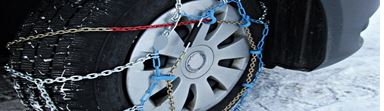
There are now multiple methods of aiding a car to drive through harsh climate conditions such as snow and muddy roads. Aside from straps and tire wraps, a tire chain is perhaps one of the most commonly explored options. As regards tire chains, it is not without drawbacks and this includes attainable speed. Intending users must therefore get familiarized with these specifications to ensure the appropriate use of the tire chain. So, how fast can you drive with a tire chain? There is a limit to how fast you can drive when the tire chains are fitted around your car tires. This is generally given as 30 mph or 50 km/h. As applicable to everything thing in life, there is an advantage as well as a disadvantage to tire chains. Irrespective of the disadvantages, tire chains are a common finding during snow seasons as they provide the tires with the traction needed to cut through the snow. Driving through snow, ice, or mud irrespective of your expertise could become a total nightmare. Possible outcomes include getting stuck without being able to access help in the form of a passerby who could help rope you out of the mud or ice. It soon becomes evident that you are out of luck when you realize your tires are only turning or rolling at standstill and using up your fuel without moving an inch forward.  Compared to what will happen when driving through ice, snow, or mud without tire chains, the limited achievable speed is not a tangible setback.  Does tire chain affect speed?  A host of factors determine the speed at which a car whose tires are fitted with tire chains can be driven. The general rule which applies to almost all types of tire chains is that the car should remain within the speed limit of about 20 to 39 mph. Yes, such a relatively slow speed may be uncomfortable, especially to drivers who are used to the ” fast and furious ” type of driving speed. Users of the chain must however ensure to abide by this irrespective of their desires. Aside from the chain, other factors must be brought into the picture for a holistic evaluation of thr allowable speed at which the car with tire chains can be driven. Some of these factors include but are not limited to: how well the chains fit the tire, the condition of the chains ( old and frail or new and strong), the expertise of the driver, and the visibility allowed by the weather conditions amongst others. Generally, when you set out during a snow season, or on a muddy road, you are mostly concerned about getting through the snow or mid to your destination. Now fast or the speed at which the car can drive through these is not usually of great concern to you as you are most of the time not in a haste. What you should be most apprehensive about is becoming stuck and unable to get your car out of such a hole. Tire chains have been around for a considerably long period. They date back to around 1904 when a new yorker named harry weed crafted this life-saving invention when he observed the struggles of drivers with snow and mud and how these persons employed unconventional methods such as wrapping their tires with ropes and sometimes vines to increase the tire’s traction and help ot out of the snow. (Read Also:Will Nissan Wheels Fit Ford?) As of today, a variety of tire chains can be ordered from both online retail auto shops and offline shops. Some are made using steel as the primary construction material while others are made from alloys of other metals and similar construction materials. In terms of the design and pattern, these have been improved over and over again. There are various patterns of tire chains out there and each has a different degree of strength. These buyers make an informed choice of what suits them. Of course, irrespective of what you want in terms of design pattern, the chain must be such that it is designated for your tire size. Although, some are adjustable and can therefore be used with any tire size. In areas with a characteristic heavy snowfall and were clearing the roads of done os not efficiently done, rather than not being able to make use of your automobiles or abandoning them completely during this time, tire chains will allow you to move around irrespective of the snow or mud.  With the invention of other methods and during the snow or mud, a good number of vehicles no longer make use of tire chains during these climate conditions. This is partly on account of the perceived disadvantages of tire chains. Later on in this article, we shall consider extensively some of the drawbacks of concern and how to tackle such. Tire chains are therefore not meant for all cars. Cars that are equipped with other methods of pulling through mud and snow without getting stuck in either are perfect without tire chains. These include cars driven on four wheels. Automobiles whose four wheels serve simultaneously as the driving wheels are unlikely to experience significant difficulty with snow mud. They move through the snow with ease and at a faster speed than cars whose tires are fitted with tire chains. Similarly, there are special tires crafted to survive the drag of snow and mud. Depending on the car’s horsepower, such cars have no problem navigating through what will seem a nightmare to other types of tires.  Trending Searches Can You Use Tire Shine On Rubber Floor Mats? Can A 16-Inch Tire Fit On A 16.5-Inch Wheel? Can A Bike Fit In A Toyota Corolla? Is it safe to drive with tire chains?  Tires chains are a necessary tore accessory needed during special times of the year such as the rainy season and snowy conditions. These periods are generally considered unsafe for driving, the safety of driving with … Read more

Does Tire Pressure Affect Speed? Find Out Here!

does tire pressure affect speed

While driving within the recommended speed limits is what is encouraged, sometimes, a person may wish to know what it feels like to attain a certain speed within or outside the speed limit. The adrenaline rush may not be on the same level as professional car racers, it may however get you to feel in a way you have never felt. Your experience driving at a high speed is considerably dependent on the tire pressure to a great extent. So, does tire pressure affect speed? Yes, tire pressure undoubtedly does affect the speed of the car. Except for professional drivers and persons with years of driving records, it is easy to lose control of the car when driving at a high speed. For this reason, most persons rarely cross 100 mph when driving and have never known what it would feel like to do so. However, those who have dared to cross this speed limit are quick to notice the difference that exists when two cars of varying tire pressure are driven at this speed. Without looking at the speedometer, what gives you most of the idea about how fast you think you are diving is the intensity of vibration felt during the driving. The higher such vibrations go, the more the feeling of fear that the car may lift off from the road. Driving shortly after, a car with a different type of shock absorber system, tires, and tire pressure makes a whole lot of difference. With such care, you may find it difficult to believe the reading on the speedometer even when it is known to function perfectly. This is because the speed does not create the same nerve-wracking experience as before due to the different tire pressure. The primary culprit here is vibration. Irrespective of the speed at which the car is driven, once vibration is borough into the equation, it changes everything. The vibration will create a picture in your mind that makes you think the car may fly off the road at any moment and forces you to slow down in fear of this. The tires and other components of the shock absorber system in cars such as race cars which can be driven for up to 200mph are in such a way that they prevent these vibrations and allows for the attainment of such a high speed without the associated vigorous or intense life-threatening trembling. Ever wonder why the tires of mountain bikes and those gravel bikes are designed differently? Well, the terrain these bikes are driven is markedly different necessitating their unique design of large size tires and reduced air pressure in the tires to accommodate the bumpy road, increasing the grip of the tires on the road as well as the speed of the bikes. The intense vibration felt when driving with an overly inflated tire can be quite deceptive, it could cause you to slow down thinking you are during too fast whereas were not. It’s about the difference between perception and reality.  Read Also:Will Tire Slime Work In Tubes? How does tire pressure affect speed?  Depending on your passion and your favorite subject back when you were a school student, you may have come across terms such as rolling resistance. Rolling resistance may be understood in layman’s terms as the force that impedes the forward movement of your bicycle, bike, or vehicle. It is a force that must be overcome if the bike or bicycle is to move forward. It, therefore, has an inverse proportionality with the car speed. Do not mistake what happens in the lab with the reality as this may not be the exact representation of what is on the ground. In the laboratory, for example, it has been noted that tire pressure varies inversely with the rolling resistance, that is, the higher the tore resistance the lower the rolling resistance. (Read Also: Does The BMW Warranty Cover Nails In Tires?) The lower the rolling resistance the faster the car drives. The along resistance is in lay terms the opposing force the tires must overcome to make a forward motion. A decrease in this will allow the car to attain a high speed with the minimum gas pump.  You however understand that while this is what is obtainable in the lab, the situation is not the same when driving on pavement. The principle holds for some time until the decreasing rolling resistance gets to an endpoint beyond which it does not decrease further, rather, it makes a U-turn and rapidly shoots up. Given that rolling resistance also maintains an inverse relationship with the speed of the tires and consequently that of the car, the new high rolling resistance will dramatically cause the car speed to become slower. A fair warning was given earlier about physics terminologies abound in this article, so here is another one. The point where the rolling resistance gets to and refuses to go lower but turns the other way and starts going up is known as the impedance breakpoint.  It is important to understand what is truly going on at this point else, you will continue to have the feeling of moving fast whereas, the reality is that you are not. At the point of the impedance breakpoint, the higher rolling resistance causes you to feel the exact intensity of every single bump you drive over, this vibratory impact causes you to think the car is moving at a high speed, whereas, it is slowing down in reality. Except for an objective measure such as the speedometer, perception of speed may not necessarily translate to an actual speed. How smooth or rough the road is may also contribute to how you feel while driving, and create the impression of a highway speed while you are losing speed. A car’s speed is judged based on its forward movement, Vibration, however, is an up and down motion, and not a forward motion. It is therefore a drag on the speed of the car as … Read more

How Long Will Tire Last With Bad Alignment? 

how long will tire last with bad alignment

A good number of people out there who own or drive a car are completely unaware of some of the maintenance practices as well as servicing a car requires regularly. For this category of persons, their primary concern is turning the engine on and driving out of the car park. As long as the engine runs, it is assumed every other thing is okay. Without a proper alignment, you risk diminishing your tire’s normal lifespan considerably. So, how long will the tire last with bad alignment? While we may not be able to state exactly how long the tire is expected to last when the car’s alignment is bad, it is enough to say that the lifespan of the tire will be reasonably truncated. The degree to which this will happen is largely dependent on two things, how bad the alignment is and the type of road as well as how frequent the car is driven. As for other car defects, it may only take a moment for them to occur, however, a bad alignment develops over time. it starts with subtle signs which if unattended to, progresses to make driving an uncomfortable task. A bad alignment alone may not rapidly wear off the tires, however, when it coexists with driving the car now and then, driving on a really bad road filled with potholes, and suspension damage, the side effects of a bad alignment on the tire becomes increasing grievous. Individuals who seldom take their cars for maintenance are equally most likely to discover a bad alignment at the late stage of the condition when it may have cost you your tires. Ideally, those who pay attention to the general condition of the car while driving, monitor the engine sound, the working efficiency of the braking system, the consistency of the steering wheels, and the general quality of driving, will detect the early signs of a bad alignment before it progresses to cost them their tires.  Some persons unfortunately rarely inspect their tires, however, for those who do, they will stumble upon the uneven wearing of their tires secondary to the bad alignment and sort a solution to this immediately. The estimated lifespan of the tire at this point depends on how badly worn out the tire is. Remember, worn-out tires cannot be repaired, rather, they must be replaced.  It takes a considerable amount of time for a tire to get worn out completely, during this time, there is a good chance that the driver may discover what is going on with the tire and have the alignment fixed. For severely bad alignments, in a matter of a few miles, the tires may be completely consumed and rendered unusable. Mild forms of alignment may go unnoticed for a while. During this time, no unusual wear of the tire may be noticed, and the drive quality may be largely normal. The most objective way of diagnosing uneven tire wear which can serve as a guide to knowing your alignment needs correcting is by taking out time to measure the depth of the tread. A mare physical inspection may miss the presence of uneven wear, especially around the early days. Whatever the result of this measure is, one can estimate how long the tire will last. Read Also: Does Tire Sealant Expire? How do I know if my car alignment is off? Do not just own a car without learning the needed maintenance practices such as how often the car should be taken for service. There are aspects of the car which require operation maintenance and servicing, without which they become fully and create a chain of problems in the car. An example of such is the alignment of the car suspension.  When the alignment goes bad on account of factors such as driving speedy over a bump or pothole, or poor maintenance practices, amongst other causes, certain findings could point to it. Some of the pointers to a bad alignment are mentioned here. Your body senses for someone who is paying keen attention to the general state of the car will be able to detect the presence of these signs. The eyes can see the worn-out tires and so can the ear hear the abnormal squealing sound. The hands are not left out as well, they can feel the vibration and the looseness of the steering wheel. Detection of any of the following signs requires an immediate need for proper diagnosis and treatment of the underlying cause to prevent complications.  Unusual tire wear Without a bad alignment, car tires especially for cars that are driven frequently wear off as a result of friction. This is however gradual and uniform. When the tire is on account of a bad alignment, depending on the grade of the misalignment, it is commonly rapid and uneven. It is an unusual finding to discover that one side of the car tire is more worn out than the others. other causes of such findings may include a close-by car part rubbing off the tire while driving. Without evidence of such, the diagnosis of a bad alignment can be made. There is a need to measure the tread depth to objectively find out whether the wear is uneven or uniform. A uniform wear irrespective of the degree may not be a result of a bad alignment but simple on account of the normal frictional force between the tires and the road. Simply to the gait of individuals who suffer shortness of one limb, the car will be out of balance if the tires wear out unevenly. This will affect the driving experience markedly over time. the most worn-out part of the tire is its weakest leak and can easily cause a tire puncture or blowout. The steering wheel may be off-center and shaking Assuming the car is being driven on a flat road, the emblem at the center of the steering wheel is noticed to be well angled in a car with a normal alignment. This … Read more

Does Tire Slime Freeze? Find Out Now!

Does Tire Slime Freeze

Liquid substances are generally susceptible to cold weather conditions. Depending on the degree of the environmental temperature, these liquid substances can get frozen. Slime sealants, both those in the bottle form and the pre-install slime in ready-made tires exist solely in a liquid state. This begs the question of whether the slime sealant freezes at any temperature. So, does tire slime freeze? Yes, a natural liquid substance is expected to freeze up at certain negative temperatures depending on the physical properties of such substance. lime however is formulated with the chemical compound- ethylene glycol which functions as an anti-freeze agent. It thus maintains the sealant in its liquid consistency even in extremely cold temperatures. The formulation of slime allows it to remain functional in both extremely cold as well as extremely hot weather conditions. It has a considerably low freezing point (- 30 F, equivalent to -34.4-degree Celsius). This allows the sealant to be usable even in cold climbs such as Canada and Alaska. Different parts of the world have varying climate conditions. While some places such as tropical Africa and Florida are characterized by their warm climate condition which could sometimes get extremely hot, other places such as Russia, Iceland, Greenland, Antarctica, Canada, Estonia, Alaska, and others are known for their cold temperatures which are usually in negative degree Celsius For this reason, the manufacturers of tire sealants such as slime sealants are forced to take into consideration such harsh weather conditions and ensure their products can withstand such temperatures and remain efficient.  Read Also: Is It Safe To Jack Up One Side Of A Car? Can you make use of tire slime during cold winters? Irrespective of your geographical location, a flat tire is a universal problem faced by all car owners and drivers. This could happen in the cold desert or in places covered with snow. The cold winters will not prevent objects such as tree thorns, nails, and screws from messing up your day by puncturing your tire. Therefore, it is important to know if the quick fix solution tire slime will be of benefit in such temperatures. When tire slime is applied through the valve into the tire, it cannot by itself get to all parts of the tire. The dispersion of the sealant to all parts of the tread area is achieved by the spinning wheel and the liquid state of the sealant. When the sealant is applied, the car should ideally be driven for about 20 minutes. During this time, the tire’s rotation help get the slime all around the tire.  In a frozen state, it is impossible to get the slime uniformly dispersed across the tire’s tread area. The frozen slime is likely to be impacted at a single point in the tire without getting to other parts. This may cause some form of vibration to be felt at the steering wheel and cause a rough driving experience. Cold winters are however unlikely to cause freezing of the tire slime. Below -35 F or as the temperature decreases, tire slime may begin to become increasingly vicious. In this state, the sealant may not be able to spread uniformly across the tire and therefore may fail to protect all aspects of the tire from puncture objects such as nails and screws. When the car is parked or kept stationary in such a cold weather condition, the risk of the sealant tuning viscous and becoming localized in one aspect of the tire is incredibly high. The continuous protection the sealant is designed to offer to the tire may be lost or reduced in this state. However, as soon as the car is driven for some time, the energy lost in form of heat from the effect of the frictional force created in the tire will cause the sealant to return to its original consistency. When riding in a desert, the earth’s temperature can be extremely cold and freezing, and the concern of slime surviving such temperature or freezing up abound. Desert temperatures could get as cold as -40 degrees Celsius. However, as long as the bike is on the move, the heat generated within the tires will ensure the sealant does not freeze up at any point. The marvelous efficiency of the slime sealant always causes some to think of its working mechanism as magical. slime’s ability to seal the hole in your tire however has nothing to do with magic, rather, it is pure science. (Read Also: Does Tire Size Affect Alignment?) When the sealant gets to the hole, there is no chemical reaction initiated here to get the hole closed, rather, the puncture is sealed by the physically present fibers and particles in the sealant. This is sort of similar to what is seen in the hemostatic mechanism known as platelet plug formation which happens in the human body. Whenever any is injured, rather than allowing a continuous loss of blood which could lead to a hypovolemic shock, the body initiates a clotting mechanism that initially involves the aggregation of platelets around the hole in the vessel.  The platelet plug is the first and primary attempt to stop further blood loss. Next is the reinforcement of this plug with a mesh of fibrin formed from the clotting pathway. The same applies to the sealant which uses fibro technology in which the short and long fibers along with particles present in the sealant form a physical barrier that effectively blocks the hole in the tire and stops the further loss of tire air pressure. Does frozen tire slime work? For tire slime to get to the point of the puncture, it must remain in its liquid state and be able to move freely along the current created by the escaping air. When the tire sustains a puncture, the air within the tire rush out of it via these points. This creates a force that pulls the liquid slime towards the point of the puncture where the sealant can arrest the puncture. Regardless … Read more

Is Slime Safe For TPMS?

Is slime safe for TPMS

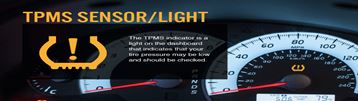
Even for great products such as slime sealant, irrespective of the magical solution they provide for flat tires, there is still the concern of whether they are safe for TPMS-enabled cars or not. Individuals who share this concern have the right to do so as the application of the sealant involves injecting it through the tiny TPMS into the valve stem. So, is slime safe for TPMS? Thankfully, you do not have to worry about the safety of the TPMS following the application of the slime sealant. The company understands the significance of the TPMS, especially seeing how its introduction has made a lot of difference in the statistics of tire blowouts on the roads, and would not do anything to jeopardize it. On your dashboard is an indicator light that tells you the state of your tire pressure. This has not always been the case. The TPMS came to be part of the care system around the year 2007, September 1st to be precise. This is following the ruling by the regulatory body known as the “national transport safety authority that all vehicles starting from the above-stated date must possess a TPMS to prevent traffic accidents caused by tire blowouts. Irrespective of how life-saving a tire sealant is, or how efficient they are in fixing a flat tire, when such sealant is discovered to be harmful to the TPMS, then other methods of fixing the flat tire should be sorted after. Cars and trucks with TPMS are more likely to have their TPMS messed up by tire swap than by tire sealants such as slime. When the tires are swapped without the necessary recalibration of the TPMS, it erroneously flags the tire pressures as under-inflated. Read Also: Can I Use Fix A Flat For A Slow Leak? Will slime mess up your TPMS? There are uncountable testimonies out there about slime sealants and their magically and timely acts of literally saving you put off a dear situation when your tire goes flat. However, there are still those who consider never making use of slime sealants out of fear of having their tires messed up or having to get a new tire. This is most likely on account of what some mechanics may have made them believe about slime sealants or what other drivers may have said about the sealant. when it comes to the TPMS, you can only tell that the monitoring system is not working efficiently when the tire pressure is greatly reduced, detectable by the naked eye and yet the sensors failed to pick that up. A good percentage of those who point accusing fingers at slime sealant most likely have their TPMS messed up from other causes and not the sealant.  To dissuade this thought, the slime package reads ” TPMS safe” or has a sign of the TPMS on the labeling, indicating its safety with TPMS enabled cars. This sign is proof of the doubting Thomas who would rather believe hearsay over what is truly obtainable in reality.  Most cars following the 2007 ruling adopted the installation of TPMS. it is commonly found in the rim where it is attached to the valve stem through which air gets into the tire. It is efficient in monitoring the pressure of air in the tire and comparing this with what each different manufacturer has preset as the normal or optimal pressure. Values about 25% below this optimal pressure are automatically flagged. In essence, what is normal for your tire may not be for another type of vehicle. The normal tire pressure varies between the four tires of the same car, therefore, when these tires are swapped, the TPMS may no longer give an accurate reading. The TPMS is wired such that its reading is transmitted through a wire which connects it to the central computer system displayed on the dashboard. With such a close eye, chances of blowouts, damage to the rim as a result of driving with a low-pressure tire over a speed bump or pothole, swindling off the road as a result of a flat tire, and other similar aftermaths of low-pressure tires or flat tires are greatly reduced. Would you have to replace your TPMS after applying slime? TPMS does not come ship, when the car:s follow come is damaged, getting a replacement could cost considerably. Therefore, it is understood that some persons are concerned over the safety of their car’s TPMS following the application of slime sealant. This concern is totally in order and is in no way unnecessary. (Read Also: Does Tire Size Affect Alignment?) However, the fact rains that you do not have to replace the TPMS after the sealant is applied. Yes, the slime sealant may be noticed to have clogged the TPMS, but this is only temporary. Amongst the factors which could cause permanent damage to the TPMS, the slime tire sealant is not one such.  The method of applying the sealant involves making use of a hose to pour the sealant into the valve stem, from where it enters the tire to be carried by the air pressure to The site of punctuated or by the centrifugal force of the rotating tire. Its initial movement involves passing through the relatively tiny passage in the TPMS. Given the physical properties of the sealant which is composed of solid parities, fibers, and binding agents, the likelihood of the TPMS getting clogged with this liquid is therefore considerably high. The ideal situation is for the liquid seals to maneuver their way through the tiny passage in the TPMS, get into the tire, and migrate to the point of the defect within the tire. There, it is expected that it should be able to form an effective plug that can successfully seal off the hole and prevent further loss of air out of the tire. So, is slime sealant tiny enough to get through this tiny passage and yet seal off holes efficiently? Yes, it is, and that explains the declaration … Read more