How Big  Of A Tire Can I Put On A 2016 F 150? Find Out Now

How big of a tire can i put on a 2016 F150

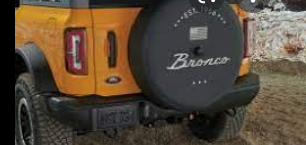
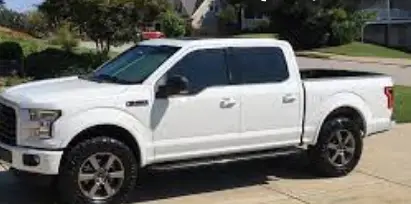
The size of the tire you install on a car depends solely on its make and model, as well as the year of its production. To this effect, various cars have different sizes of wheels that are compatible with them. For instance, a regular super cab will take only tires that are compatible with it depending on its bolt pattern, and so would the super crew, heavy-duty 2 WD( wheel drive) and so on. To make a proper choice of tires, you need to know its rim size too. For the 2006 Ford F 150 2 WD Regular Car, its tire size is 245/70 R17, while for the 2016 Ford F 150 2 WD Super Cab, the tire sizes are: 245/70 R 17, 265/70 R17, and 275/55 R20. The 2016 Ford F150 4 WD Heavy Duty Super Cab uses 275/ 65 R 18 tires, while the 2016 Ford 150 4WD Regular Cab uses either 265/ 70 R17 and 245/ 70 R17. Another car, the 2016 Ford F150 4 WD Super Cab uses 265/70R17, 245/70R17, 275/65 R18, and 275/55R20. Finally, the 2016 Ford F150 4WD Super Crew has 265/70 R17, 245/70 R17, 275/ 65R18 and 275/55 R20. Judging from these analyses, you will see that the tires used on the various models of the Ford F150 vary on their specific types, as well as their years of production, just as was explained earlier. Other notations of tire sizes for the 2016 Ford F150 are 32 — 10 inches, 33 — 11 inches and 34 — 12 inches. In these tire notations, the letter R stands for radial, N for bias belt, D for diagonal, E for load range and S for the speed rating. More explanations on these notations will be given subsequently in the article. What are the standard  F150 tire sizes? The standard tire sizes for the Ford 150 are  32 by 10 inches, 33 by 11 inches and 34 by 12 inches. How do big tires change F150? One of the disadvantages of big tires is that they throw off your speedometer and odometer readings. So, if you happen to have upgraded to bigger tires, you just have to recalibrate your meters or mentally determine how fast you are travelling. Additionally, bigger tires are known to increase speed as well as to make you sit much higher up on the road than smaller tires. Bigger tires are heavier, which means that they increase your rate of fuel consumption too. How do you measure the backspace on a Ford 150? In order to measure the backspace, you need to utilize certain tools such as a measuring tape to measure the wheel space, a straight edge, and a wheel without a tire on it. The following steps will guide you through the process: Step 1 First, lay the wheel down so that its back side faces you. Step 2 Get hold of the straight edge and lay it diagonally across the flange of the wheel. Step 3 Thereafter, measure the length from where the straight edge touches the flange to the hub mounting pad of the wheel. This gives you the backspacing measurement. Will 35-inch tires fit on a 2016 F 150? Not at all, 35 inch tires will not fit on a stock Ford F 150. Only 33 to 34-inch tires will do without the need for removing any crash bars or even causing any rubbing tire issues. However, if everything is stock, including the rims and suspension equipment, the following tires will fit the stock Ford F 150 perfectly: 32 × 10 inches, 33× 11 inches and 34× 12 inches. In this case, the diameters of the tires matter not since that does not affect the tire sidewall profile in any way. Though, the higher the tire sidewall, the better the traction of the tires with the road, if you are going off-road. In addition, the 32-inch tire will fit too,  if the truck has 10 inch wide rims as well. Can you fit 35-inch tires on a stock Ford F 150? No, the biggest tires that will fit a stock Ford F 150 are those between 33 to 34 inches. These tires will fit without the need for the removal of the crash bars or causing the rubbing of the tires either. The 32-inch tires will also fit if the vehicle has a 10-inch wide rim on its wheels. How to put big tires on F150 that don’t fit? In choosing tires that will fit any vehicle and not just the Ford F150, the tire diameter is of little importance, if you do not plan to go off-road. In addition, never use 125-inch tires on any vehicle that uses rims of less than 8.5 inches,  just as it is recommended by the manufacturers. You can run 33 by 12-inch tires on a 4 WD F150 and  31 by 12.5-inch tires on a 2 WD Ford F150. On lifted trucks, by two inches or more, you can run 35 by 12.5-inch tires if it is a 2 WD. In essence, the bigger the lift, the more the tire size you can fit under your wheels in terms of height. Conversely, Super Duty Trucks can fit larger wheels without much or any modifications. Before you can be certain that a tire will fit or not, use the Ford truck’s offset calculator to find out how much space you will have if you were to upgrade. Alternatively, you can use tire spacers with similar results too. Tire spacers go between the wheel and hub so as to push the tire further outside the car. In this way, it will eliminate tire rubbing, though they may cause stress on the system and also the suspension geometry too. Another option that can reduce rubbing is fender rolling. Trending Searches Can I put 20-inch rims on my Ford F150? Yes, you can put a 20-inch rim on Ford F150 conveniently. Doing this will enable you to use any fancier rims, but unluckily, … Read more

How Long Can You Drive On A Bent Rim?

how long can you drive on a bent rim

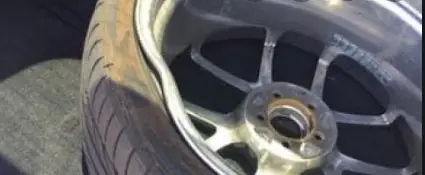
Driving on a bent rim can be a very nasty experience indeed, which involves the possibility of damage to your tire components and possibly even other vehicle parts too. Additionally, driving on a bent rim can also impact negatively the control you ought to have while driving. In extreme circumstances, this loss of control may also imply certain risks to your health and other road users as well.  If these are the risks involved, how far then can we drive on a bent rim? You must not under any circumstances drive for longer than a very short distance on a bent rim. Driving for such a short distance is only allowed so as to enable you to get the car to any auto repair specialist nearest to you for his attention. Also, you are allowed to drive for a short distance of only a few yards to enable you to remove yourself from the obvious threat of other drivers on the highway.  In summary, drive on your bent rim for not more than 100 yards, and should you go beyond that, your rim may eventually get damaged irreparably. Apart from this, the tire can come off the vehicle while in motion with possible damage to the vehicle’s bodywork too. So, as much as you can, avoid driving on a bent rim. What happens if you drive on a bent rim? A lot of ugly things are liable to happen if you should risk driving on a bent rim. First and foremost, the rim itself can get irreparably damaged, and secondly, the tire as a whole can come off and inflict severe damage on the car’s bodywork too. There is also the possibility of your tire pinching or popping or both, which may in worse case scenarios,  lead to a tire blowout. There is also the possibility of the car developing mechanical issues and control problems which can lead to accidents. Can bent rims be fixed? Yes, bent rims can be straightened by experienced and expert specialists. Despite this possibility, any bent rim hardly recovers completely to what we may refer to as ‘pre-bending status. Consequently, while driving on a bent rim, you are likely to feel the sensation of harmonic vibrations while going down the road. There is also the possibility of severe damage not only to the rim itself but also to the entire vehicle as a whole. Will a bent rim be balanced? Yes, bent rims are commonly balanced by auto repair specialists. How much you are able to recover the qualities of your damaged rims after any repairs will depend on the skill and expertise of the mechanic.  All the same, no matter how well the repairs were done, it is highly unlikely for the rim to regain its previous excellent qualities. This is because, after the repairs, you are likely to be receiving harmonic vibrations in the vehicle as you drive along. In worse case scenarios, it may even permanently impair your control while driving. If this happens, your best bet is to simply get the rims replaced, rather than to keep contending with vehicular vibrations and poor control of the steering. Can a pothole bend a rim? Yes, a pothole can bend a rim just like any other tough obstacle on the road can. In most, if not all instances, vehicle rims get bent as a result of some key factors, which are the weight of the vehicle and its speed or velocity at the moment of impact. If the force from such impact that is eventually transmitted to the rims is strong enough, it can cause the rim to bend or even break up into fragments. So, yes, a pothole can bend a rim. How do you tell if a wheel is bent? Driving on a  bent rim is a very dangerous enterprise to contend with, just like doing the same on a tire knot or bubble. The tires can pop or pinch in such situations without notice,  leading in some cases to severe or even fatal accidents. There is also the possibility of getting landed with mechanical complaints too, as well as issues relating to poor manoeuvrability of the vehicle entirely. All these developments are a panacea to avoidable disasters.  The following are signs via which you can tell a bent rim: (1). While driving down the road, if your rim is bent, you are most likely going to experience bouts of shakiness and vibrations in the steering wheel transmitted through the steering column. Under such circumstances, your vehicle tires are not properly in contact with the road itself, which is another very dangerous antecedent too. If you experience these signs or symptoms, it means you have a bent front wheel. Conversely, if you experience vibrations in the rear seats or behind you, chances are pretty high that you have got a bent rear wheel. (2). A bent rim can also present or manifest as a lack of complete control of the vehicle while driving. When you notice this, perform a visual inspection if you wish, or alternatively, go to an auto repair shop nearest to you for more proper attention. (3). It is also common to observe visible damage to your wheel. If this is the case, remove any present hub cap and inspect the wheels more properly, just in case. (4). Finally, a bent rim can also present as a constant or persistent flattening of your tires. If you notice this, take the vehicle for a more proper expert check and attention. Trending Searches How far can you drive on a bent rim? Drive on disfigured rims for just a few yards only, if you must at all. Most traffic regulatory authorities recommend that you should not drive on a bent rim for any distance exceeding a maximum of 100 yards, and only to a safe parking location away from other cars or to where you will get the malfunction fixed. It becomes necessary to do this since driving on … Read more

Can I Put A Tubeless Tire On A Tube Rim?Find Out

Can i put a tubeless tire on a tube rim

Rims are specifically meant to be either tubeless or to work with a tube, and because of this reason, each of them has specific features that enable it to work accordingly. Since air must be trapped at all cost, tubeless rims are not for any reason supposed to have any hole in them, a characteristic which confines air in the tires. But, can one kind of rim be converted to another? This is what we shall look at in the article along with other similar questions. Can I Put A Tubeless Tire On A Tube Rim, Yes, tubeless tires can be used on a tube rim effectively, but there is a condition to it? If the rim is marked or identified as a WM type, you can only fit tube tires on it but never tubeless. If the tire happens to be ribbed on the inside, it can chafe the tube thereby causing it to become heated and wear faster as well. In essence, the type of rim is a factor to be considered along with other conditions that may or may not enable it to work as a tubeless rim. Can I go tubed? Of course, you can go tubed if you so wish. However, before using a tube in any tire, make sure that the rim is not ribbed and the tire itself is not chaffed on its inner surface too. If it were not so, there is the possibility of either the tire or the rim tearing up the tube unnecessarily. Also, any tire to be used with a tube should not have weakened points on it due to either wear or age that may harm the tube. If all these conditions are met, you can go tubed satisfactorily. Trending searches Can I Use Fix A Flat For A Slow Leak? How To Remove Tubeless Tape Easily With Steps How To Identify Tubeless Tire Puncture Plus Quick Fix Do tubeless tires go flat? A flat tire is one whose air content has leaked out or escaped due to a hole or tear in either the tire itself or its inner tube. It is thus only logical to understand that any tire can go flat if the right conditions prevail. Be that as it may, though tubeless tires can go flat like all other tires, it is still rare for them to do so when compared with tube tires because the sealant used in them will quickly plug any hole in the tire. That they hardly go flat is not because of anything other than their ability to solve the presence of a tear or hole in them almost instantly whenever that happens. Can you make any rim tubeless? No, not any rim can be made tubeless. However, some still can, if conditions warrant it.  First, be sure that the rims do not have any holes in them. Secondly, they must be compatible with the tire to be used on them in terms of size. Additionally, it is good to know that a tubeless road tire will only work with a given tubeless rim if it is not too tight to fit properly, which may otherwise cause a blowout that could lead to injuries or even worse. Is it okay to put a tube in a tubeless tire? All things being equal, you can put a tube in a tubeless tire provided they are compatible with each other or are of the right fit. It is only when you are converting a tube tire to a tubeless one that you may have to watch out for certain conditions such as whether the rims can be so used according to the manufacturer’s instructions, or whether the tire itself is compromised by the presence of a hole in it. Can I use a tire without rim? No, you cannot. All tires regardless of whether they are either tubed or tubeless must be used with a rim. The rims serve as anchors for the tires to remain in place while either in motion or even when the vehicle is stationary too. Consequently, tire rims must always go with the tires. Are tubeless tires better? Yes, in many ways, tubeless tires have an edge over tube tires. First, tubeless tires by their nature hardly go flat, and even when they do, they do not flatten out as quickly as tube tires. In addition, the rims used with tubeless tires are much more reliable in most cases than those utilized with tube tires. (Read Also: How Long Can You Drive On A Bent Rim?) Because they do not deflate instantly, tubeless tires are less likely to result in accidents as regularly as tube tires do. This is particularly so when vehicles are moving at top speeds, and suddenly a tire punctures. With tubeless tires, the deflation is a gradual one, which you may notice and pull over, but with tube tires, they deflate instantly and that may cause the vehicle to lose control with severe consequences. So, yes, tubeless tires are a lot better than tube tires for this reason. How long does a tubeless tire last? How any tire lasts depends on proper use, maintenance, and driving habits, as well as the nature of roads you ply and regularity of use too. Taking all these factors into consideration, it is easy to see that your tire can last for as long as the manufacturers say if you use them properly. Despite all these conditions, your tires can last for as long as 2 to 7 months depending on prevailing heat conditions and humidity. (Read Also: Will LandCruiser Wheel Fit Hilux?) The hotter and drier the air, the faster it evaporates. With an orange seal in your tires, and depending on the  temperature and humidity, ride time and geography, you can get between 1 to 3 months from tubeless tires and up to about 6 months with tube tire How to build a tubeless rim? A tubeless rim, if done properly gives … Read more

Can A Cracked Rim Be Welded?

Can a cracked rim be welded

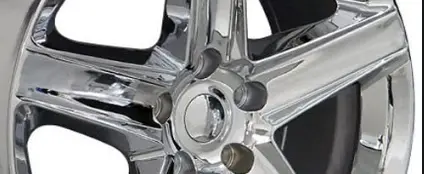
Vehicle rims do get cracked often after hitting obstacles on the road or driving through potholes at top speeds. Though drivers can’t really stop that from happening completely, they can still manage to reduce the incidence of cracking rims through careful driving, in order to minimize the impact on their wheels. So, what happens if your rim gets cracked? Broadly speaking, cracked rims can be welded, but only if certain conditions are met and the right people to undertake the repairs are on hand. The size of the crack, depth and direction are all important in whether you should weld a rim or not. To start with, it is just not advisable to attempt mending a cracked rim, particularly if the crack is wide to some extent. For this reason, it is highly recommended that you replace the wheel completely because there is just not any guarantee with a cracked rim. For example, a cracked rim is at best compromised, and consequently, its structural integrity can’t be relied upon as would have been the case previously. This is akin to cracks in the spokes of a wheel. Most significantly, you are not under any circumstances advised to weld cracks in the inside barrel of a rim, though if you must, you can manage to weld small cracks on its surface, since cracks in this place can be easily opened up for welding. This means that all cracks in inaccessible places should not be welded. Even after very careful mending of a cracked rim, there are still limitations to how much distance or stress you can make it to bear.(Read Also: How Long Can You Drive On A Bent Rim?) Why do my rims keep cracking? The most common causes of repeated rim cracking are driving across hard obstacles on the road, hitting a pothole or ramming the vehicle against a curb. Driving on a flat tire especially across bumps on the road can also cause repeated rim cracking. It is therefore important that you keep checking your wheels regularly for early detection of any malfunction whatsoever.   Why do aluminium wheels crack? Aluminium wheels crack commonly due to the kinds of stress that afflict other wheels too. Consequently, aluminium wheels can crack from impact with potholes, road debris, and other hazards too. They may also bend sometimes, even if they don’t crack. Trending Searches Can I Use Fix A Flat For A Slow Leak? Can You Get A Flat Tire From Hitting A Curb? How Do You Use The Acura Flat Tire Repair Kit? How do you fix a cracked rim? Before you initiate any rim welding, make sure that it is of the repairable size, at a place you can easily reach, as well as whether the metallic substance of the rim is one that can take welding. For example, aluminum wheels are more difficult to weld than most other metals for different reasons. Assess all this before you embark on any rim repairs. Fixing a rim with a small crack take a few careful steps and procedures, which you can’t execute rashly or without being constantly on guard. The following steps will suffice for this purpose: Step 1 First, you should judge or assess the extent or severity of the damage and decide upon your finding whether it is logical to carry out any rim repairs or not. Essentially, for any crack more than one on the inside edge of the rim, it is better to replace the rim and not to conduct any repairs. Similarly, if the crack is more than one anywhere on the rim, you should replace it too, and so should you for bent wheels as well. Furthermore, for any wheel that has undergone previous repairs, replace it too. (Read Also: Can You Put A New Tire On A Bent Rim?) Step 2 Some of the tools needed for this repair work are a large hacksaw, oval file, flat file, rasp file, small round file, and large round file. Others are 80 to 100 grit Emery sandpaper,  320 grit Emery sandpaper, WD 40, thinners, black marker pen, drill and drill bits. You also need a hammer, small flat chisel or screwdriver, small belt sander, TLG welder 150 amps and 1.52 mm alloy rod with 5 to 10 per cent magnesium, chain or sling, nut and long bolt. First, you should hold the alloy wheel to be mended in place, after inspection of the crack and saw it down on one side of the crack. Now, using a screwdriver or a flat punch, tease it out by tapping it with a hammer before you drill a hole at the end of the crack with a 13 mm drill, slowly but not right clean through. Do the same to the underside as well. This will basically enhance the weldability of the wheel. Step 3 This step involves welding with a tig. Start welding at the inside of the wheel, at the point of your first drill in a circular motion. Step 4 Here, you will test the wheel after finishing the repairs by checking for any visual signs of any crack using a black marker and a little drop of thinner. Also, you may test its sound with a hammer gently. If it gives a dull crack sound, it is still cracked, but if it is a constant ringing sound until it diminishes, it shows that the wheel has been well repaired. Is it safe to weld a cracked alloy rim? Yes, it can be safe, if the crack is small and non-structural. Where the crack is large and has affected the structural integrity of the wheel, it is not safe to weld it. In such a situation, the best option is to simply replace the rim with a new one, for both your safety and that of the vehicle too. Is it safe to drive on a cracked wheel? No, it is definitely not safe to drive on a cracked wheel at all. For … Read more

Can Tire Valve Caps Fall Off?Find Out

Can tire valve caps fall off

Tire valve caps are tiny devices used to seal the openings of tire valves, through which air is forced under high pressures into the tires. They are basically used so as to limit the tendency of any air loss from the inflated tires, as well as to prevent the entry of water and dust into the tires too. Despite these important functions, valve caps are commonly regarded as more or less mere decorations in tires. Can Tire Valve Caps Fall Off? Of course, tire valve caps can fall off for different reasons. They usually get lost when they become unscrewed if they are not tightly fitted after inflating the tires, severe movements against road bumps and other obstacles, wearing of the valve thread itself, and becoming stripped after prolonged use. How do you remove a valve from the stem? Replacing a valve cap or even the stem usually takes but only a few minutes, if done properly with the right tools. If after several efforts you are still unable to get the valve cap off, it is advised that you spray it with a lubricant such as WD 40 and allow it to sit for a bit before twisting it again. In addition, you are advised to rotate your vehicle tires at least once every 5000 miles, in order to safeguard the valves and other accessories. To remove the valve cap, rotate your vehicle wheels so that the valve cap is somewhat upside down from your point of view. After that, spray a little amount of lubricant on it so that the removal can become easier. Then, you should grasp the base of the valve stem with a pair of pliers, and also grasp the cap itself with another plier too, before twisting until it becomes free. Finally, replace the cap after filling the tier with the correct quantity of air. Like it has been highlighted earlier, you should exercise the most caution whenever you are removing the valve of any car for fear of damaging something in the process.  To do this correctly, go by the following steps: Step 1 First, loosen the lug nuts of the car using an appropriate spanner of the correct size. Step 2 Thereafter, you should proceed to raise the car or truck on good jack stands. Step 3 You should now go ahead and remove its wheels. Step 4 Deflate the tires and rid them of any air content. Step 5 Then, separate tire beads from the wheel. Step 6 Proceed to lift the lip of the tire up from the wheel. Step 7 Finally, you should remove the tire itself, before extracting the valve from the stem meticulously to Trending searches Can You Get A Flat Tire From Running Over A Porcupine? Can You Pop A Tire With A Knife? Find Out Now Can I Drive 200Miles On A Donut? Find Out Can you drive without dust caps? You can drive without dust caps in your tires, but there are certain risks and consequences associated with doing that. First, you risk dust and moisture getting access into your tire with possible repercussions. For instance, apart from the possibility of losing air from your tires on account of this, water or moisture can also get in easier than should have been the case. Also, when dust enters into it, the valve can malfunction by plugging the valve such that you may be unable to inflate your tires when next you want to do that. In this case, the only solution will be to get it changed completely, which has both financial ramifications and time wastage, particularly when you are busy with something. Do valve caps keep the air in? Of course, it has been established beyond any arguments by several intense research findings that gradual and natural leakage of air through tire valve caps is one of the reasons why vehicle tires are said to lose about one PSI every month,  even without any puncture. For this reason among many others, it is highly recommended that you inspect your tire pressures at regular intervals for any need to re-inflate them.(Read Also: Goodyear Endurance Trailer Mileage(Causes And How To Fix It) Are tire valve caps the same size? No, they are not. For example, bigger Earth Mover tires are equipped with larger valve caps when compared to many vehicles. Similarly, all, or most, Schrader valves used on tires have both their threads and bodies of the same size at the exterior end mainly. There are primarily three common sizes of valves. Despite these differences, all rubber pull valves are of the same size as long as it is not a stepped tractor type. Any rim provided with a TPMS( tire pressure monitoring system) will also have a different valve stem from that without it. Their core values or identifications are of three types: long( also known as standard), short( or high performance), and nickel-plated ( for the tire pressure monitoring system).  Common valve sizes are 0.453 inches for cars and light-duty trucks, and 0.625 inches valves for heavy-duty trucks and also commercial vehicles. It is now clear that valves are not all of the same sizes. Can you tighten a tire valve? Yes, you can, but absolute care must be taken throughout while doing so to ensure that you do not affect either the tube or even the tire itself. While tightening it, you should ensure that you do so carefully such that the valve will fit in firmly and not too tightly, to prevent any tear in the rubber substance of either the tire or its tube( where you are using a tire tube). All you should do to tighten it is to twist clockwise in a very gradual and meticulous process to prevent any willful damage to other tire components. Do tire valve caps go bad? Yes, they do. This results when their threads or metal linings are stripped or worn due to prolonged use, or when their rubber components( for … Read more